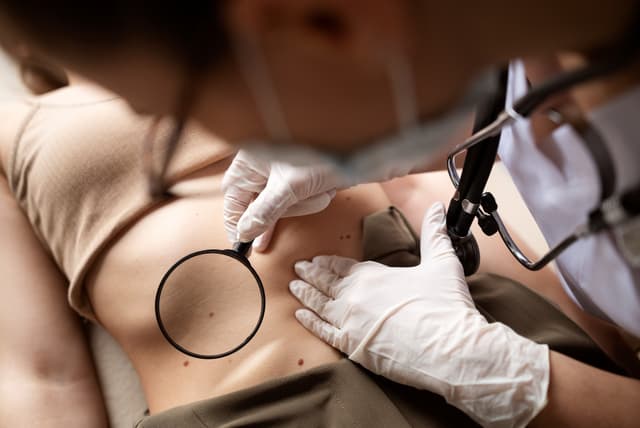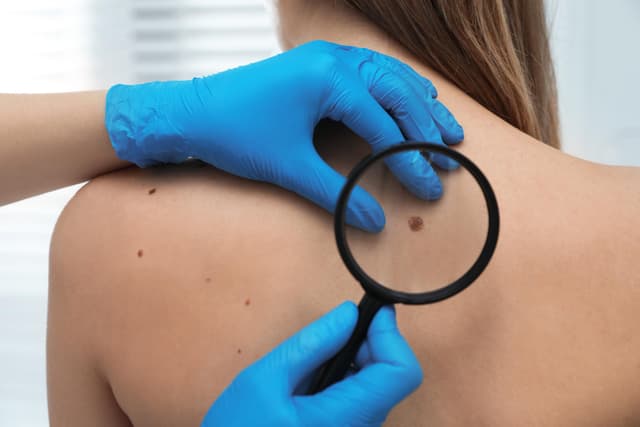
If you’ve been looking into mole removal in Los Angeles, you’re probably not doing it casually. There’s usually a reason behind it. A mole that stands out too much. One that changed slightly. Or just something that doesn’t sit right anymore.
And in a place like Los Angeles, where facial aesthetics carry real weight, even small details matter.
But here’s the thing. Mole removal is not just about taking something off your skin. It’s about how it’s done, how it heals, and what’s left behind after.
That’s where most people get it wrong.
Let’s go step by step.
About Dr. Ardesh
Dr. Ardesh of Beauty Mark MD is a double board-certified facial plastic and reconstructive surgeon known for delivering thousands of refined, natural outcomes. With an academic background that includes teaching in head and neck surgery, ophthalmology, and dermatology at Loma Linda University, he later transitioned into private practice to focus on patient-centred care. His philosophy emphasises subtle enhancement rather than obvious alteration, earning him recognition as a leading plastic surgeon in Beverly Hills and Newport Beach.
What is Mole Removal and When Should You Consider It?
Mole removal is a procedure where a mole is carefully removed from the skin for either cosmetic or medical reasons.
Simple enough. But the decision to remove one is not always simple.
You might consider mole removal in Los Angeles if:
- The mole is raised, uneven, or noticeable
- It affects facial balance or confidence
- It gets irritated due to shaving or friction
- It has changed in size, color, or shape
Now, not every mole needs to be removed. Some are completely harmless and stable for years.
But if something feels off, even slightly, it’s worth getting it checked. That part shouldn’t be ignored.
Types of Mole Removal Methods
There isn’t just one way to remove a mole. And honestly, this is where quality differences start to show.
Surgical Excision
This is the most definitive method.
The mole is removed entirely, including its deeper portion. The skin is then closed with fine sutures.
Best suited for:
- Deeper moles
- Larger or irregular moles
- Moles that require complete removal
What makes a difference here is not just removal, but closure technique. A skilled specialist aligns the incision with natural skin lines. Over time, that’s what helps the scar fade into the background.
Not disappear completely. But become barely noticeable.
Shave Removal
This method involves shaving the mole down to skin level.
It’s less invasive. No stitches. Faster recovery.
Best suited for:
- Raised moles
- Superficial growths
Things to keep in mind:
- There may be slight pigmentation changes
- In some cases, the mole can regrow
- Results depend heavily on technique
It sounds simple. But even this requires control and precision. A poor shave can leave an uneven surface or visible mark.
Laser Removal
Laser treatments are often promoted as clean and easy.
And they are, in the right cases.
Best suited for:
- Small, flat, pigmented moles
But here’s the catch.
Laser doesn’t always remove the entire mole structure. That means in some cases, it fades rather than fully removes.
Also, not every mole should be treated with laser. Especially if there’s any uncertainty about its nature.
That’s why experienced providers in Los Angeles tend to be selective with this method.
Why Facial Mole Removal Needs a Different Approach
This part is important.
Removing a mole from the arm is one thing. Removing it from the face is another.
Facial skin is different:
- Thinner in certain areas
- More visible
- Closely tied to expressions and symmetry
Even a small mistake can leave a noticeable mark.
That’s why mole removal in Los Angeles often involves specialists who understand facial structure, not just skin.
Because it’s not just about removing the mole.
It’s about preserving how your face looks after it’s gone.
What Happens Before the Procedure?
A proper consultation should never feel rushed.
During this stage:
- The mole is examined closely
- Its depth and type are assessed
- Your goals are discussed
- The most suitable method is selected
Sometimes, if there’s any doubt, the mole may be evaluated further before removal.
You should also expect a clear explanation of:
- Healing time
- Possible marks or scars
- Aftercare steps
If these things are skipped or brushed aside, it’s worth reconsidering.
The Procedure: What Actually Happens
The procedure itself is usually straightforward.
Here’s how it typically goes:
- The area is cleaned
- Local anesthesia is applied
- The mole is removed using the chosen method
- If needed, the area is closed with sutures
Most procedures take under an hour.
You stay awake the entire time. There’s no pain during the process, just slight pressure or movement.
And then it’s done.
Simple on the surface. But again, the real difference lies in how carefully each step is handled.
Healing and Recovery: What to Expect
This is where expectations need to be realistic.
Healing is not instant. And it’s not identical for everyone.
Initial Phase (First Few Days)
- Mild redness or swelling
- Slight tenderness
- A small wound or sutured area
Short-Term Healing (1 to 2 Weeks)
- Surface healing begins
- Stitches, if used, are removed
- Skin starts to close and settle
Long-Term Healing (Several Weeks to Months)
- The area continues to refine
- Any scar gradually softens
- Skin tone evens out over time
Here’s something people don’t always hear.
Even with the best technique, some mark is normal at first. The goal is not zero trace immediately. The goal is a result that blends naturally over time.
That takes patience.
Will There Be a Scar?
Short answer. Possibly, yes.
Better answer. It depends.
Scarring depends on:
- The method used
- The location of the mole
- Your skin type
- The skill of the provider
In high-quality mole removal in Los Angeles, the focus is on minimizing visibility.
That includes:
- Precise incisions
- Careful closure
- Proper aftercare guidance
A well-done removal often leaves a mark that becomes hard to notice unless someone is specifically looking for it.
That’s the difference.
Aftercare: What Actually Helps Healing
Aftercare is often underestimated. But it plays a big role.
Some basic but important steps:
- Keep the area clean and dry
- Avoid direct sun exposure
- Follow any ointment or dressing instructions
- Do not pick or disturb the area
Sun protection, especially in Los Angeles, matters more than people think. UV exposure can darken healing skin and make marks more visible.
Small detail. Big impact.
Choosing the Right Specialist in Los Angeles
This decision affects everything.
Not just the removal. The result.
When evaluating providers for mole removal in Los Angeles, look at:
- Experience with facial procedures
- Before and after results
- Approach to scarring
- Willingness to explain the process
Avoid choosing purely based on convenience.
Because fixing a poorly done removal is always harder than doing it right the first time.
Final Thoughts
Mole removal seems like a small procedure. And technically, it is.
But when it comes to visible areas, especially the face, small details carry weight.
The method matters. The hands performing it matter more.
And the outcome is not just about removing something. It’s about how naturally your skin looks afterward.
If you’ve been considering mole removal in Los Angeles but still feel unsure about the process or what’s right for you, that’s completely normal. There’s no rush.
We believe the right approach starts with clarity, not pressure. If you need guidance, a second opinion, or simply someone to walk you through your options in a straightforward way, we’re here to help you make a decision that feels right for you.
FAQs
1. Is mole removal painful?
Not really. The area is numbed with local anesthesia, so you won’t feel pain during the procedure. Some mild discomfort or tenderness can happen after, but it’s usually manageable.
2. How long does it take to heal after mole removal?
Initial healing takes about 1 to 2 weeks. However, the skin continues to refine over the next few weeks or even months, especially for facial areas.
3. Can a mole grow back after removal?
In some cases, yes. This is more common with shave or laser methods where deeper cells may remain. Complete surgical removal reduces this risk significantly.
4. Is mole removal safe?
Yes, when performed by a qualified professional. In fact, if a mole looks unusual, removing and examining it can be an important step for your health.
5. Will mole removal leave a visible mark?
A small mark can form initially, but with proper technique and care, it usually fades and blends well with the surrounding skin over time.