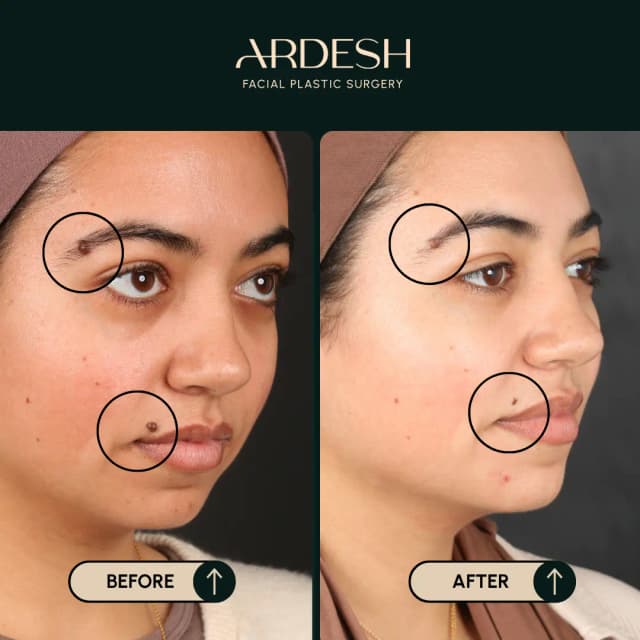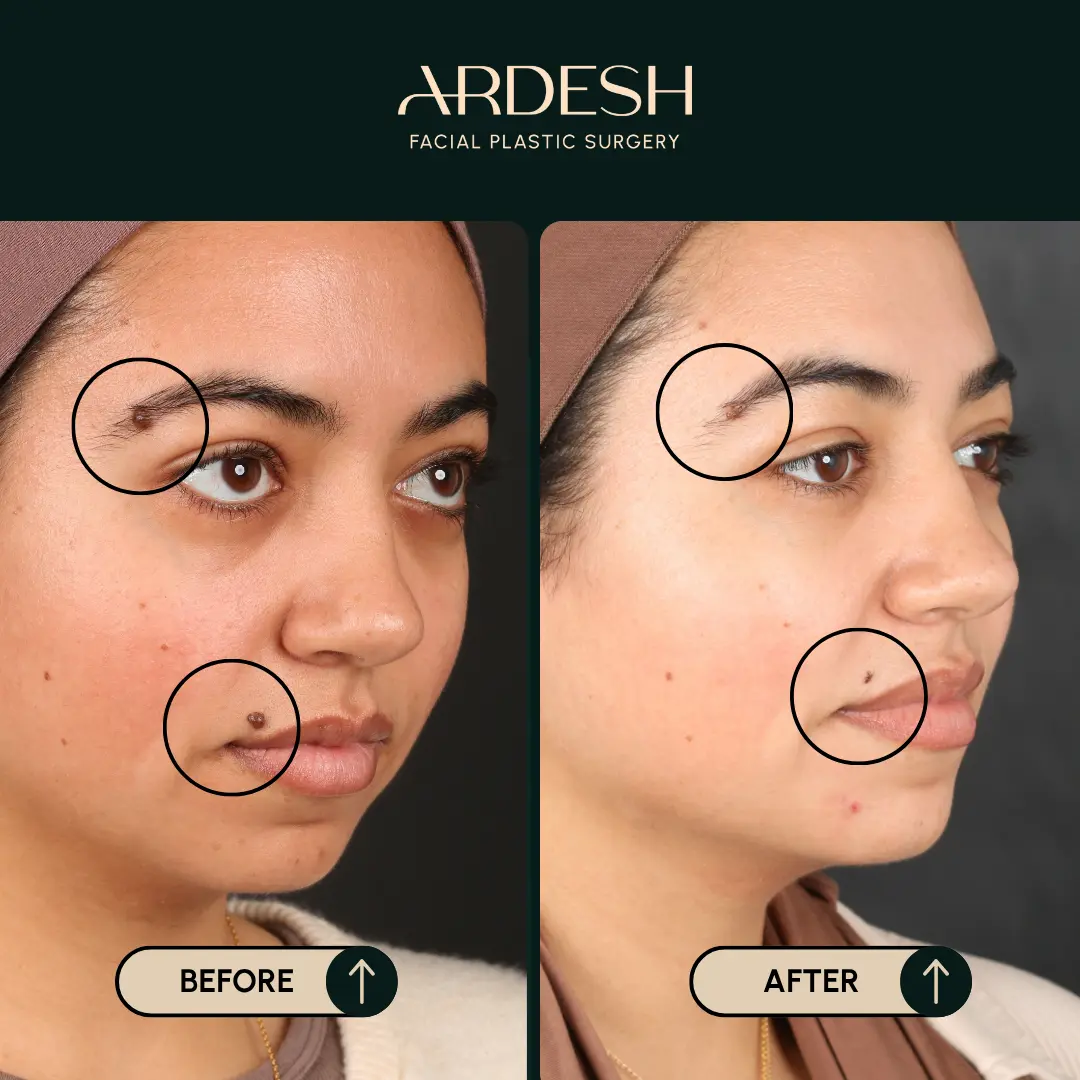
A mole on the face can be small and still feel surprisingly noticeable. For patients considering cosmetic mole removal, the concern is often not only getting rid of the mole. They also want to know what the skin will look like afterwards. This is where radiofrequency technology has become an important option for selected moles, allowing precise removal without relying on a traditional scalpel-based excision in every case.
Radiofrequency treatment uses controlled high-frequency energy to remove targeted tissue. When appropriate for the type of mole being treated, it allows the physician to work gradually and precisely while limiting unnecessary disruption to surrounding skin.
About Dr. Ardesh
Dr. Ardesh of Beauty Mark MD is a double board-certified facial plastic and reconstructive surgeon known for delivering thousands of refined, natural outcomes. With an academic background that includes teaching in head and neck surgery, ophthalmology, and dermatology at Loma Linda University, he later transitioned into private practice to focus on patient-centred care. His philosophy emphasises subtle enhancement rather than obvious alteration, earning him recognition as a leading plastic surgeon in Beverly Hills and Newport Beach.
What Actually Happens During Radiofrequency Mole Removal?
The term "radiofrequency" can sound more complicated than the procedure itself.
Instead of using a traditional surgical blade to cut around the mole, specialised radiofrequency energy is used to remove targeted tissue. The physician can work carefully across the mole while preserving surrounding tissue as much as possible.
This level of control is particularly relevant for face mole removal, where even a small mark can be noticeable because of its location.
The exact technique, however, depends on the mole itself. Its depth, size, shape, colour, location, and relationship with the surrounding skin all matter.
Why Precision Matters So Much on the Face
Removing a mole from the back or another less visible area presents a different cosmetic challenge from removing one beside the nose, lip, cheek, or eye.
Facial skin has natural lines, contours, and changes in thickness. A removal technique therefore needs to consider not only the mole but also the skin around it.
With cosmetic mole removal, the aim is to remove the unwanted lesion while creating the best possible conditions for an aesthetically acceptable result.
That requires attention to details such as:
- How deeply the mole extends into the skin
- Whether it is raised or relatively flat
- Its position on the face
- The surrounding skin texture
- How much tissue needs to be treated
- The patient's individual healing response
These factors are why the same removal method should not automatically be used for every mole.
What About Flat Moles?
People sometimes assume that only raised moles can be treated cosmetically. That is not necessarily the case.
Flat moles removal requires careful assessment because what appears to be a simple flat mark at the surface can vary in depth and characteristics. Before focusing on the cosmetic result, the physician needs to determine whether the lesion is appropriate for cosmetic removal and which technique makes sense.
For suitable lesions, controlled treatment can allow the mole to be addressed layer by layer rather than automatically removing a larger section of surrounding skin.
The goal of flat moles removal is still precision. Removing too little may leave visible pigmentation or tissue behind, while unnecessary treatment can affect more skin than required.
Does Radiofrequency Mole Removal Leave No Scar?
This deserves a clear answer: no responsible treatment can guarantee completely scar-free healing.
Any procedure that removes tissue creates a healing response. What can differ is the size and appearance of the resulting mark.
Radiofrequency treatment can be selected with the goal of limiting unnecessary tissue trauma and achieving a favourable cosmetic outcome. This is particularly important in face mole removal, where patients are understandably concerned about exchanging a visible mole for a visible scar.
Healing can also vary according to the individual, treatment depth, mole location, aftercare, and other factors. The realistic objective is therefore to minimise visible evidence of removal, not promise that the skin will look untouched.
Not Every Mole Should Be Treated the Same Way
Technology is only one part of good treatment. Proper assessment comes first.
A mole that has changed in size, shape, border, colour, or other characteristics may require medical evaluation rather than being approached simply as a cosmetic concern.
Even when cosmetic mole removal is appropriate, the physician may recommend a particular technique based on the lesion rather than the patient's preference for a specific device.
This is also why seeing examples of previous results can be useful, but they should never replace an individual assessment.
What Happens After Removal?
Once a mole has been treated, the area needs time to heal.
Patients should follow the aftercare instructions provided by their physician and avoid interfering with the healing skin. Picking or scratching the treatment site can affect how the area heals.
For face mole removal, protecting healing skin and following professional aftercare guidance are particularly important because the cosmetic result develops over time rather than being judged immediately after treatment.
Similarly, the final appearance following flat moles removal cannot always be assessed in the first few days. Healing is a process, and patience is part of achieving the best possible outcome.
The Technique Matters, but So Does the Treatment Plan
Radiofrequency technology provides a precise option for selected moles, but successful treatment starts with deciding whether a mole is appropriate for removal and choosing a method that suits its characteristics. The objective should always balance effective removal with careful management of the surrounding skin.
Dr. Farhad Ardesh offers cosmetic mole removal with attention to both the lesion and the cosmetic appearance of the treated area. A personalised assessment can help determine the appropriate removal approach for each individual mole.
FAQs
1. Can radiofrequency be used for flat moles?
It may be an option for selected lesions, but suitability depends on the mole's characteristics and requires professional assessment before treatment.
2. Is radiofrequency mole removal completely scar-free?
No mole-removal method can responsibly guarantee zero scarring. The aim is to use an appropriate technique that supports the best possible cosmetic healing.
3. Why is facial mole removal different from removing moles elsewhere?
The face is highly visible and has complex contours, so preserving surrounding skin and planning for the cosmetic outcome are particularly important.
4. Can every mole be removed for cosmetic reasons?
No. A mole should first be assessed to determine whether cosmetic treatment is appropriate. Some lesions may require further medical evaluation.
5. How soon will the treated area look normal?
Healing varies between individuals and depends on factors such as the mole, treatment depth, location, and aftercare. The appearance generally continues to change as the skin heals.