Changes in moles can raise important questions about skin health, especially in a sun-intensive region like Southern California. Mole removal in Los Angeles is commonly searched by individuals who want to understand when a mole should be evaluated by a medical professional rather than monitored at home. One of the most widely used tools for identifying concerning mole changes is the “ABCDE” guide, which helps individuals recognize when it may be appropriate to consult a licensed dermatologist.
Why Monitoring Moles Matters in California
Los Angeles experiences high ultraviolet (UV) exposure throughout the year, increasing the importance of regular skin checks. Prolonged sun exposure can influence the appearance of existing moles and contribute to the development of new ones. Dermatologists in California often emphasize early evaluation, as timely assessment can support both skin health and informed decision-making.
While many moles are harmless, some changes may warrant professional attention. Understanding what to look for helps individuals avoid unnecessary worry while ensuring potentially concerning signs are not overlooked.
What Is the ABCDE Guide?
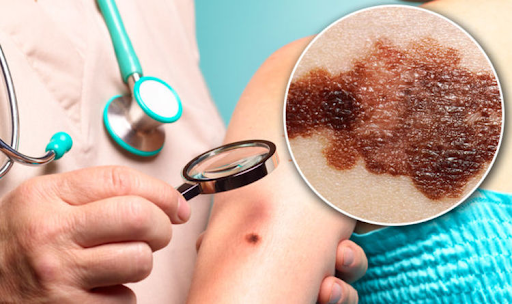
The ABCDE guide is a clinical framework used by dermatologists to evaluate moles for signs that may require further assessment. Each letter represents a specific characteristic to observe:
A – Asymmetry
If one half of a mole does not match the other half in shape or thickness, it may be considered asymmetric. Symmetrical moles are more commonly benign, while asymmetry can be a reason to seek evaluation by a dermatologist in Los Angeles.
B – Border
Borders that are irregular, uneven, blurred, or jagged may be a sign that a mole should be checked. Smooth, well-defined borders are typically less concerning, but changes in border shape should not be ignored.
C – Color
Moles that display multiple colors or uneven pigmentation—such as shades of brown, black, red, or blue—may require further assessment. Consistent coloring is generally less concerning, but color variation is an important factor in mole evaluation.
D – Diameter
Moles larger than approximately 6 millimeters (about the size of a pencil eraser) may warrant professional evaluation. Size alone does not determine risk, but changes in diameter over time are particularly important to monitor.
E – Evolving
Evolution refers to any change in a mole’s appearance, texture, or sensation. This includes growth, darkening, itching, bleeding, or tenderness. Among all the ABCDE criteria, evolution is often considered one of the most significant indicators for seeking dermatological evaluation.
When to See a Dermatologist in Los Angeles
If a mole meets one or more ABCDE criteria, scheduling an evaluation with a licensed dermatologist is generally recommended. Dermatologist mole removal Los Angeles searches often reflect concern about whether a mole needs monitoring, biopsy, or removal. A professional examination allows for accurate assessment and, if necessary, further diagnostic steps.
In some cases, mole removal may be advised for medical reasons, such as diagnostic evaluation. In other cases, ongoing observation may be sufficient. California medical guidelines require that any mole considered for cosmetic removal be medically assessed beforehand to rule out health concerns.
Medical vs Cosmetic Mole Removal
Medical mole removal focuses on health and diagnosis, particularly when there is concern about abnormal changes. Cosmetic mole removal in Los Angeles addresses appearance-related concerns once a mole has been evaluated and deemed medically benign. Both approaches must follow California regulations and be performed or supervised by licensed medical professionals.
It is important to understand that cosmetic removal does not replace medical evaluation. Even moles removed for aesthetic reasons should be assessed for potential risk factors prior to removal.
Skin Type and Mole Evaluation
Moles can appear differently across various skin tones. Individuals with lighter skin may notice color changes more easily, while those with deeper skin tones may experience changes in texture or size rather than pigmentation. Skin cancer screening in California is recommended for all skin types, as delayed diagnosis can occur when changes are harder to detect.
Los Angeles dermatologists are trained to assess moles across a wide range of skin tones, ensuring evaluation is based on clinical criteria rather than appearance alone.
The Role of Regular Skin Checks
Routine self-examinations and periodic professional skin evaluations are key components of skin health. Not all moles require removal, and many remain stable over time. However, familiarity with the ABCDE guide empowers individuals to recognize when professional input may be helpful.
Making Informed Decisions About Mole Care
Understanding the ABCDE guide supports informed conversations with a dermatologist and helps individuals take an active role in skin health. Whether monitoring a mole or considering mole removal, consulting a licensed dermatologist in Los Angeles ensures care aligns with California medical standards and prioritizes safety, accuracy, and informed decision-making.
Meet Dr.Ardesh
Dr Ardesh, Beauty Mark MD, a double board-certified facial plastic and reconstructive surgeon, has delivered over 7,000 natural results with expertise and empathy. He formerly served as a college professor in the departments of head and neck surgery, ophthalmology, and dermatology at Loma Linda University, after which he established his private practice. Creating a refreshed look, not “worked on,” has established him as one of the best plastic surgeons in Beverly Hills and Newport Beach.