Most People Don’t Delay Treatment Because of the Skin Tag They Delay Because They Don’t Know What to Expect
For something so small, a skin tag can occupy an unexpectedly large amount of mental space.
People notice it while applying skincare in the morning. While adjusting jewelry before dinner in the Marina. While catching their reflection in certain lighting. And yet many wait months sometimes years before scheduling a consultation.
Not because they aren’t bothered by it.
Because uncertainty feels uncomfortable.
Will it hurt? Will there be a scar? Will the skin look worse afterward? Is removal more complicated than it sounds?
For many patients in San Francisco, and nearby communities such as Daly City and South San Francisco, uncertainty about the procedure can become a reason to postpone treatment. Whether someone lives in the Marina, Pacific Heights, or Sea Cliff, concerns about discomfort, scarring, and healing often lead to the same questions.
Ironically, once patients finally experience professional skin tag removal, most describe the process as far easier and more reassuring than they imagined.
Book now for October 17 in San Francisco
About Dr. Ardesh
Dr. Ardesh of Beauty Mark MD is a double board-certified facial plastic and reconstructive surgeon known for delivering thousands of refined, natural outcomes. With an academic background that includes teaching in head and neck surgery, ophthalmology, and dermatology at Loma Linda University, he later transitioned into private practice to focus on patient-centred care. His philosophy emphasises subtle enhancement rather than obvious alteration, earning him recognition as a leading plastic surgeon in Beverly Hills and Newport Beach.
The Consultation Is More Personalized Than Most People Expect
One of the biggest misconceptions is that every skin growth is treated the same way.
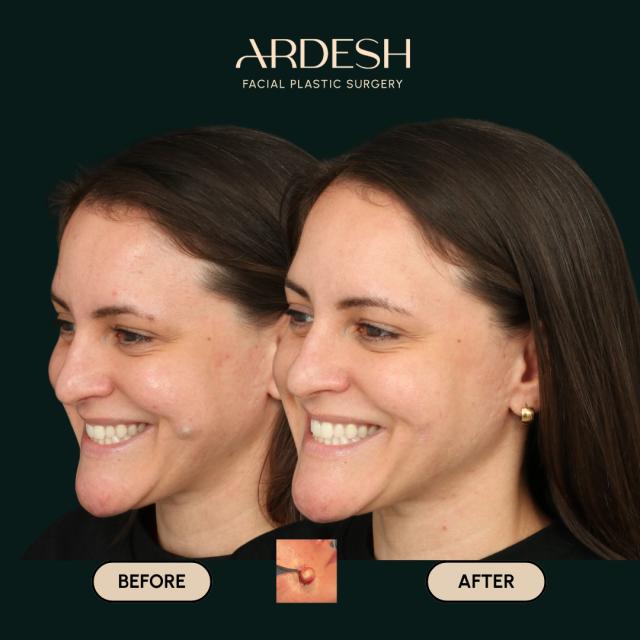
In reality, professional evaluation is highly individualized. During the consultation, the lesion is carefully examined to determine what it actually is, how deeply it extends, and which removal method will provide the best cosmetic result.
Some lesions patients assume need skin tag removal may actually behave more like growths treated with wart removal or even concerns associated with beauty mark removal.
The location also matters significantly.
Facial skin heals differently than skin on the body. Areas around the eyelids, jawline, neck, or cheeks require a more refined approach because even small textural changes can become visible.
For patients in the Marina and surrounding communities such as Burlingame, the consultation is an opportunity to understand how the skin is likely to heal, not simply how the lesion will be removed. This matters particularly for visible facial areas where even minor texture changes can affect the final appearance.
Does Skin Tag Removal Hurt?
This is usually the first question patients ask.
In most cases, professional skin tag removal involves minimal discomfort because local anesthesia is used to numb the area before treatment begins. Patients typically feel a brief pinch during the numbing process, followed by little to no pain during the actual removal.
The procedure itself is often surprisingly quick.
Many patients arrive expecting something extensive or intimidating, only to realize treatment can frequently be completed comfortably in-office within a relatively short visit.
Reducing anxiety is part of the experience.
A calm, discreet environment matters, especially for people considering facial cosmetic procedures from Pacific Heights, Sea Cliff, and nearby Hillsborough. Privacy, personalised attention, and a clear explanation of the procedure can make the experience feel less intimidating.
What Removal Method Is Used?
The exact technique depends on the type, size, and location of the lesion.
Shave Removal
For certain raised skin tags or superficial growths, shave removal may be appropriate. This technique carefully removes the lesion at the skin surface while preserving as much surrounding tissue as possible.
Because facial texture matters aesthetically, precision is essential.
Excision
Some lesions require excision, particularly if they extend deeper into the skin or need more controlled removal. In these cases, careful closure technique becomes extremely important for minimizing visible scarring afterward.
Facial anatomy plays a major role here.
Natural skin tension lines, movement patterns, and surrounding contours all influence how incisions should be placed and closed to support elegant healing.
For patients considering facial treatment, concerns about visible scarring are often just as emotional as the lesion itself.
For individuals in San Mateo considering skin tag removal on the face or neck, understanding the difference between shave removal and excision can help them make informed treatment decisions. The right technique depends on the lesion's characteristics and the expected healing outcome.
Why DIY Methods Often Create More Problems
Patients frequently search for skin tag removal near me after becoming frustrated with at-home treatments.
Many have already tried:
- Freezing kits
- Acidic solutions
- Online removal tools
- Cutting or tying methods
Unfortunately, DIY treatments rarely prioritize cosmetic healing.
Instead, they often create unnecessary irritation, uneven pigmentation, or texture irregularities especially on delicate facial skin. In some cases, patients end up more concerned about the aftermath of home treatment than the original lesion itself.
For people in San Bruno, attempting to remove facial skin tags without professional evaluation carries the same risks of irritation, scarring, and pigmentation changes. Knowing when to seek professional care can help avoid unnecessary damage to delicate skin.
Professional treatment offers something DIY methods cannot: controlled precision.
That difference becomes incredibly important when the skin being treated is visible every day.
What Healing and Recovery Usually Look Like
Healing depends on the size and location of the lesion, as well as the removal technique used.
Most patients experience mild redness or temporary sensitivity initially, followed by gradual skin refinement over the healing period. Downtime is generally minimal, particularly for smaller lesions.
Patients are usually able to resume normal routines relatively quickly, though protecting the healing skin and following aftercare instructions carefully helps optimize cosmetic results.
For patients travelling from nearby Millbrae, understanding the expected recovery process before treatment can make planning easier. Asking about aftercare, temporary redness, and any activity restrictions helps set realistic expectations for healing.
For facial areas, subtle healing matters.
The goal is not simply removing the growth it is allowing the skin to heal in a way that looks natural, smooth, and aesthetically balanced over time.
Confidence Often Comes From Removing Small Daily Distractions
One of the most common things patients say after treatment is that they wish they had done it sooner.
Not because the lesion was medically serious, but because they underestimated how often they thought about it throughout the day.
Once it’s gone and healed properly many patients experience a quiet sense of relief that feels larger than expected.
Precision Matters When Skin Is Always Visible
Dr. Ardesh at Beauty Mark MD™ is a double board-certified facial plastic and reconstructive surgeon with over 7,000 successful procedures. He evaluates every growth personally, selects the right method, and closes with the precision that visible skin demands.
For patients throughout San Francisco, including Marina, Pacific Heights, and Sea Cliff, the focus is not simply removal it is achieving refined cosmetic healing with natural-looking results that preserve confidence and facial harmony.
Book Your Consultation Today
You will know what your removal involves, what it costs, and what your result will look like — before anything is scheduled. No hidden fees.
October 17, 2026 | Skin Tag Removal, San Francisco
Limited spots. 1-on-1 appointments only. No walk-ins.
BOOK YOUR CONSULTATION
(424) 242-8608 | drardesh.com