
01
Silicone Scar Gel
Used during scar maturation as part of the postoperative care routine.
Mole Removal • Transformation Story
A 9-month transformation focused on complete single-stage removal, advanced facial reconstruction and a natural-looking scar in a highly visible area.
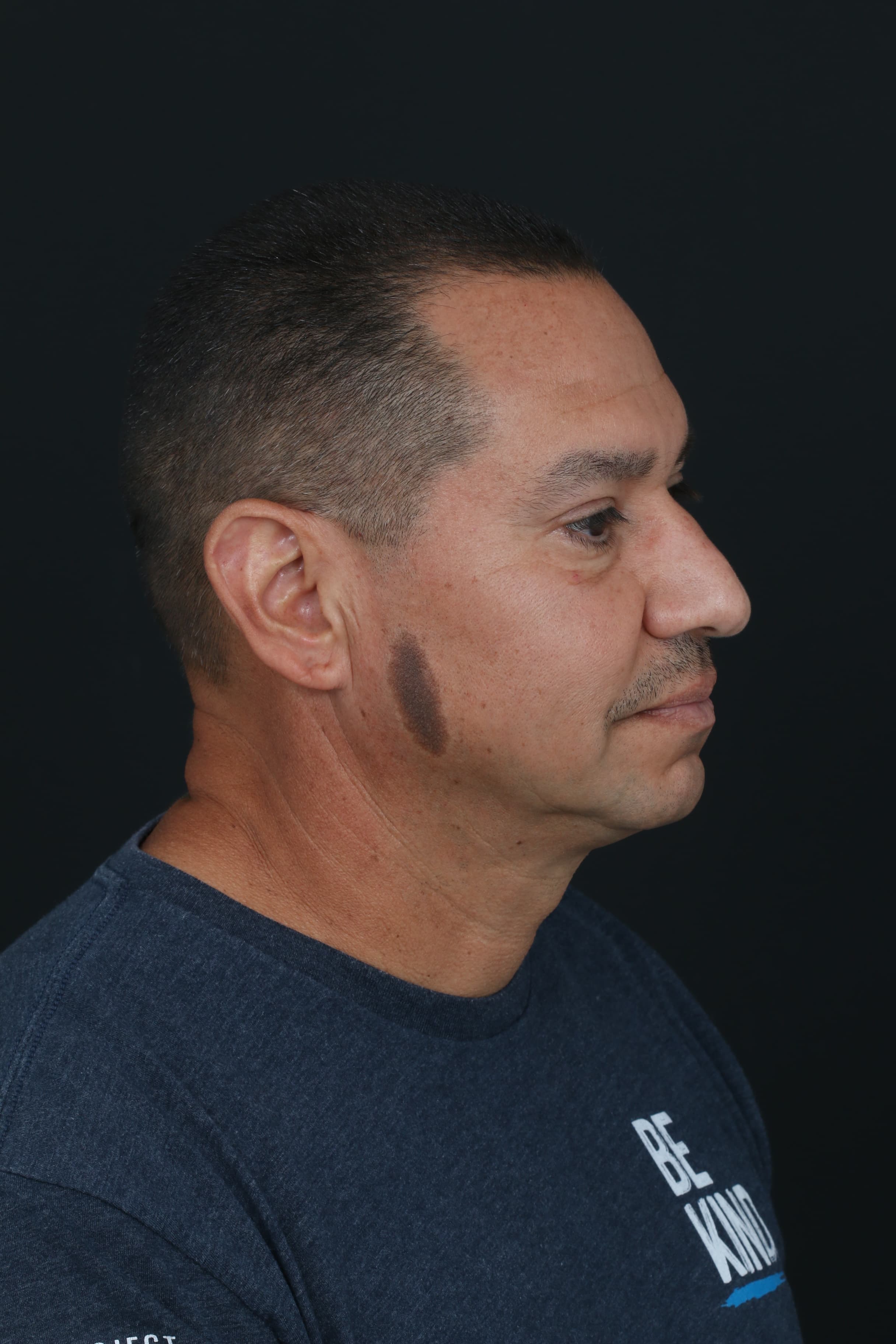
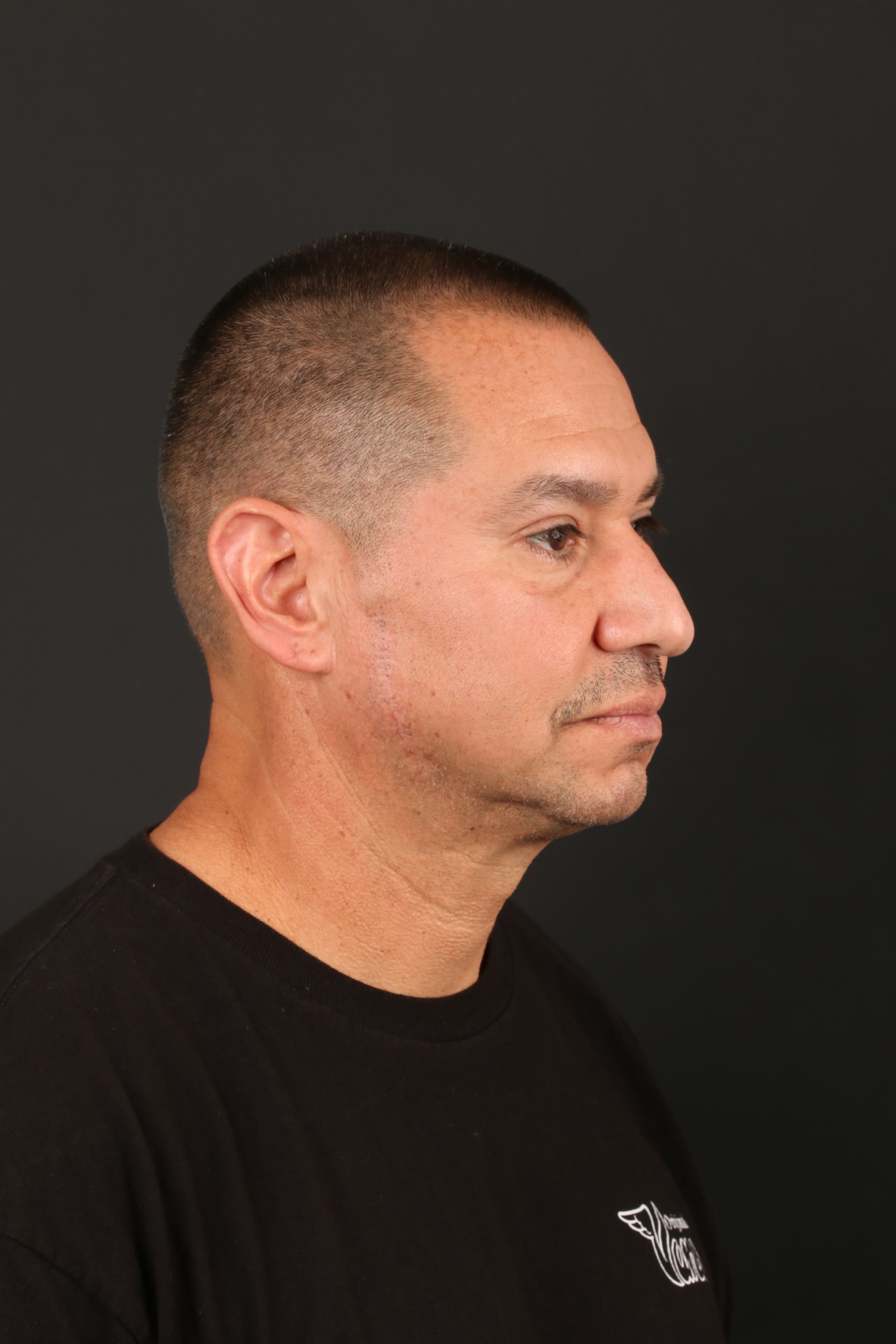
Actual patient shown before treatment and approximately nine months after large cheek Molectomy™. Individual healing and results vary.
Treatment
Molectomy™
Area
Cheek
Follow-up
Approx. 9 months
01 | Case at a Glance
This 52-year-old patient had considered cheek mole removal for years but remained concerned about the scar that might result. Because he is normally clean-shaven, keeping the final scar as inconspicuous as possible was especially important.
Treatment
Molectomy™
Area
Cheek
Mole Size
Approximately 2 inches (5 cm)
Primary Goal
Complete removal in one procedure
Pathology
Melanocytic nevus
Follow-up Shown
Approximately 9 months
The Concern
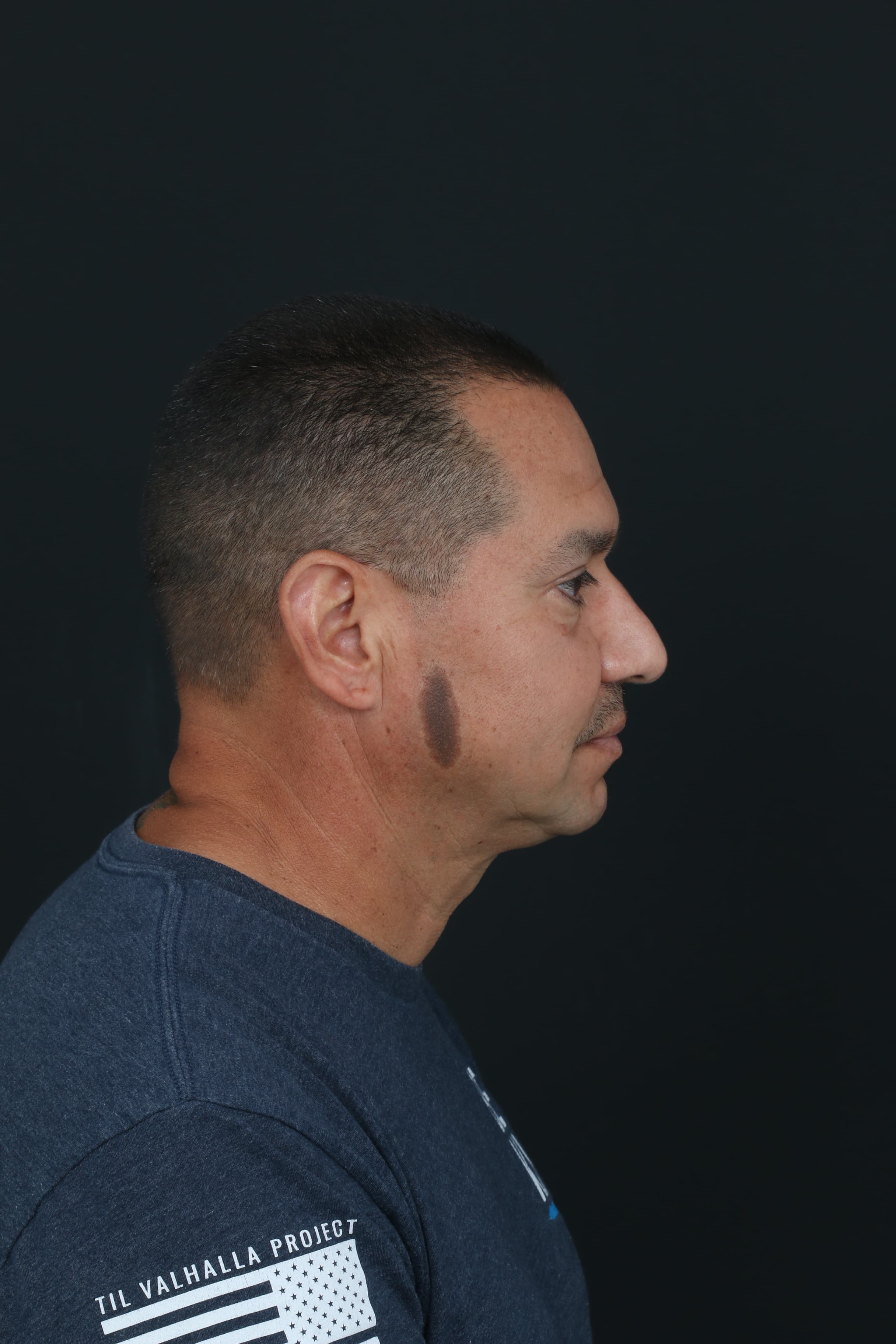
The mole was large, flat and pigmented. The patient wanted the entire lesion removed rather than treated through multiple serial excisions.
The challenge was to achieve complete removal while preserving natural cheek contour and planning a scar that could mature as favorably as possible in a highly visible area of the face.
02 | Surgical Planning
Dr. Ardesh evaluated the mole's size, shape, depth and location, along with the patient's cheek movement at rest and while smiling. The direction of the excision and closure was planned in relation to natural skin tension lines and facial creases so the resulting scar could blend more naturally with the surrounding skin as it matured.
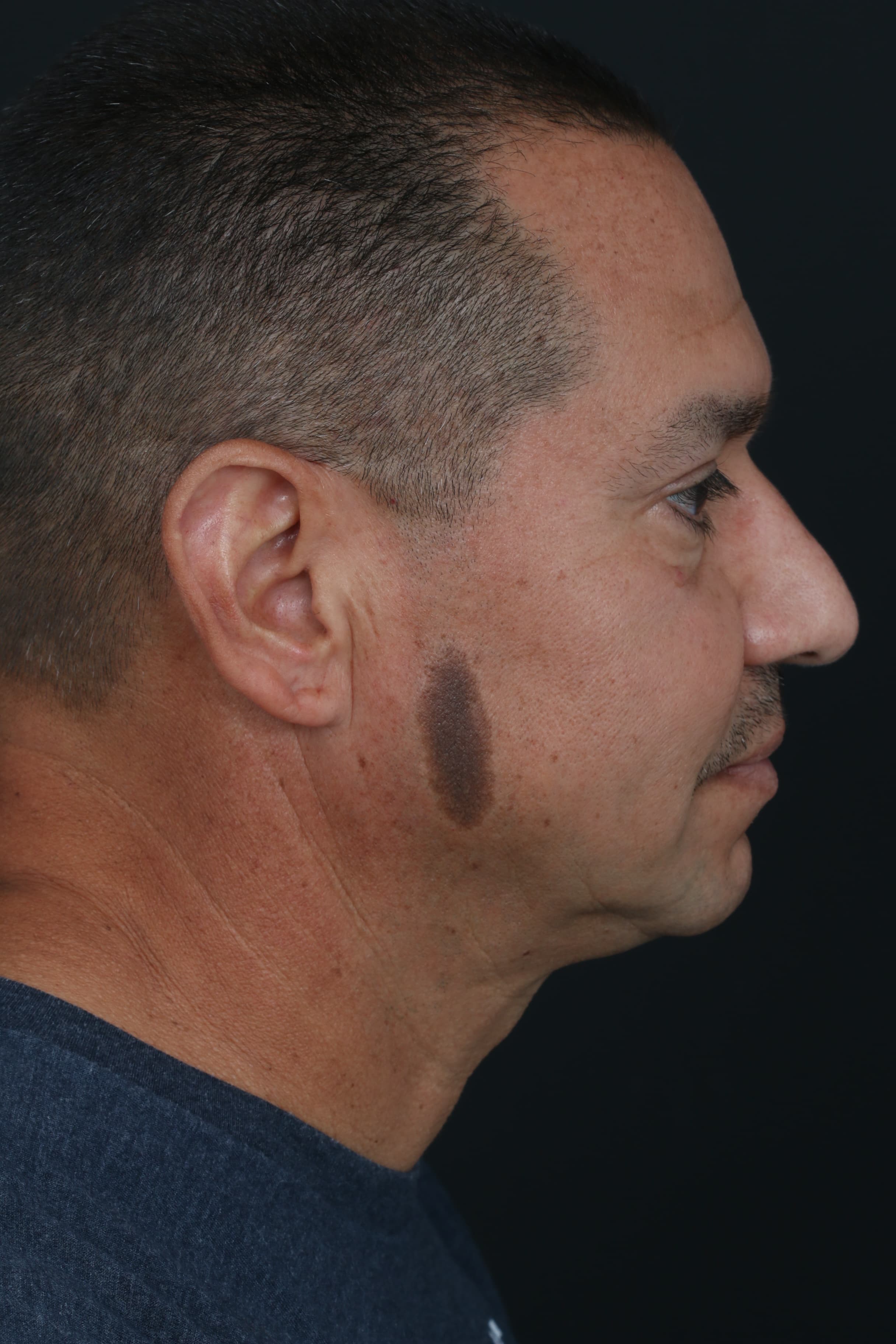
Individual matching-angle views show how the lesion sits within the cheek and surrounding facial anatomy.
03 | Advanced Facial Closure
Reconstructive Strategy
To remove the large cheek mole in a single stage, Dr. Ardesh mobilized deeper tissue at the level of the superficial musculoaponeurotic system (SMAS), using surgical principles similar to those used in deep-plane facelift surgery.
Supporting and mobilizing the deeper tissues allowed the cheek to be reconstructed with less tension on the skin and on the final surgical scar. This deeper work requires detailed knowledge of facial anatomy because facial nerve branches responsible for movement must be carefully protected.
The Molectomy™ Procedure
Dr. Ardesh then performed Molectomy™ to completely excise the mole, including its deeper components and unwanted hair follicles. The resulting defect was meticulously reconstructed using advanced facial plastic and reconstructive surgery techniques.
04 | Pathology & Healing Support
Pathology Confirmation
The removed tissue was sent for microscopic examination by a board-certified pathologist. Final pathology confirmed a melanocytic nevus.
Supporting Scar Maturation
During healing and scar maturation, the patient used Beauty Mark MD skincare as part of his aftercare plan, including Silicone Scar Gel and Retinol Renewal Complex, together with microneedling.
01
Used during scar maturation as part of the postoperative care routine.
02
Included later in the healing plan to support skin quality.
03
Used as a supportive treatment during scar maturation.
05 | Approximately 9 Months After
Approximately nine months after Molectomy™, the cheek has maintained a smooth, natural-looking contour. The mature mole-removal scar blends well with the surrounding skin, an especially important consideration for a patient who is normally clean-shaven.
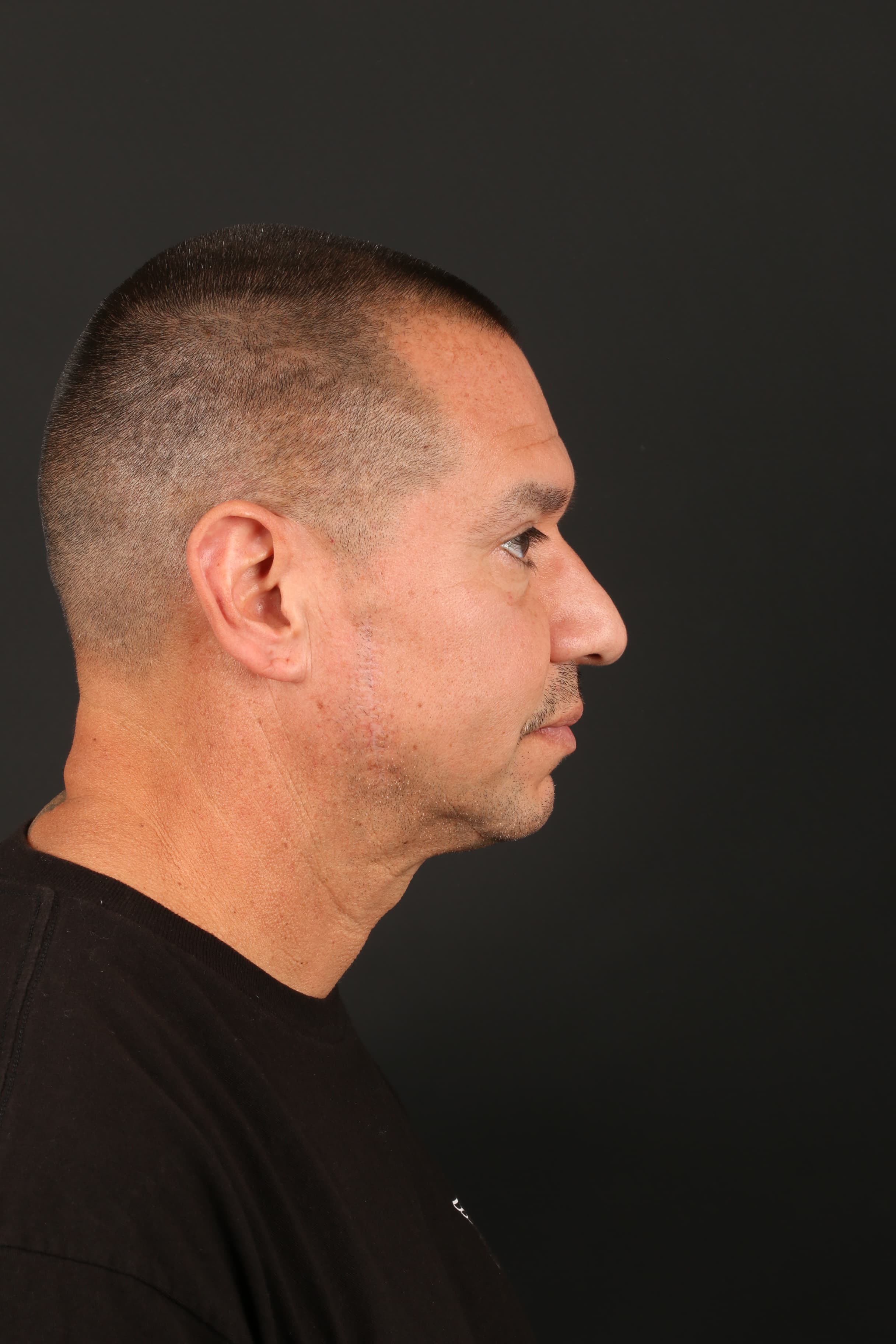
Follow-up views show the healed cheek, preserved contour and mature scar at approximately nine months.
06 | Before & After
Each comparison is shown separately with clear labels so the original lesion, cheek contour and approximately nine-month result can be reviewed from similar angles.
07 | Clinical Perspective
Video Module
This postoperative video supports the clinical story behind the case: why a lesion of this size required advanced planning, how deeper tissue support helped reduce skin tension, and how the cheek contour and scar matured over time.
9-month clinical perspective on planning, deeper tissue support, scar maturation and preservation of natural cheek contour.
For this case, the challenge was not simply removing a large mole. The treatment plan had to account for the size of the defect, cheek movement, skin tension, scar placement and protection of deeper facial anatomy while completing the removal in a single procedure.
Planning
Why single-stage removal required a reconstructive plan
Technique
How deeper tissue mobilization helped reduce skin tension
Anatomy
Why facial nerve protection matters during deeper cheek work
Outcome
How the cheek contour and scar matured by approximately 9 months
The Journey
Before
Large, flat pigmented cheek mole measuring approximately 2 inches (5 cm)
Goal
Complete removal in a single procedure while keeping the final scar as inconspicuous as possible
Planning
Facial movement, natural skin tension lines, cheek contour and closure direction
Treatment
Molectomy™ with deeper SMAS-level tissue mobilization and advanced facial reconstruction
Healing
Scar maturation supported with postoperative skincare and microneedling
Outcome
Approximately nine months later: smooth cheek contour and a mature scar blending with surrounding skin
A lesion of this size on the cheek creates a larger defect after complete removal. Planning therefore had to account for cheek movement, skin tension, scar placement, deeper tissue support and protection of facial nerve branches.
Mobilizing deeper SMAS-level tissue allowed the reconstruction to place less tension on the skin while preserving natural cheek contour through healing.
Every mole and every treatment area is different. A consultation with Dr. Ardesh can help determine an appropriate treatment approach based on the lesion, its location and the goals of treatment.