Rhinoplasty Treatment in Los Angeles
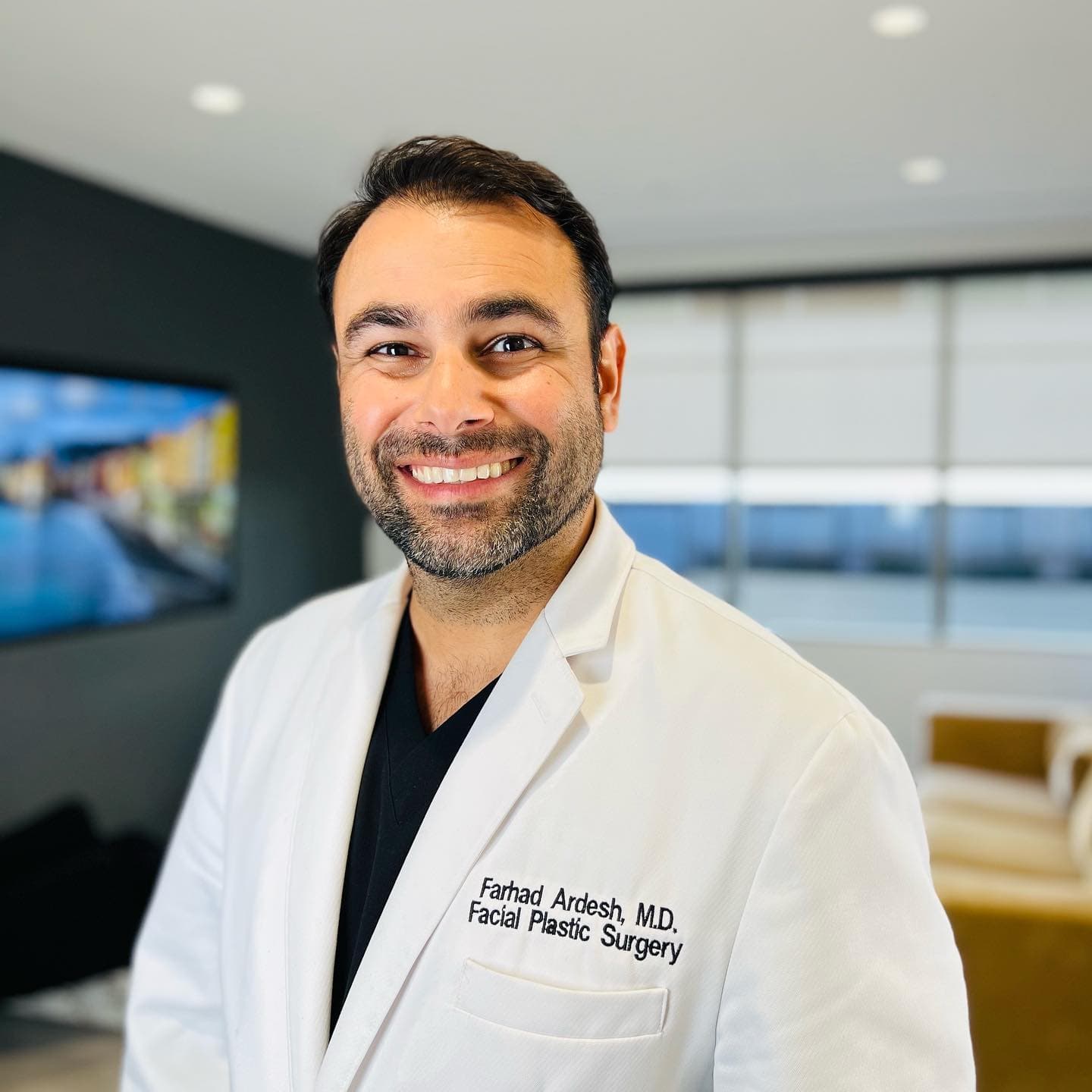
Meet Dr. Ardesh: Your Trusted Doctor for Rhinoplasty In Los Angeles
Dr. Ardesh is a double board-certified facial plastic surgeon specializing in rhinoplasty and nasal surgery. With years of experience and a deep understanding of facial anatomy, Dr. Ardesh offers a meticulous and personalized approach to rhinoplasty, ensuring optimal results for each patient. His expertise in reshaping nasal bones, cartilage, and tissues means that whether you're seeking aesthetic changes or improved breathing, you're in expert hands.
Can Rhinoplasty Improve Breathing?
Yes, rhinoplasty may improve breathing when nasal obstruction is caused by structural problems such as:
- A deviated septum
- Narrow nasal passages
- Nasal valve weakness
- Previous trauma
- Structural changes after earlier surgery
When appearance and breathing are both concerns, cosmetic reshaping and functional correction may be planned together.
What Can Rhinoplasty in Los Angeles Correct?
Rhinoplasty can change the shape, size, position, or internal structure of the nose.
It may help address:
- A bump on the nasal bridge
- A wide or poorly defined tip
- A drooping nasal tip
- A nose that appears too large
- Wide nostrils
- A crooked or asymmetrical nose
- Changes caused by injury
- Difficulty breathing through the nose
- Concerns after previous nose surgery
The surgical approach depends on whether the concern involves bone, cartilage, the septum, or several structures together.
Rhinoplasty in Los Angeles for a Dorsal Hump or Wide Tip
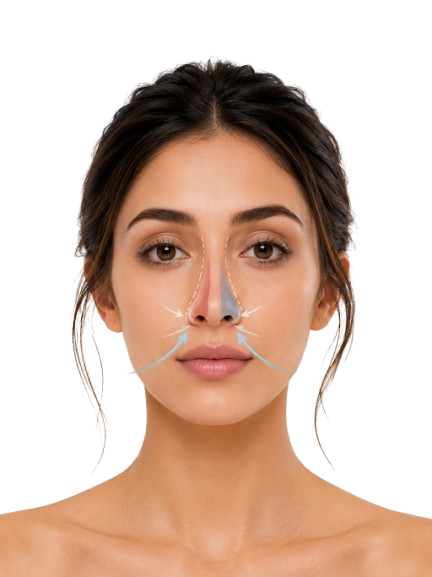
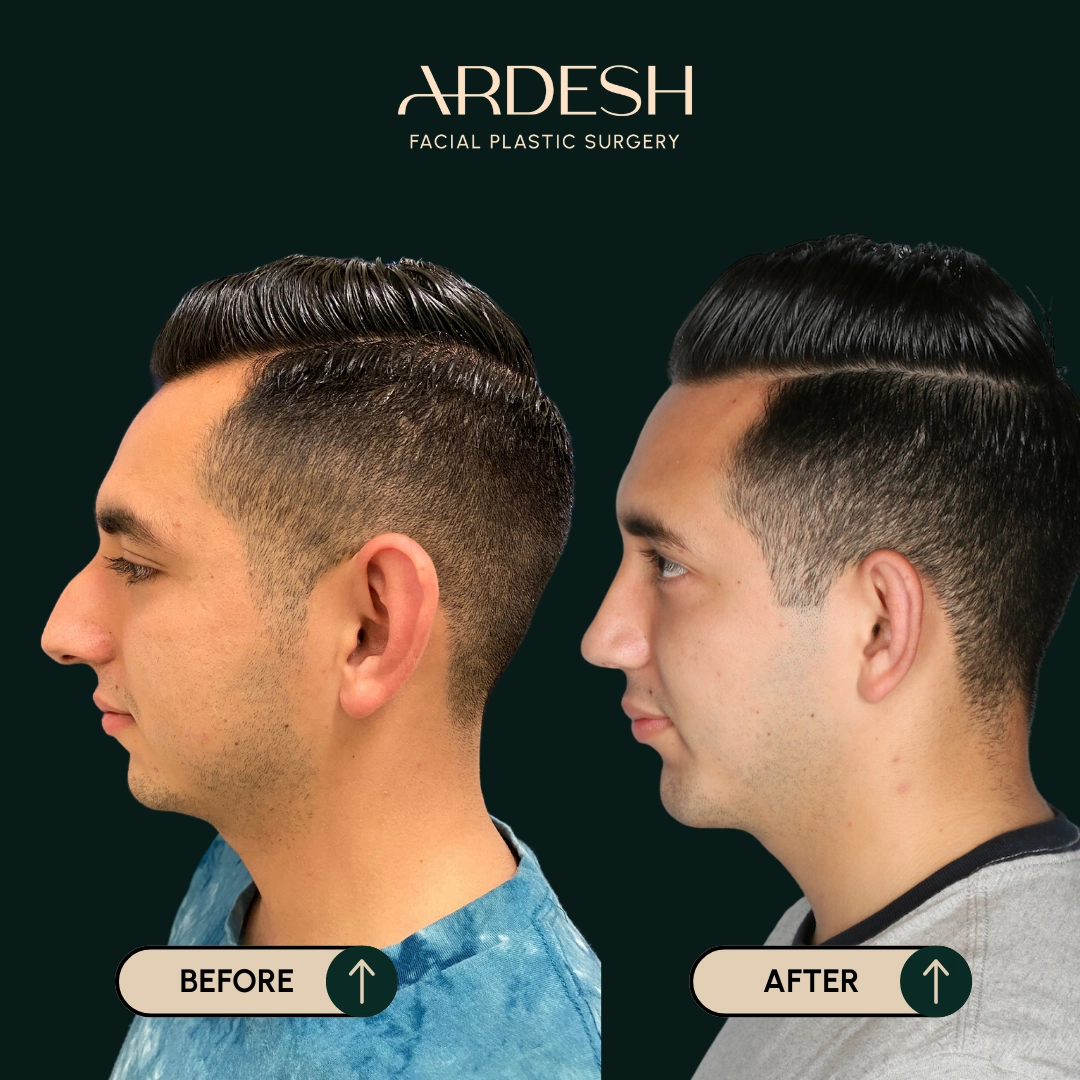
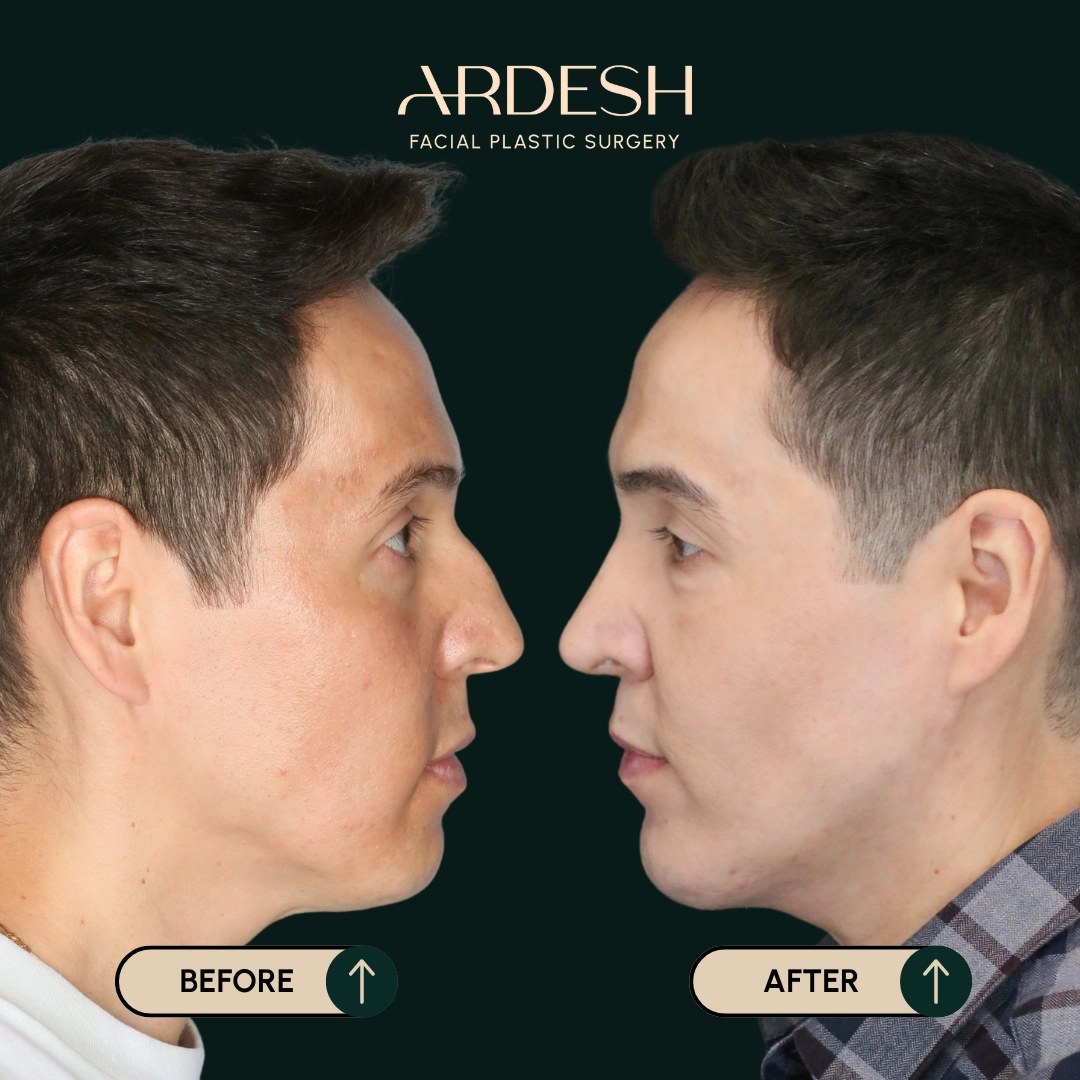
A dorsal hump can make the nose appear prominent from the side, while a wide or bulbous tip may affect the front view.
Rhinoplasty may reduce excess bone and cartilage along the bridge, refine the tip, improve definition, adjust projection, or lift a downward-pointing tip. Skin thickness and cartilage strength influence how much refinement can be achieved.
Rhinoplasty Results in Los Angeles
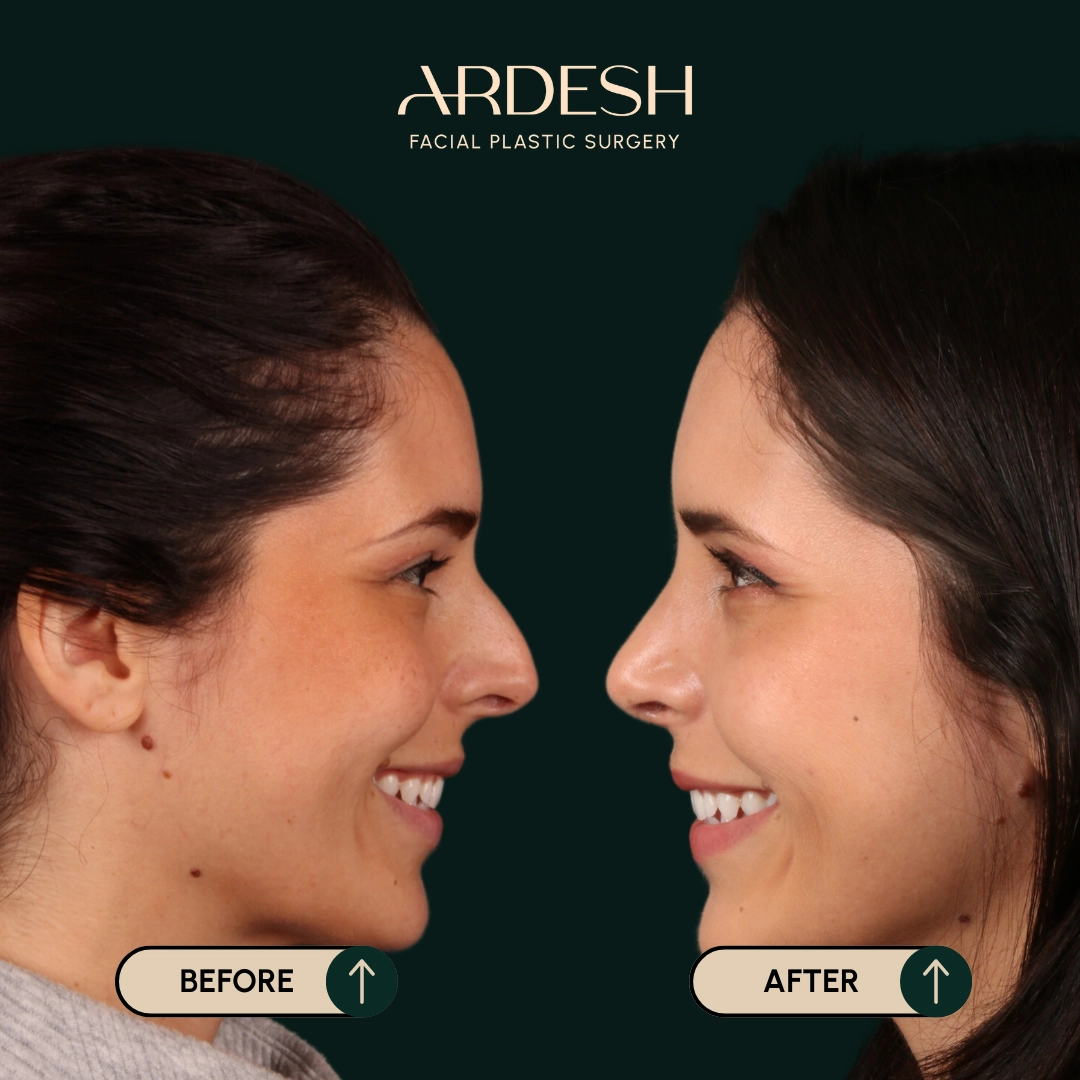
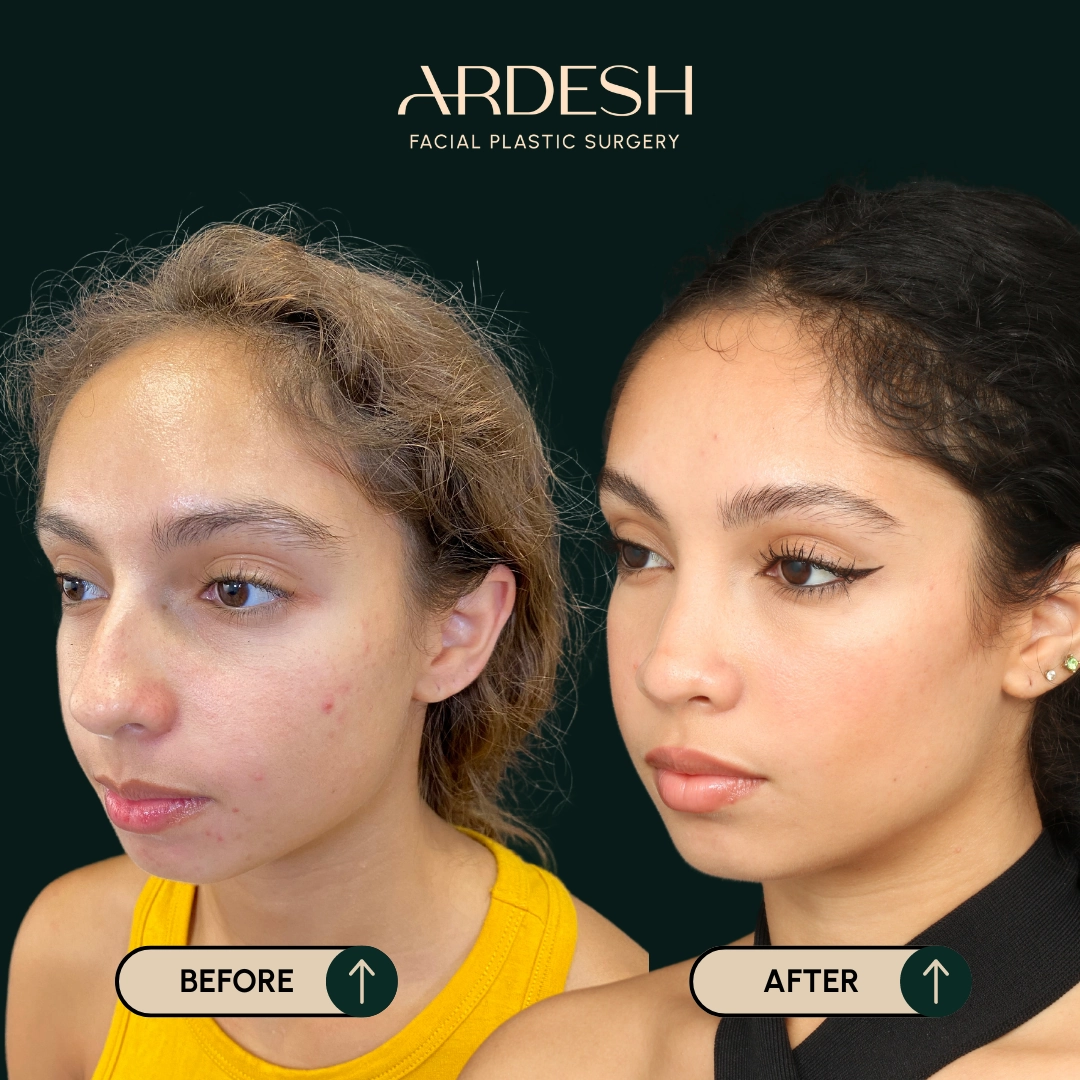
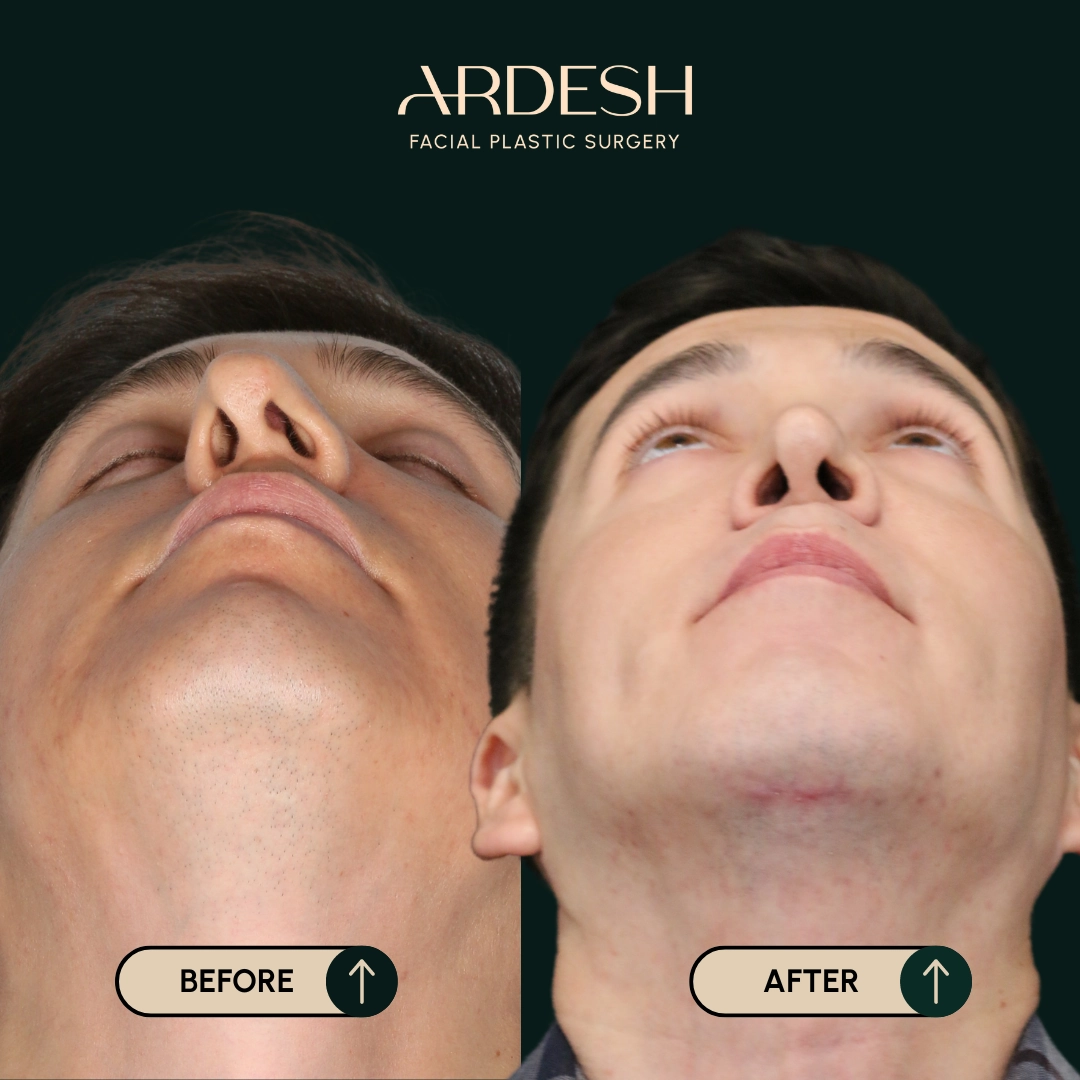
Explore Dr. Ardesh's rhinoplasty before-and-after gallery to see results for concerns such as a prominent bridge, wide tip, crooked nose, and previous surgery.
Revision Rhinoplasty in Los Angeles
Revision rhinoplasty is for patients who have already had nose surgery but remain concerned about the shape, symmetry, support, or function of the nose.
It may address:
Revision rhinoplasty in Los Angeles usually requires more detailed planning because scar tissue and altered cartilage may affect what can safely be corrected.
How Long Does Rhinoplasty Recovery Take?
Most patients experience swelling, congestion, and possible bruising during the first week. Many return to non-strenuous work within one to two weeks.
The bridge often settles sooner, while tip swelling may take longer to improve. Smaller changes continue developing over several months as the nose heals.
Open rhinoplasty involves a small incision across the columella, allowing direct visualization of the cartilage framework beneath. Dr. Ardesh uses this approach for significant structural reshaping, complex tip work, cartilage grafting, and revision cases. The columellar scar, when properly closed, typically becomes imperceptible within 12 months.
Closed rhinoplasty places all incisions inside the nostrils. No external scarring results. This technique is appropriate for patients requiring moderate changes where full structural access is not necessary.
Real Patients.
Real Transformations.
Why Choose Dr. Ardesh for Rhinoplasty in Los Angeles?
Dr. Farhad Ardesh is a double board-certified facial plastic and reconstructive surgeon who focuses on procedures involving the face and nose.
Patients seeking rhinoplasty in Los Angeles consult him for:
- First-time cosmetic rhinoplasty
- Functional nasal correction
- Septorhinoplasty
- Revision rhinoplasty
- Crooked or injured nose correction
- Tip and bridge refinement
His Beverly Hills practice provides consultation, treatment planning, and follow-up care through one location.
What Happens During a Rhinoplasty Consultation in Los Angeles?
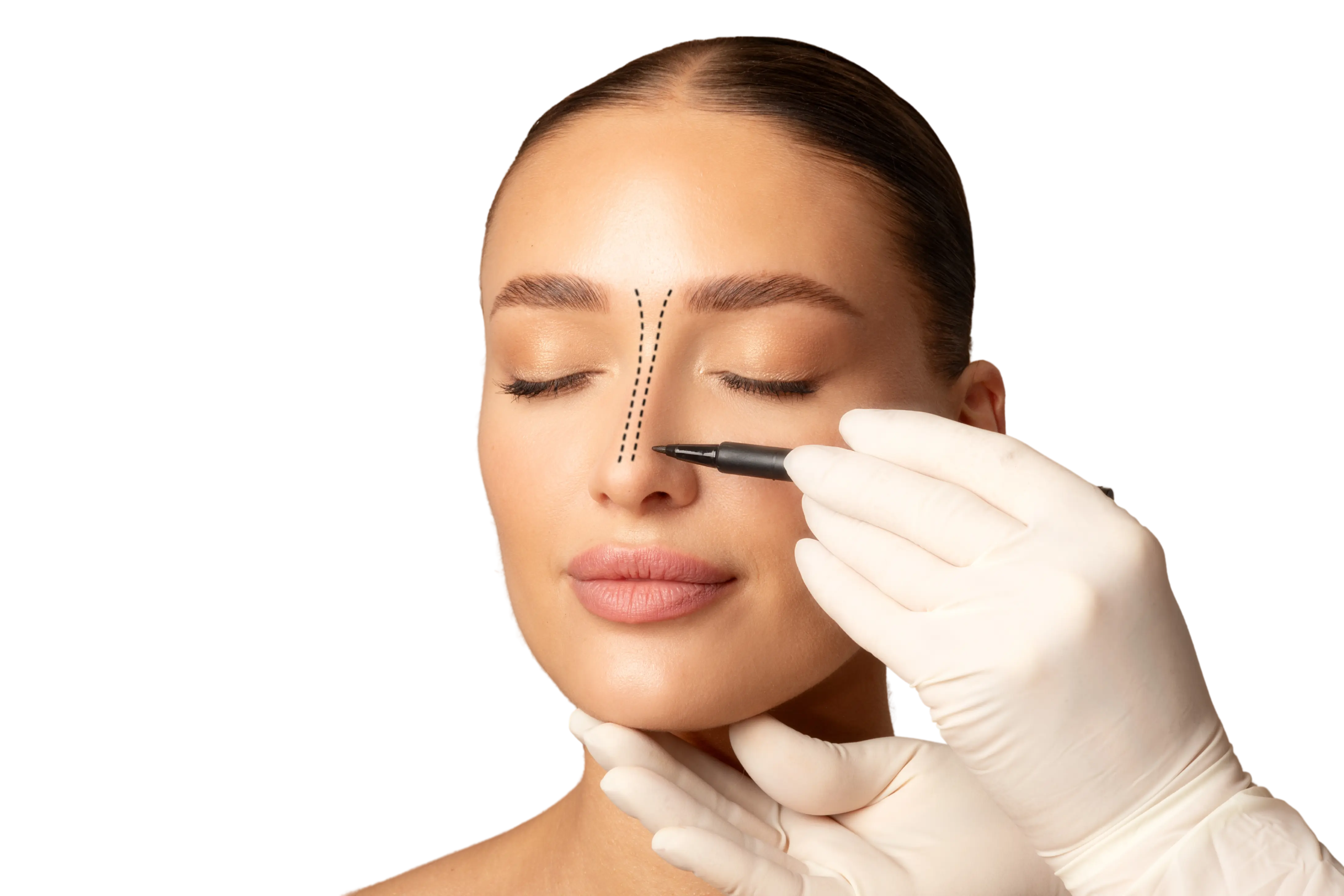
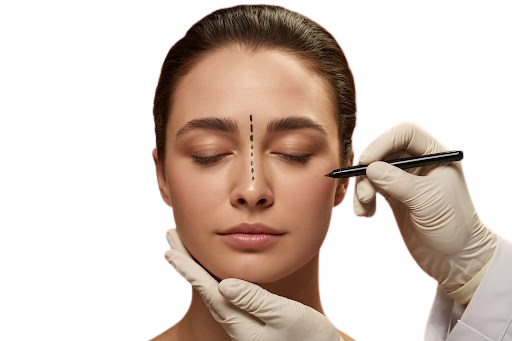
During a rhinoplasty consultation in Los Angeles, Dr. Ardesh examines the nose externally and internally.
The assessment may include:
- Bridge height and width
- Tip shape and support
- Nostril position
- Nasal symmetry
- Skin thickness
- Septal alignment
- Airway function
- Previous injury or surgery
You can explain what bothers you, how much change you want, and whether breathing is also affected. Dr. Ardesh then discusses the suitable surgical approach, expected recovery, and treatment limitations.
How Much Does Rhinoplasty Cost in Los Angeles?
The cost of rhinoplasty in Los Angeles depends on:
- The complexity of the correction
- Primary or revision surgery
- Functional breathing treatment
- Cartilage grafting
- Anesthesia and surgical facility fees
A treatment-specific quotation is provided after Dr. Ardesh examines the nose and understands the changes required.
Schedule Rhinoplasty Treatment in Los Angeles
Whether you want to reduce a nasal hump, refine a wide tip, straighten a crooked nose, improve breathing, or correct previous surgery, a consultation can help determine the right treatment approach.
Dr. Farhad Ardesh provides rhinoplasty treatment in Los Angeles from his stage of recovery practice.