Skin Tags on the Neck
Precise Removal for Visible Skin Tags on The Neck
That soft bump on your neck isn't dangerous. But if it's catching on your collar every morning, showing up in every photo, or simply something you'd rather not have, you don't have to keep it.
Dr. Ardesh At Beauty Mark MD™, a double board-certified facial plastic and reconstructive surgeon, removes neck skin tags with the surgical precision the neck demands. Clean removal. Minimal trace. Skin that heals like the tag was never there.
Serving patients across Los Angeles, Beverly Hills, Santa Monica, West Hollywood, and Newport Beach.

When Should You Consider Treatment for Skin Tags on the Neck?
There is no medical deadline to remove a neck skin tag. But there are clear, valid reasons patients choose to act, and none of them require a clinical emergency.
Consider Removal If Your Neck Skin Tag Is:
- Catching repeatedly on shirt collars, necklaces, or jewellery
- Located on the front or side of the neck. a visible area that affects daily confidence
- Irritated, inflamed, or bleeding from repeated friction
- Present alongside other growths, you are not certain are skin tags
- Simply something you no longer want, cosmetic preference is a complete and valid reason
Seek An Evaluation Without Delay If The Growth:
- Is a change in size, shape, or color over a short period
- Has uneven or irregular pigmentation
- Bleeds without being touched or physically traumatized
- Feels firm, fixed, or significantly different from surrounding skin
These features are not consistent with a benign acrochordon. They require a professional assessment before any removal is considered — not after.
If you are unsure whether what you have is a skin tag, that uncertainty alone is reason to book a consultation. Dr. Ardesh evaluates every growth before a removal method is recommended.

What Are Skin Tags on the Neck?
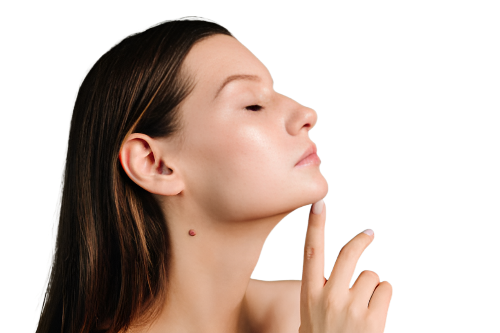
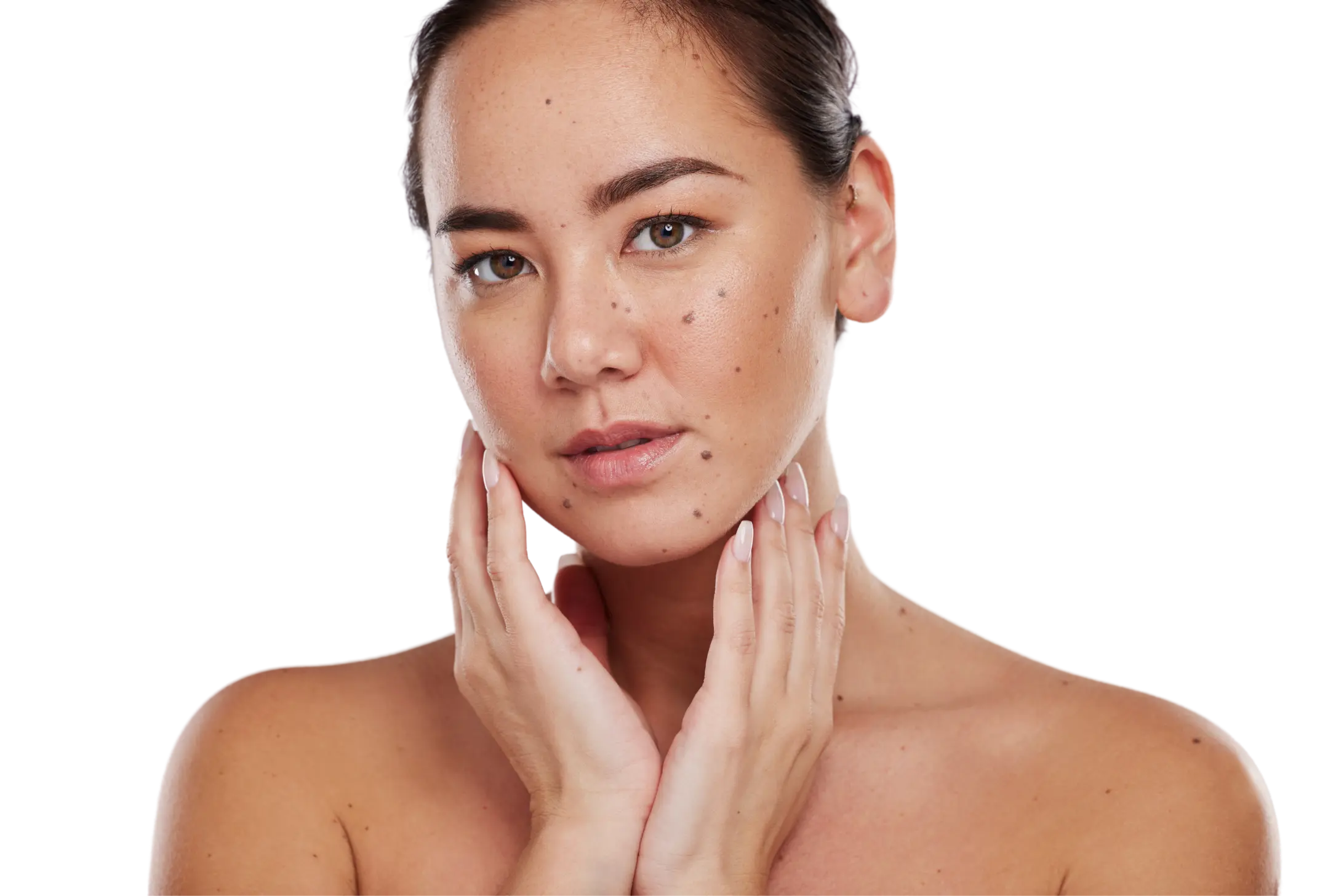
Skin tags on the neck (acrochordons) are small, benign growths attached to the skin by a narrow stalk. They are non-cancerous, non-contagious, and carry no malignant potential.
They typically appear along the sides, back, or front of the neck — areas prone to friction from collars, necklaces, or skin-on-skin contact. Most range from 1 to 5 mm, are soft, flesh-toned or slightly darker, and move freely when pushed. Nearly half of all adults develop at least one in their lifetime.
Clinical note: Not every soft growth on the neck is a skin tag. Dermatofibromas, sebaceous cysts, and early melanocytic lesions can present similarly. Professional evaluation before any removal is not optional — it is the standard of care. Dr. Ardesh examines every growth before recommending a treatment method.
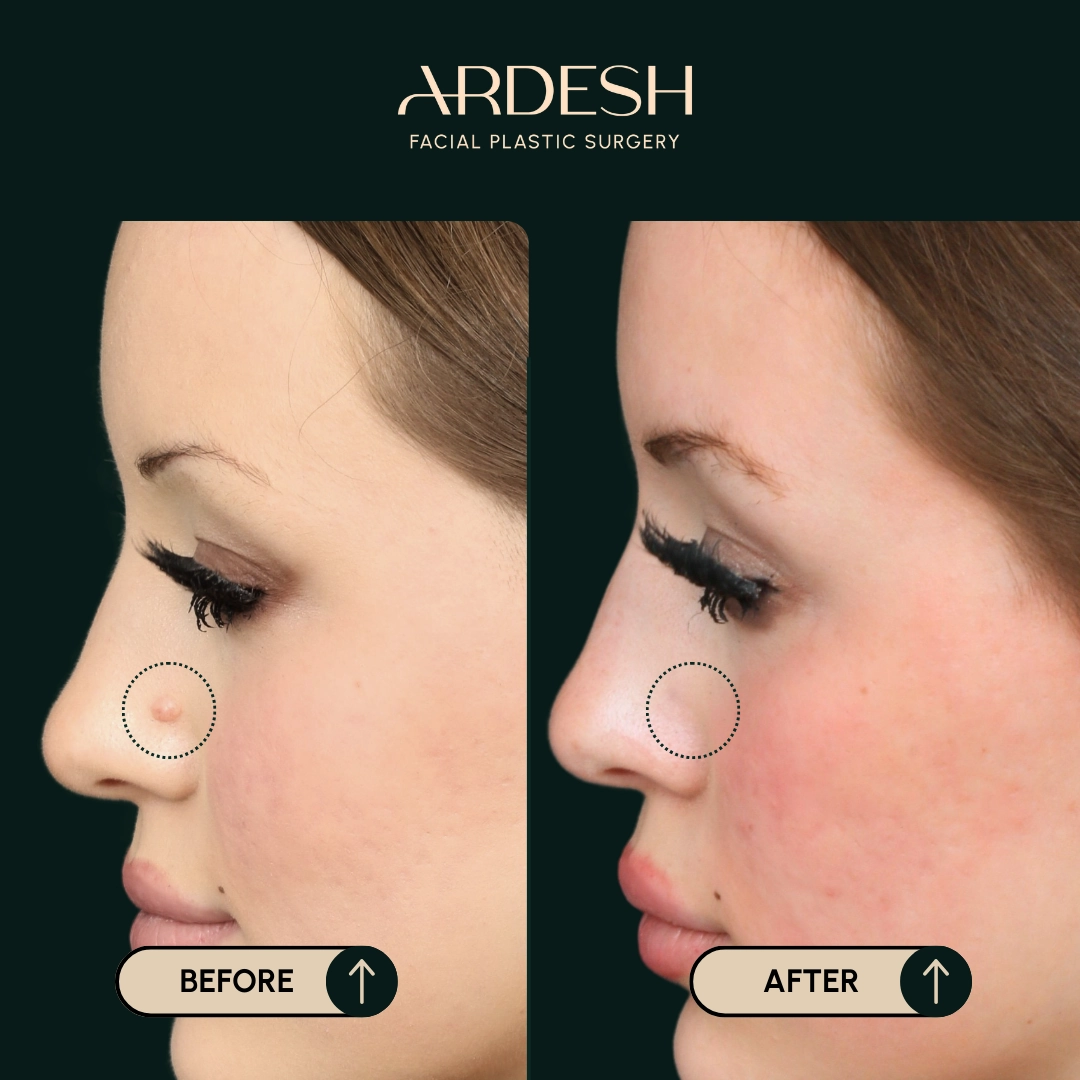
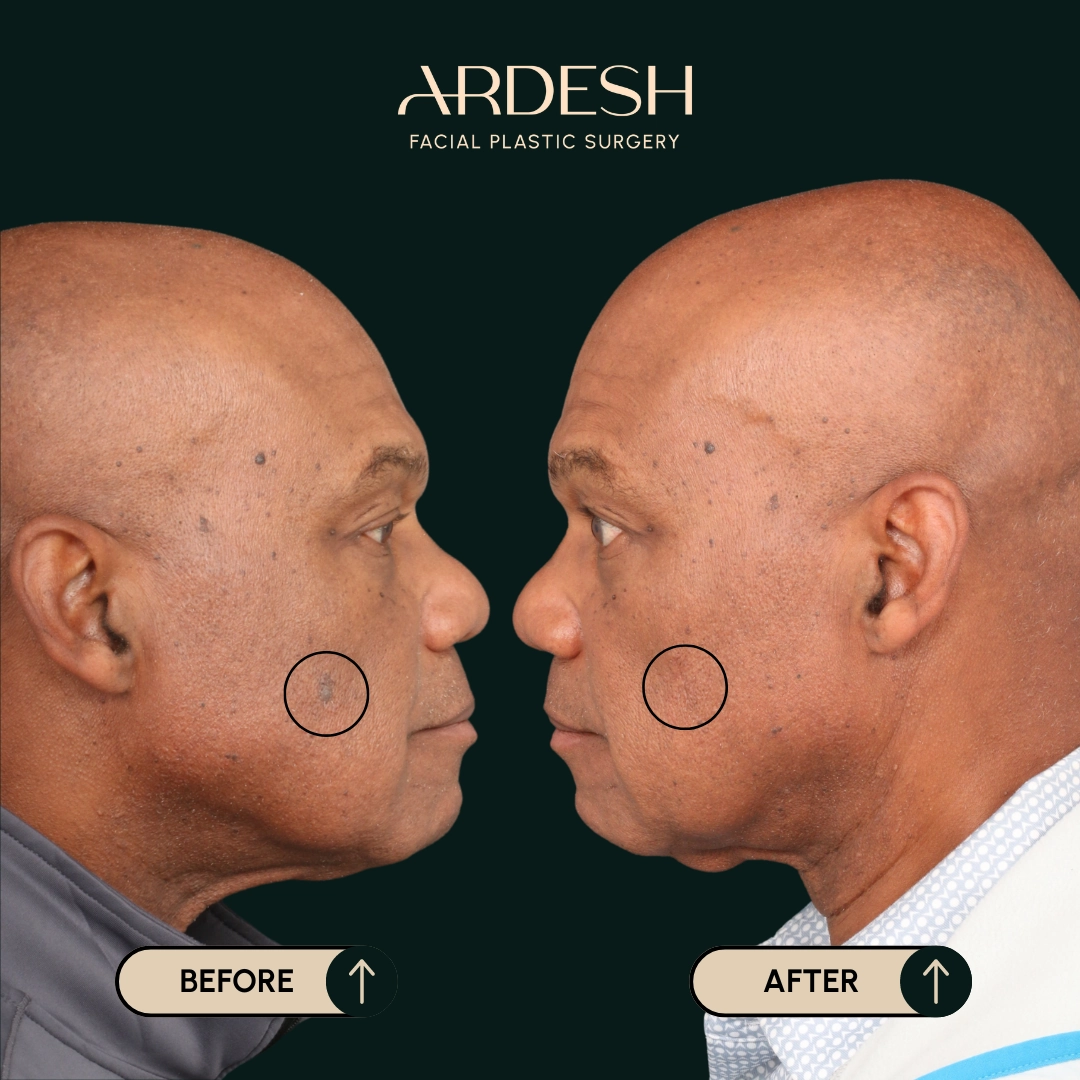
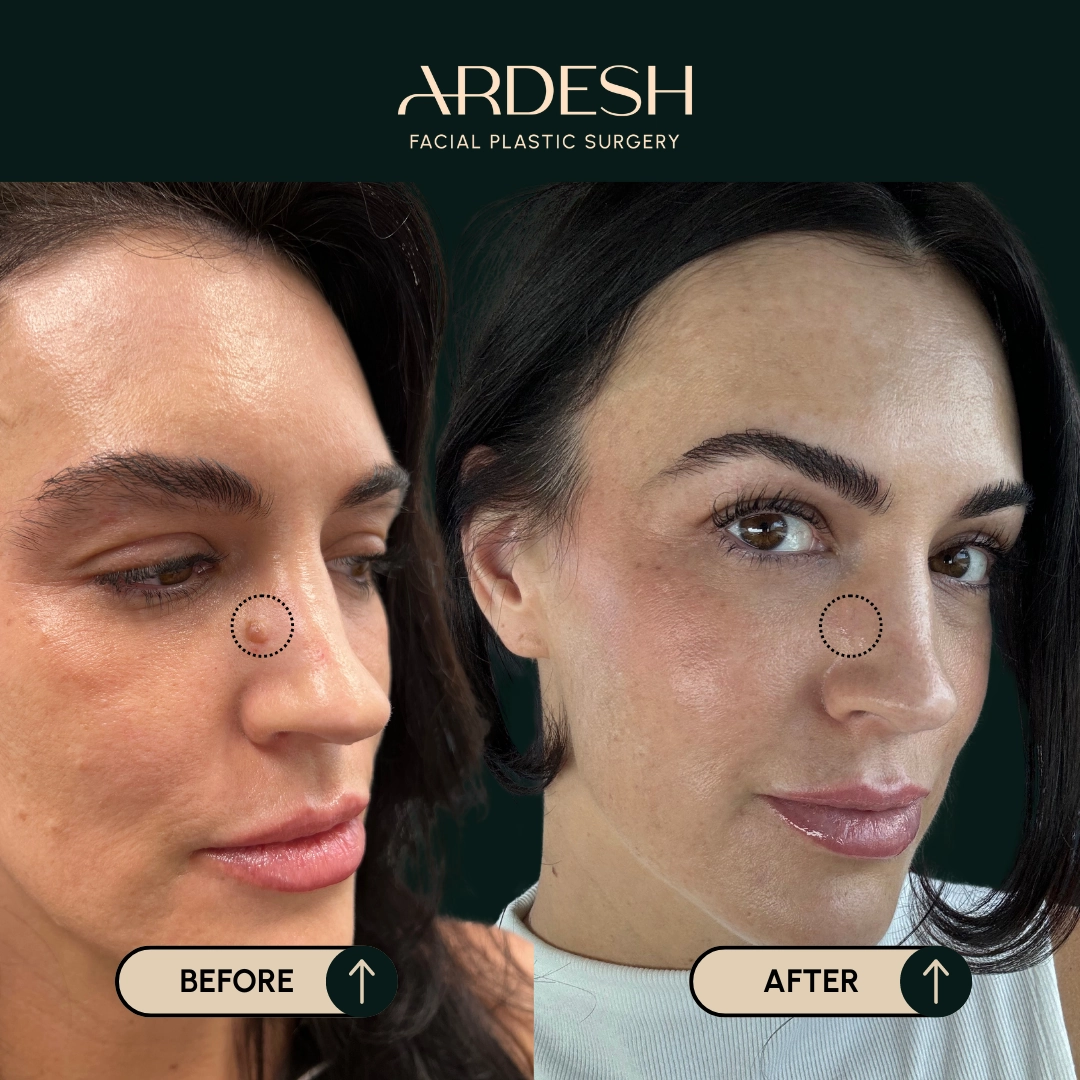
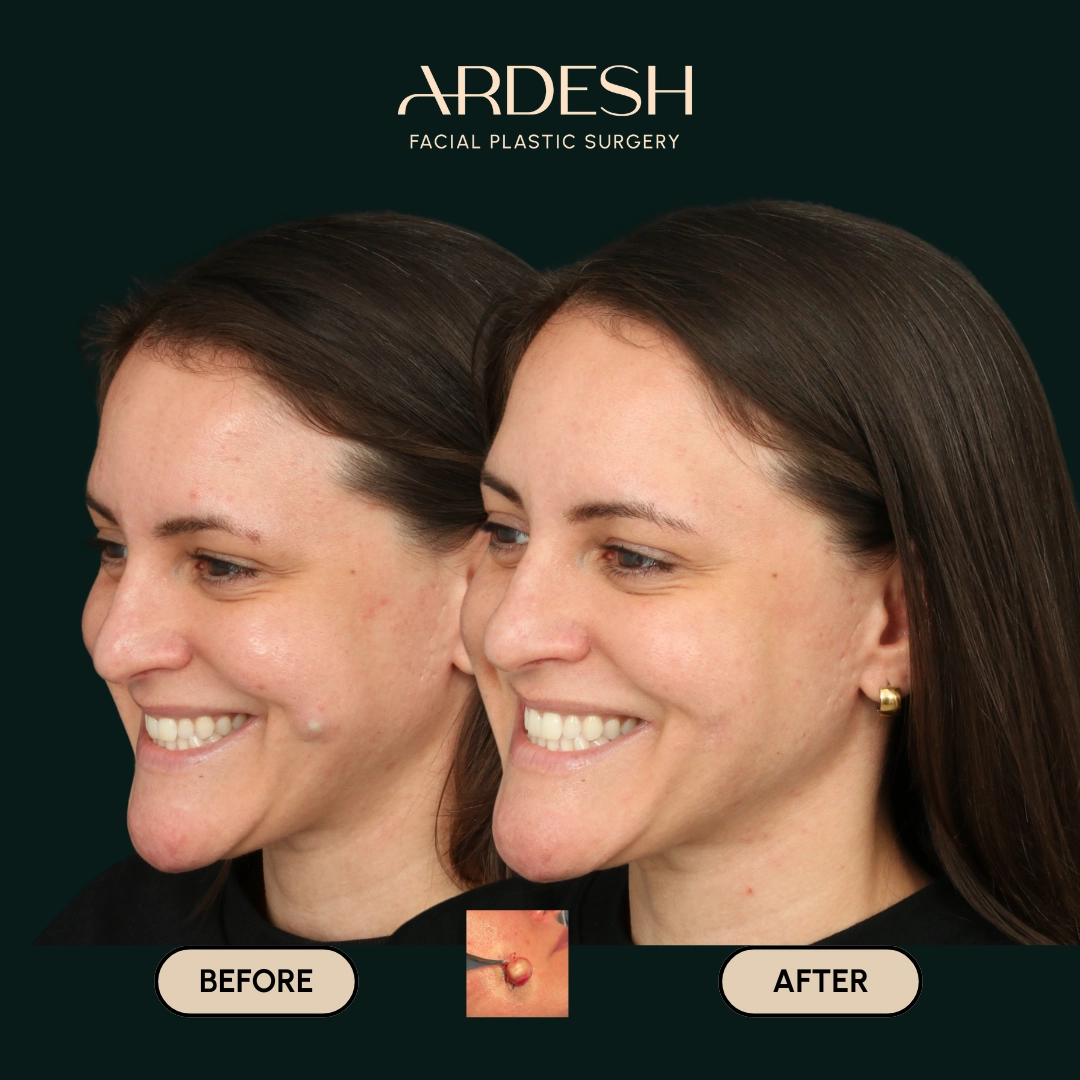
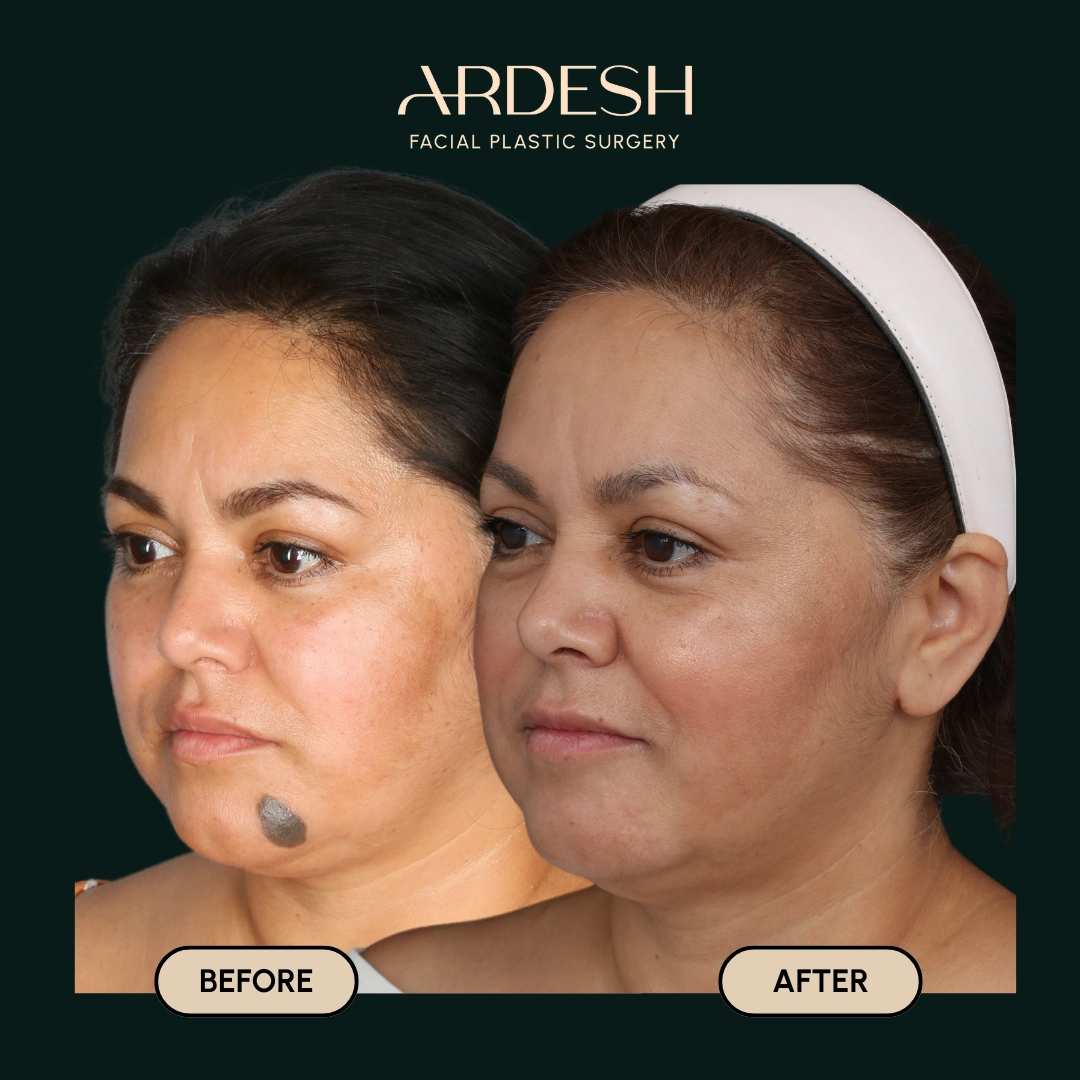
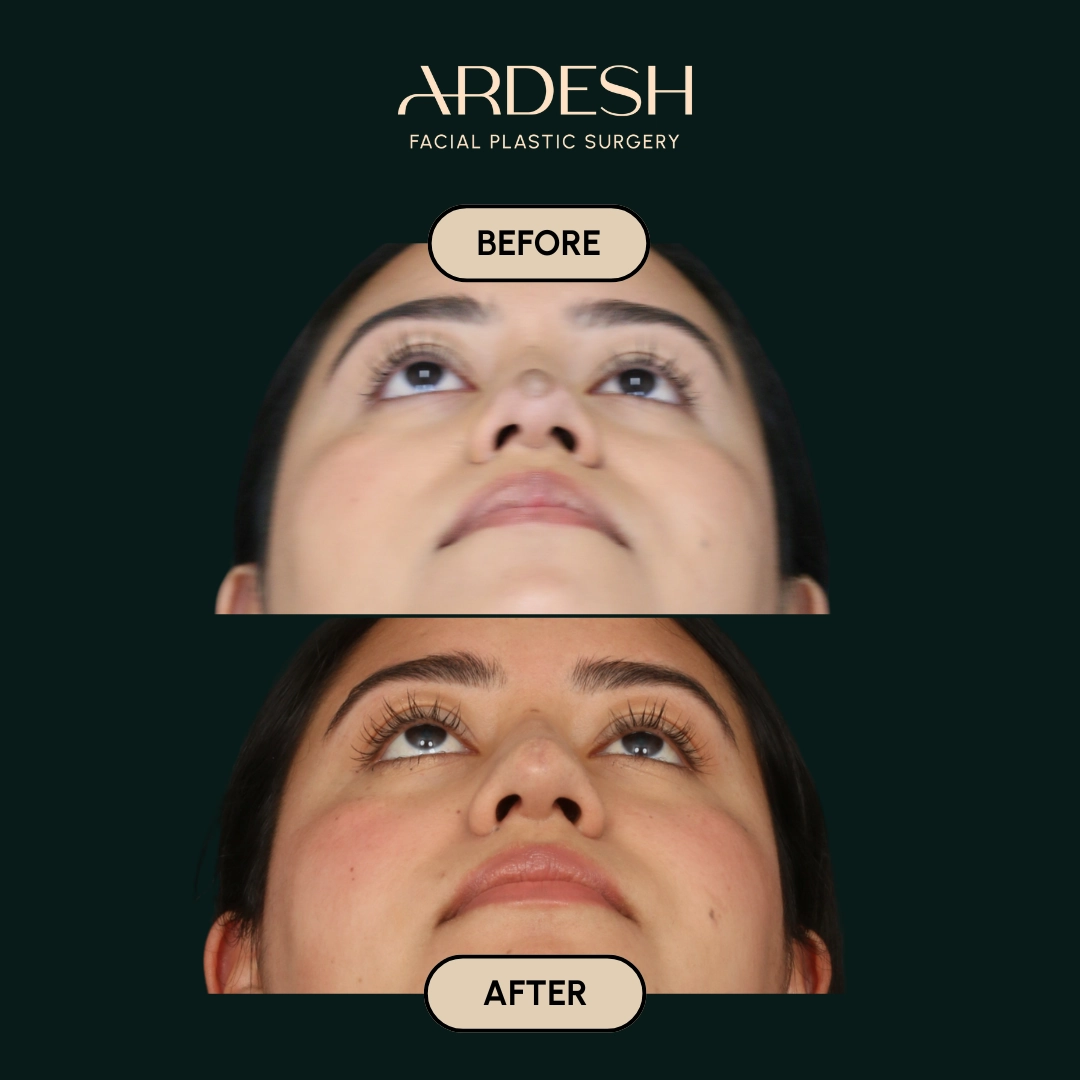
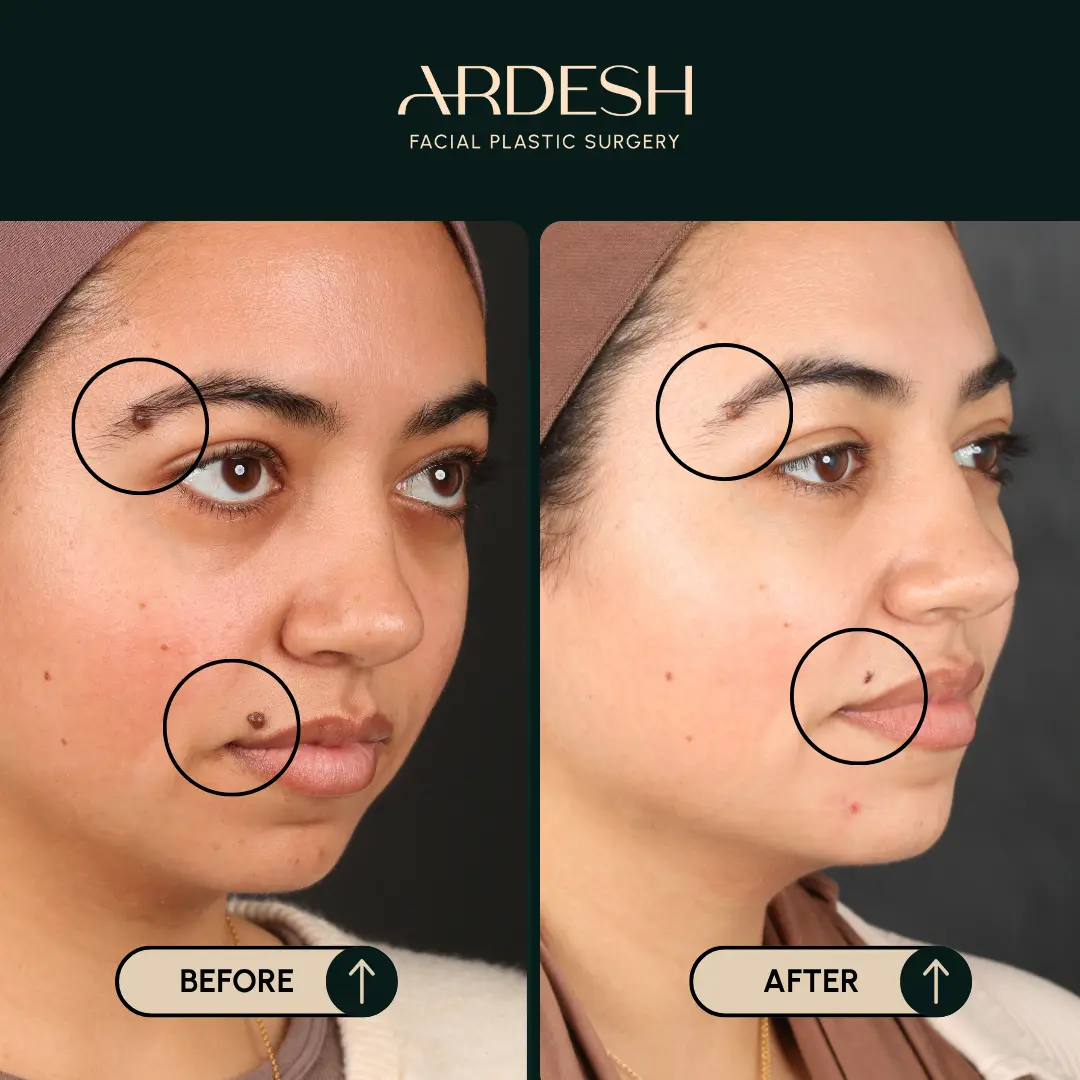
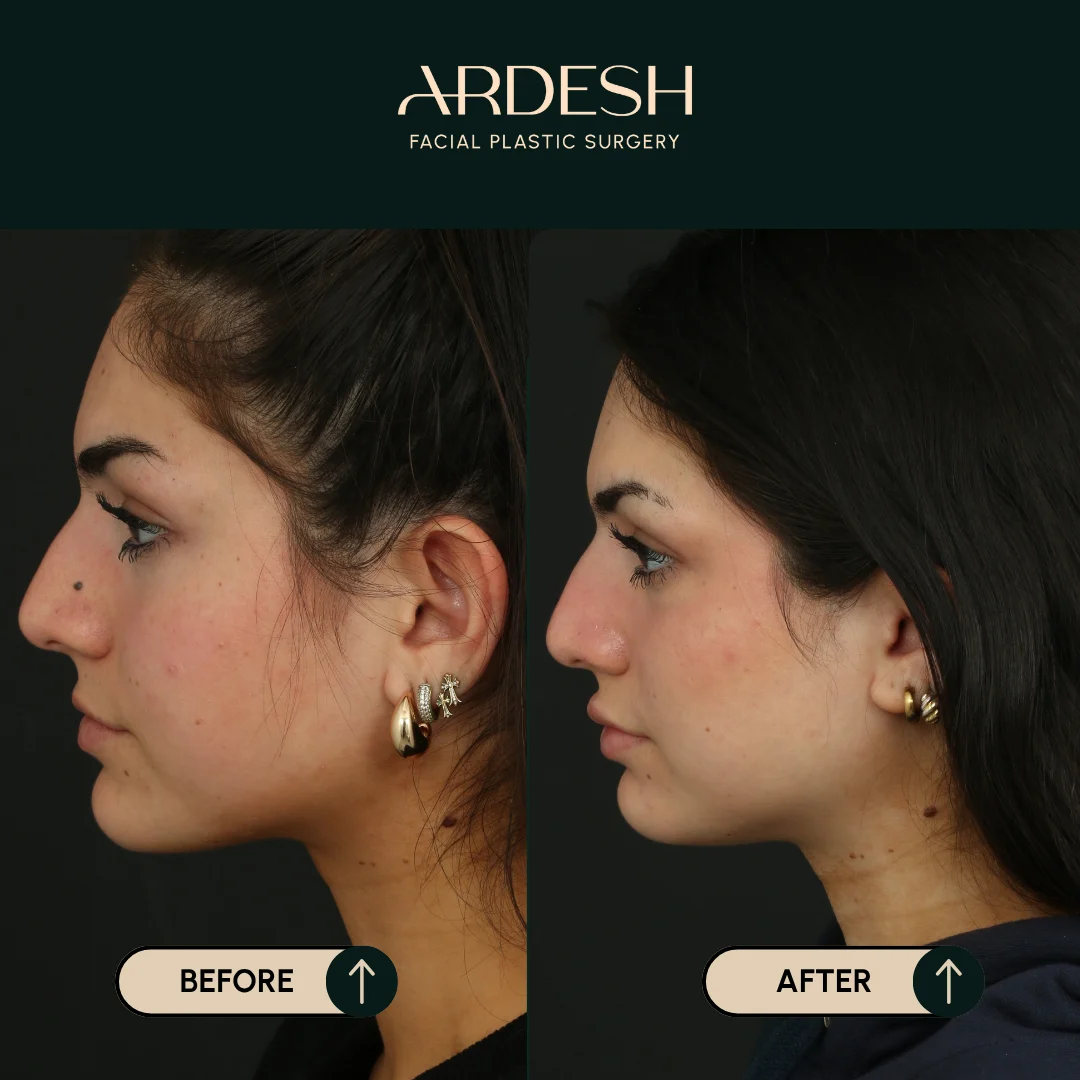
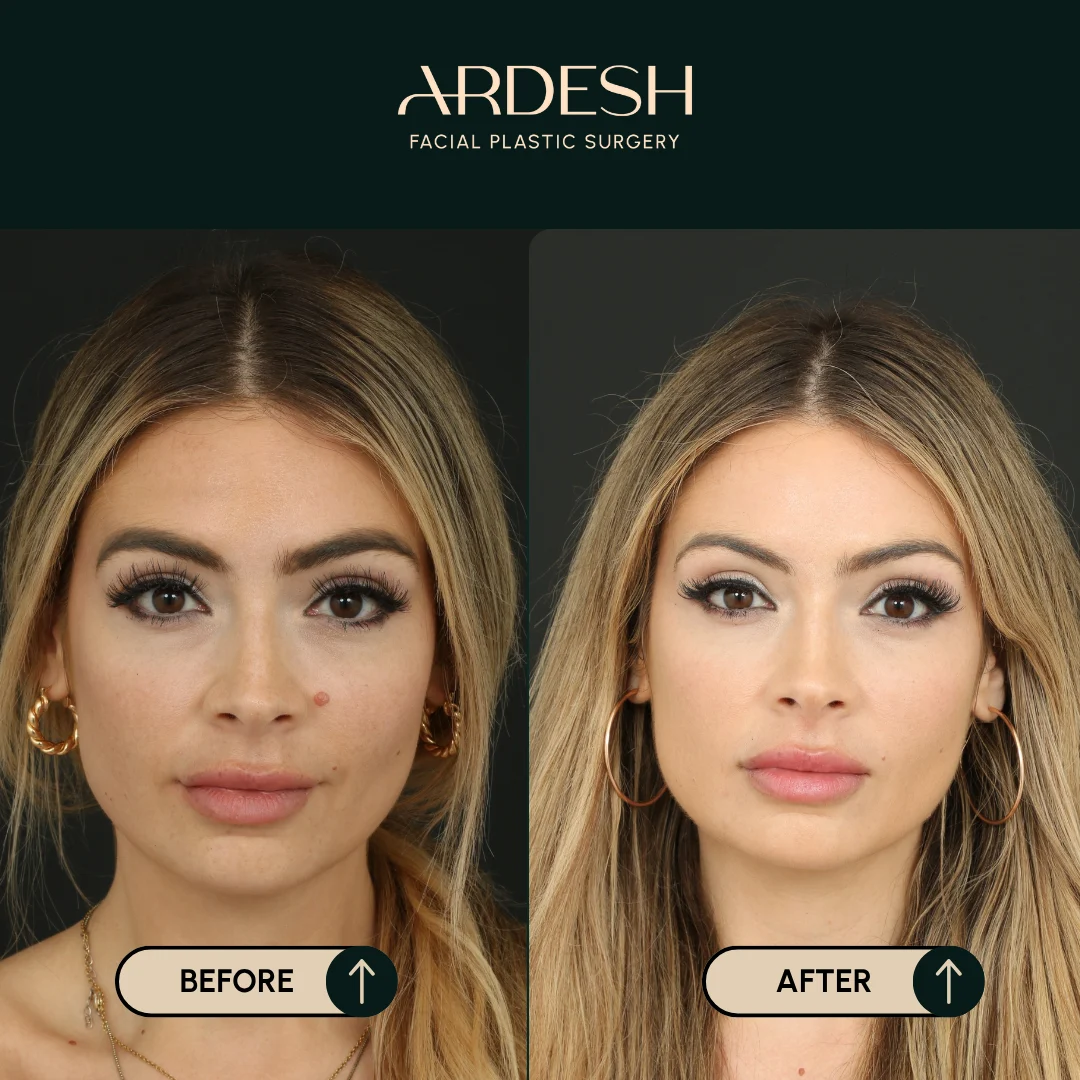
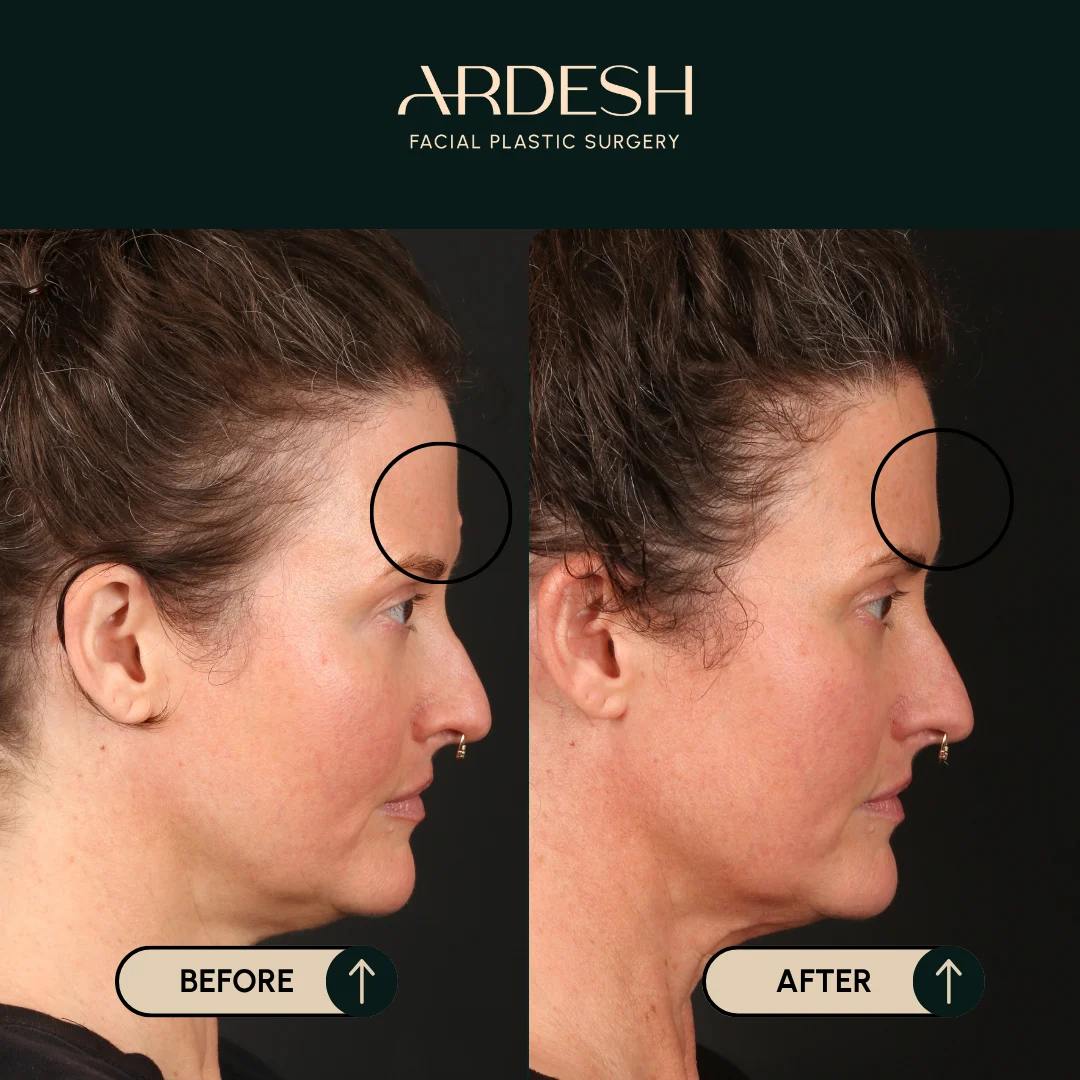
Real Patients.
Real Transformations.
Why Do Skin Tags Form on the Neck?
The neck is one of the most common sites for acrochordons, and for specific, well-understood reasons.
Chronic friction is the primary driver.
Shirt collars, necklaces, and skin folds create repetitive mechanical stress on the dermis. Over months and years, this friction stimulates pedunculated fibrous tissue growth at the skin surface.
Hormonal fluctuation accelerates development.
Multiple neck skin tags appearing during pregnancy or perimenopause are common; hormonal shifts alter epidermal cell turnover and growth signaling.
Insulin resistance and metabolic factors have a documented association with acrochordons.
A sudden increase in new tags is worth mentioning to your physician, not because tags alone indicate disease, but because the context matters.
Age is a straightforward factor.
Skin tags on and around the neck become noticeably more prevalent after 40, as skin loses elasticity and friction-related changes accumulate over time.
Neck Skin Tag Removal Treatments Offered at Our Beverly Hills Practice
Dr. Ardesh selects the removal technique based on the tag's size, location, and your skin's characteristics. The neck is thinner-skinned and more cosmetically sensitive than most areas; technique selection here is not interchangeable.
Surgical Excision
Electrocautery
Cryotherapy
In-Office Convenience
Why Choose a Plastic Surgeon
Los Angeles has no shortage of clinics offering skin tag removal. The outcome you get depends entirely on who performs it and how.
Necks are unforgiving. The skin is thin, visible, and poor technique leaves a mark. Besides "how do I remove it?", a board-certified plastic surgeon trained in facial reconstruction asks one question about neck skin tag removal: "What will healed skin look like?"
What sets Dr. Ardesh apart:
- Double board-certified: American Board of Facial Plastic and Reconstructive Surgery
- Fellowship-trained at the University of Washington, Seattle in Facial Plastic & Reconstructive Surgery
- 7,000+ procedures performed with a consistent focus on natural, scar-minimized results
- Diagnostic evaluation included: every growth is examined before removal is discussed
- Beauty Mark MD™: a practice built around cosmetic precision, not volume. Med spas remove the tag. Dr. Ardesh removes it and considers what your neck looks like six weeks later. That distinction is the difference between a procedure and a result.

What to Expect: Consultation Through Recovery
Consultation
Dr. Ardesh examines the growth, confirms the diagnosis, reviews your skin type and the tag's location, and recommends the most appropriate removal technique. No assumptions. No rushed decisions. Pricing is discussed transparently; no surprises.
The Procedure
Local anesthesia is applied first. Once numb, removal is performed. Most patients feel nothing beyond the initial injection. The appointment is typically complete within 15 minutes.
Recovery
Return to your normal routine the same day. Mild redness or a small scab is a normal inflammatory response, resolving within one to two weeks. Full cosmetic resolution, including any residual pigmentation, takes four to eight weeks. Daily SPF on the treated area directly improves the final result.
A removed tag will not return in the same location. New tags may develop over time if underlying triggers, such as friction, hormonal changes, and metabolic factors, remain present.
Benefits of Professional Skin Tag Removal on the Neck
Professional removal offers more than convenience. On the neck, where the skin is thin, highly visible, and cosmetically sensitive, both the technique used and the experience of the person performing it directly affect the final result.
- Immediate results: The skin tag is fully removed in a single visit, with no risk of partial treatment.
- Accurate diagnosis: Each growth is examined before removal to help rule out other skin conditions.
- Minimal scarring: Advanced techniques are used to reduce the chance of visible marks.
- Safer for sensitive skin: Professional treatment avoids the pigmentation and scarring risks often associated with DIY methods.
- Multiple tags treated in one visit: Several skin tags can often be removed during the same appointment.
- Long-term guidance: Aftercare and prevention advice can help reduce the likelihood of recurrence.
Preparing for Skin Tag Removal on the Neck
The neck requires extra care in preparation; the skin here is thinner and more reactive than most areas of the body.
- Stop blood-thinning medications and supplements, such as aspirin, ibuprofen, and fish oil, at least one week prior
- Remove all jewellery and avoid wearing high collars or necklaces on the day of your appointment
- Keep the neck area clean and free from moisturisers or skincare products beforehand
- Do not scratch, pull, or attempt to remove the tag yourself; friction increases the risk of inflammation on the neck skin
- Avoid direct sun exposure on the neck in the days before treatment
Dr. Ardesh reviews preparation instructions specific to your skin type and tag location at the consultation.
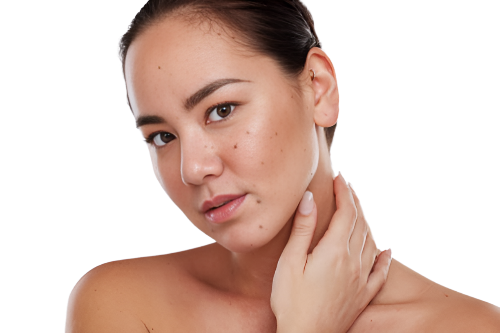
Skin Tags on the Neck: Healing Stages and Recovery
Neck skin heals predictably and quickly with proper aftercare.
- Days 1–3: Mild redness or a small scab at the site is expected and normal
- Week 1–2: Surface heals fully. Avoid tight collars, necklaces, or anything rubbing directly over the treated area during this period
- Weeks 4–8: Any residual redness or pigmentation resolves gradually
- Ongoing: Daily SPF on the healed site is essential UV exposure is the primary cause of prolonged discolouration on neck skin
Once a tag is removed it will not return in that location. New tags may develop over time if underlying triggers — friction, hormonal changes remain present. This is addressed openly at your consultation.
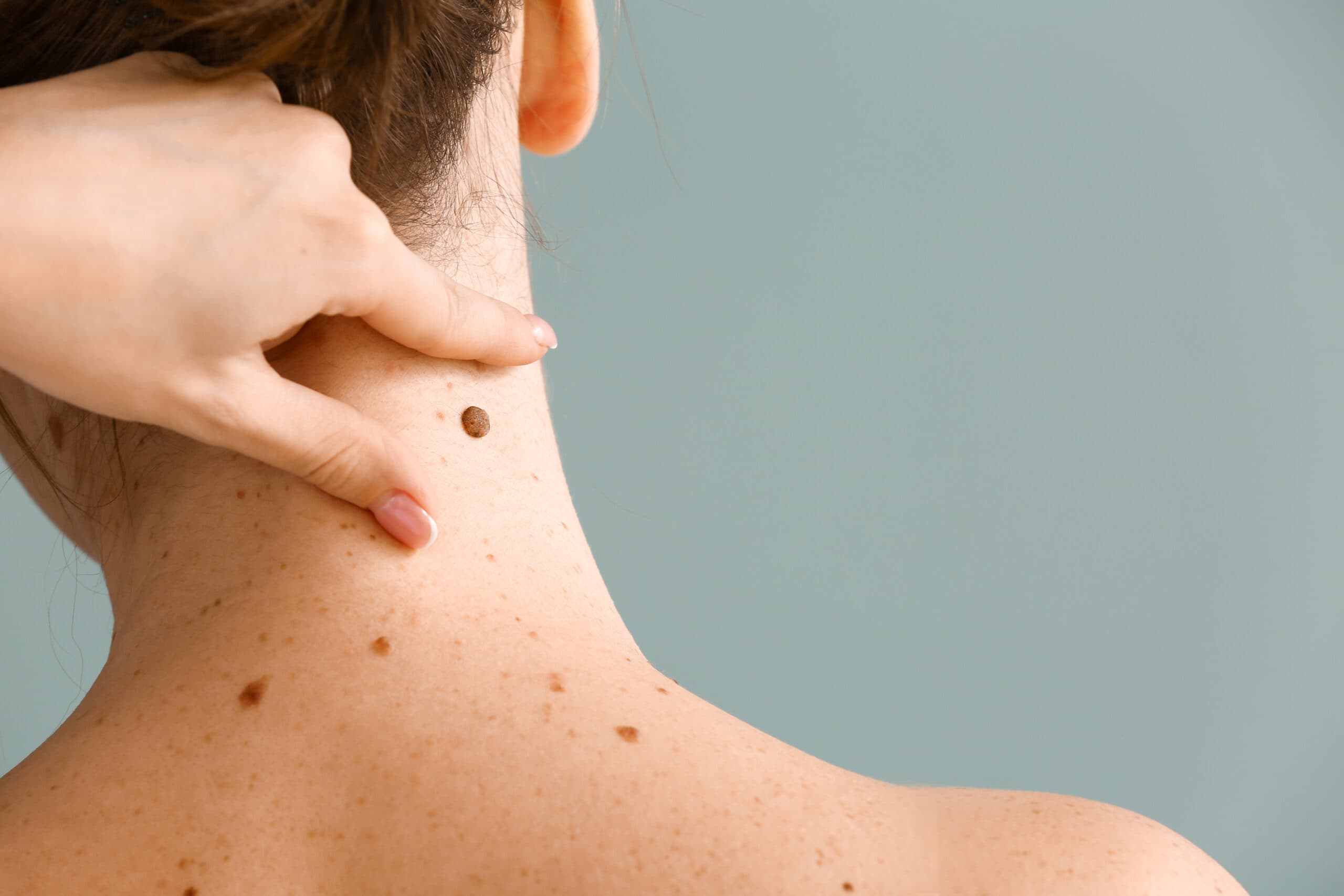
Can I Remove a Neck Skin Tag at Home?
On the neck specifically, at-home removal carries risks that are not worth taking.
- The neck is thinner-skinned and more sensitive than most areas — over-the-counter kits are not calibrated for this
- Incomplete freezing or ligation on neck skin frequently results in hyperpigmentation or an irregular scar in a highly visible location
- At-home methods skip the diagnostic step — not every neck growth is a skin tag
- Tags near the hairline, collar line, or jawline require precision that no kit can replicate
- Dr. Ardesh performs neck skin tag removal under local anesthesia in under 15 minutes — with the scar-minimising technique of a board-certified facial plastic surgeon.
Book a Consultation with Dr. Ardesh.
One short appointment. No downtime. Results that last.
Dr. Ardesh personally evaluates every patient before any procedure is scheduled. You will know exactly what to expect, what your result will look like, and what it will cost — before anything begins.
Serving Los Angeles, Beverly Hills, Santa Monica, West Hollywood, Brentwood, Pasadena, and Newport Beach.
About the Practice
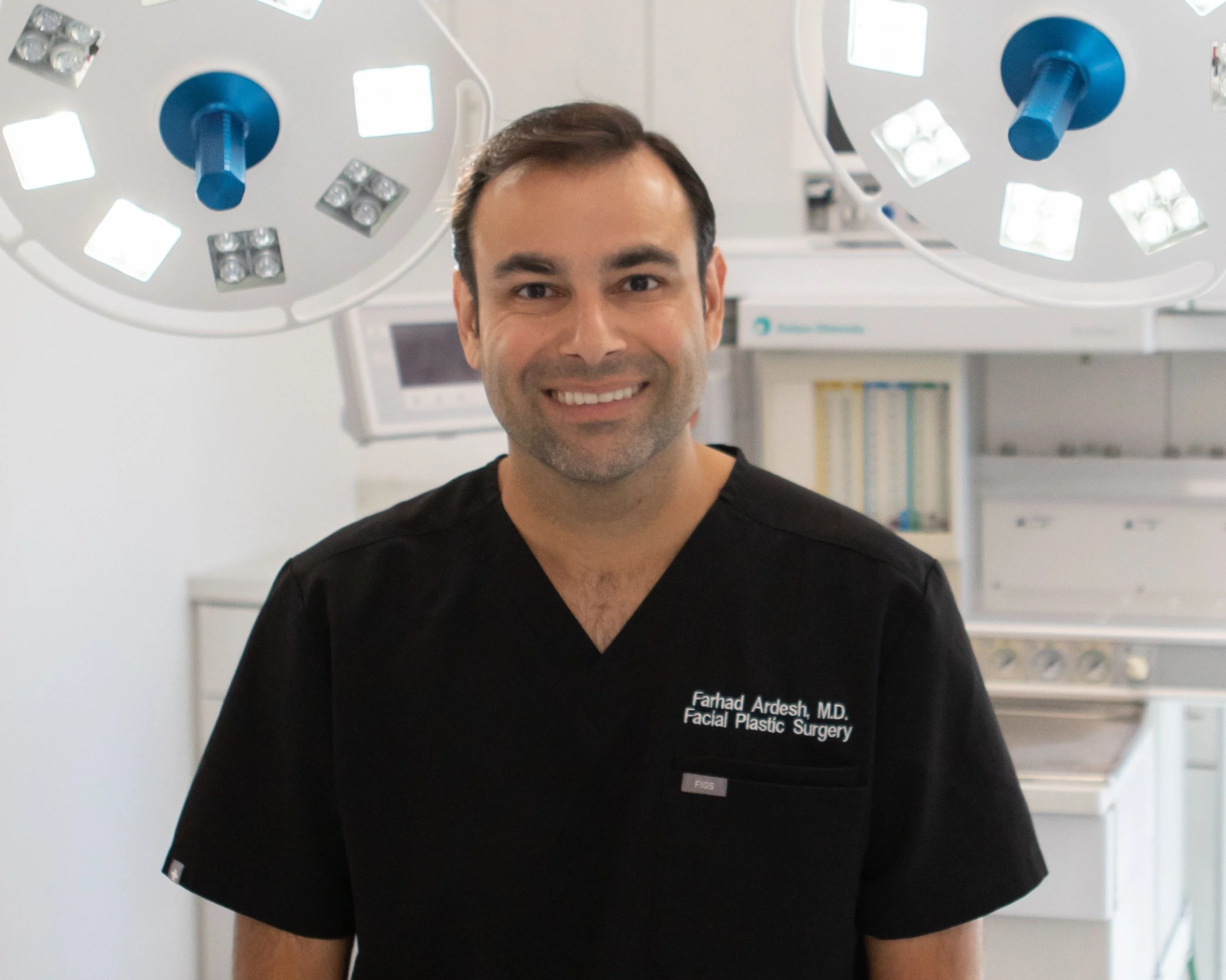
Dr. Ardesh is a double board-certified facial plastic and reconstructive surgeon with over 7,000 procedures and a reputation for natural-looking results. Whether you’re coming in for mole removal in Los Angeles or mole removal in Orange County, you’ll find the same level of precision and personal care at his Beverly Hills practice.
(424) 242-8608
150 S. Rodeo Drive, Suite 260, Beverly Hills, CA 90212
1441 Avocado Ave, Suite 703, Newport Beach, CA 92660
Book Your Consultation Today
Book your consultation at drardesh.com. Call (424) 242-8608. Visit us at 150 S. Rodeo Drive, Suite 260, Beverly Hills, CA 90212 or 1441 Avocado Ave, Suite 703, Newport Beach, CA 92660.