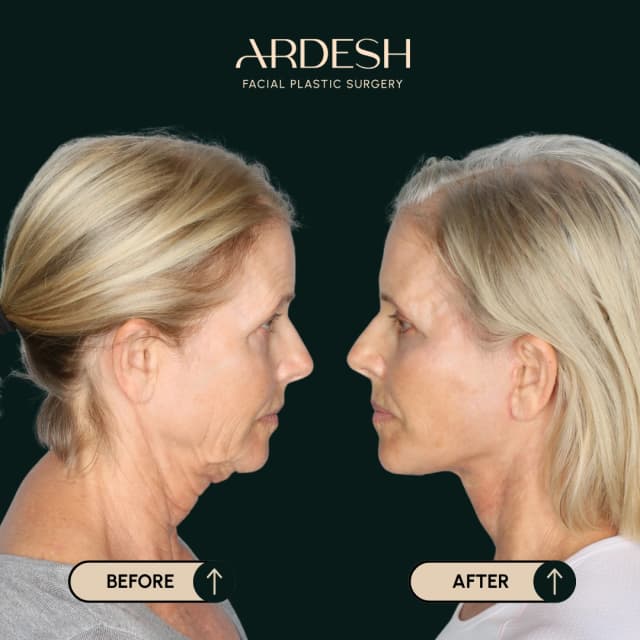
When patients search online for a neck lift, they rarely begin by looking at before-and-after photographs.
Instead, many type a far more anxious question into Google:
"What if my neck lift goes wrong?"
It is a reasonable concern. Unlike hairstyles or injectable treatments, surgery cannot simply be undone overnight. The neck is one of the most anatomically complex regions of the face, containing delicate muscles, nerves, blood vessels, connective tissues, and skin that must function together while creating natural movement and facial harmony.
Fortunately, truly serious neck lift complications are uncommon when surgery is performed by an appropriately trained facial plastic surgeon and patients are carefully selected. However, understanding what constitutes a bad neck lift, why complications occur, and how surgical planning reduces risk allows patients to make informed decisions rather than decisions driven by fear.
The goal of this discussion is not to discourage surgery. It is to explain the science behind successful neck rejuvenation and why anatomy, not shortcuts, determines long-term results.
About Dr. Ardesh
Dr. Ardesh of Beauty Mark MD is a double board-certified facial plastic and reconstructive surgeon known for delivering thousands of refined, natural outcomes. With an academic background that includes teaching in head and neck surgery, ophthalmology, and dermatology at Loma Linda University, he later transitioned into private practice to focus on patient-centred care. His philosophy emphasises subtle enhancement rather than obvious alteration, earning him recognition as a leading plastic surgeon in Beverly Hills and Newport Beach.
What Does "Neck Lift Gone Wrong" Actually Mean?
Patients often use the phrase bad neck lift to describe almost any disappointing outcome.
From a medical perspective, however, poor outcomes generally fall into two categories:
Surgical Complications
These involve recognised medical risks associated with surgery, including:
- Bleeding (haematoma)
- Infection
- Delayed wound healing
- Temporary or permanent nerve injury
- Skin healing problems
- Fluid accumulation (seroma)
These complications are discussed before surgery because they are recognised risks of any operative procedure, although they remain relatively uncommon in appropriately managed patients.
Aesthetic Complications
These are often what patients actually notice.
Examples include:
- Persistent neck fullness
- Visible platysmal bands
- Over-tightened appearance
- Asymmetry
- Poor scar placement
- Residual loose skin
- Unnatural neck contours
These problems may not represent medical emergencies, but they can significantly affect patient satisfaction.
Understanding the difference between medical complications and aesthetic shortcomings is essential.
Why Most Poor Results Begin Before Surgery
One of the biggest misconceptions is that unsuccessful surgery happens inside the operating room.
In reality, many disappointing outcomes begin long before the first incision.
Successful neck lift plastic surgery depends on accurate diagnosis.
Loose skin is only one possible cause of neck ageing.
Other contributing factors include:
- Platysma muscle laxity
- Deep cervical fat
- Superficial fat deposits
- Weak chin projection
- Facial volume loss
- Skeletal anatomy
- Genetic neck structure
If treatment addresses the wrong anatomical problem, even technically competent surgery may produce disappointing results.
The operation itself may be well performed.
The diagnosis may simply have been incomplete.
The Neck Is More Complex Than It Appears
To patients, the neck may seem like a simple area of loose skin.
To a facial plastic surgeon, it represents multiple anatomical layers working together.
These include:
- Skin
- Subcutaneous fat
- Platysma muscle
- Deep cervical fascia
- Salivary structures
- Vascular anatomy
- Sensory and motor nerves
Every patient demonstrates a different combination of ageing within these layers.
This is why identical procedures rarely produce identical outcomes.
Modern neck rejuvenation requires treating the structures responsible for the ageing pattern, not simply tightening everything equally.
The "Pulled" Neck That Patients Fear
Perhaps the most recognisable example of a bad neck lift is the unnaturally tight neck.
Patients often describe this appearance as:
- Overly stretched
- Windswept
- Rigid
- Artificial
- Uncomfortable during movement
This occurs when surface skin tension becomes the primary method of correction instead of restoring deeper anatomical support.
Contemporary facial plastic surgery emphasises repositioning structural tissues while allowing the skin to drape naturally over the corrected framework.
The objective is refinement, not excessive tension.
A youthful neck should still move naturally during speaking, swallowing, and smiling.
When Residual Fullness Is Mistaken for Surgical Failure
Not every persistent neck contour represents a failed operation.
Some patients naturally possess:
- Deeper anatomical fat
- Larger salivary glands
- Lower hyoid position
- Shorter mandibular projection
- Inherited cervical anatomy
These features influence neck contour regardless of surgery.
An experienced consultation includes discussing which concerns can realistically improve and which anatomical characteristics may remain despite treatment.
Managing expectations is therefore part of achieving successful outcomes.
Healing Is a Biological Process, Not an Overnight Event
Another common misunderstanding involves recovery.
Many patients evaluate results within the first several weeks.
However, tissues continue changing for months.
Normal healing includes:
- Temporary swelling
- Firmness beneath the skin
- Minor asymmetry
- Scar maturation
- Gradual softening of tissues
These findings are expected components of recovery rather than immediate evidence of neck lift complications.
Patience is an important part of postoperative care.
Final results develop progressively as swelling resolves and tissues mature.
Why Individual Anatomy Matters More Than Age
Two patients may both be 60 years old.
One demonstrates mild skin laxity.
The other presents with extensive platysmal separation, facial tissue descent, and reduced chin support.
Treating both patients identically would ignore the most important variable:
Their anatomy.
Modern facial plastic surgery increasingly focuses on customised surgical planning rather than age-based recommendations.
Evaluation includes:
- Skin elasticity
- Platysma integrity
- Fat distribution
- Jawline support
- Facial proportions
- Tissue quality
- Functional anatomy
This comprehensive analysis reduces the likelihood of under-treatment, overcorrection, or aesthetically unbalanced results.
Choosing the Right Surgeon Is About More Than Technical Skill
Technical ability is essential.
Equally important is clinical judgement.
Knowing when not to operate, when to recommend additional evaluation, or when surgery is unlikely to improve a specific concern reflects surgical maturity.
Patients should look for thoughtful consultation rather than quick promises.
Questions worth asking include:
- What anatomical problem is causing my neck ageing?
- Why is this procedure recommended?
- What limitations should I expect?
- Which improvements are realistic?
- What cannot be changed?
Clear explanations usually indicate that treatment recommendations are based on anatomy rather than assumptions.
One reason patients become disappointed is because they misunderstand what a neck lift is designed to accomplish. Knowing the expected outcome helps set realistic expectations before surgery. Our article Does a Neck Lift Change Your Face? explains how neck lift surgery enhances facial harmony without making you look like someone else.
The Goal Is Confidence — Not Perfection
Every surgical procedure carries recognised risks.
No ethical surgeon can promise a complication-free operation or guarantee a perfect aesthetic outcome.
However, risk can be reduced through:
- Careful patient selection
- Comprehensive anatomical evaluation
- Meticulous surgical technique
- Realistic expectations
- Structured postoperative follow-up
These principles form the foundation of responsible facial plastic surgery.
Patients should not choose surgery because they believe complications are impossible.
They should choose surgery because they understand how those risks are minimised through evidence-based planning and experienced care.
Trust Experience Before You Trust Fear
Stories of a bad neck lift understandably create anxiety, but they rarely explain why the outcome occurred. Every neck is different, and successful treatment begins with understanding the individual anatomy beneath the skin rather than applying the same surgical approach to every patient.
Dr. Ardesh approaches neck rejuvenation through detailed facial analysis, evaluating skin quality, muscle anatomy, facial proportions, and neck contour before recommending any treatment. His philosophy centres on creating refined, natural-looking results that enhance each patient's facial harmony while preserving their individual identity.
If you are considering neck lift plastic surgery, researching neck rejuvenation in Los Angeles, or comparing options while searching for an affordable neck lift in Los Angeles, the most valuable first step is a personalized consultation.
Dr. Ardesh can determine the anatomical causes of your concerns, explain realistic treatment options, discuss potential risks and expected recovery, and recommend an approach tailored specifically to your facial structure rather than a one-size-fits-all solution.
Frequently Asked Questions
1. What are the most common neck lift complications?
Recognised surgical risks include bleeding (haematoma), infection, delayed wound healing, fluid collection (seroma), unfavourable scarring, and temporary or, less commonly, permanent nerve injury. Your surgeon should discuss these risks during consultation.
2. What causes a bad neck lift?
A poor outcome may result from incomplete anatomical assessment, unrealistic expectations, inadequate correction of the underlying structures, or healing factors unique to the individual. Not every disappointing aesthetic result represents a surgical complication.
3. Can a bad neck lift be corrected?
In some cases, revision surgery may improve residual skin laxity, contour irregularities, or other aesthetic concerns. Whether revision is appropriate depends on the underlying anatomy, healing, and the nature of the original result.
4. How can I reduce the risk of neck lift complications?
Choosing a qualified facial plastic surgeon, undergoing a comprehensive preoperative evaluation, following all postoperative instructions, and maintaining realistic expectations all contribute to reducing surgical risk.
5. How long does it take to know the final result after neck lift plastic surgery?
Initial swelling improves over the first few weeks, but tissues continue to soften and settle over several months. Final results should be assessed only after adequate healing has occurred, as advised by your surgeon.