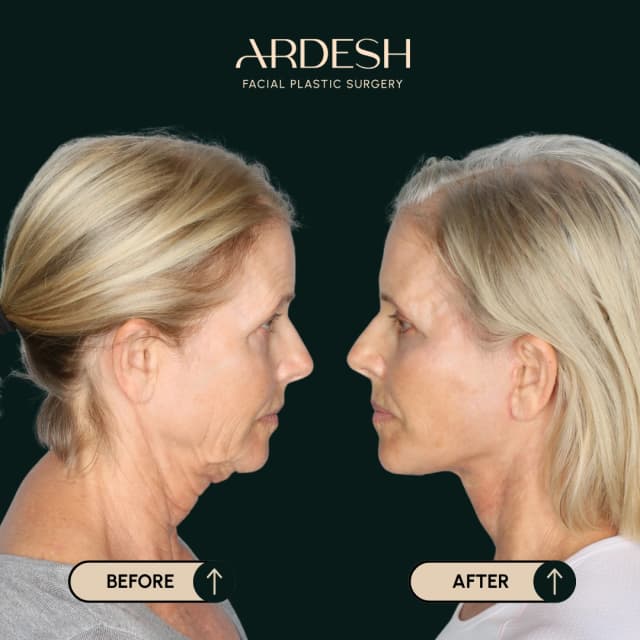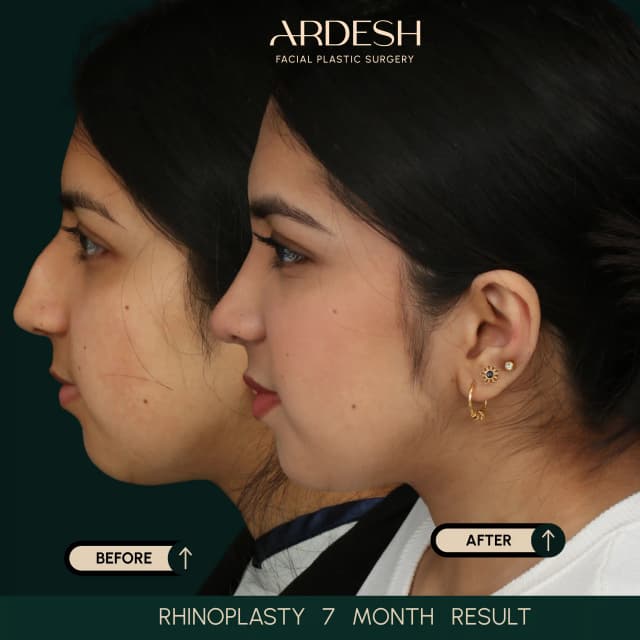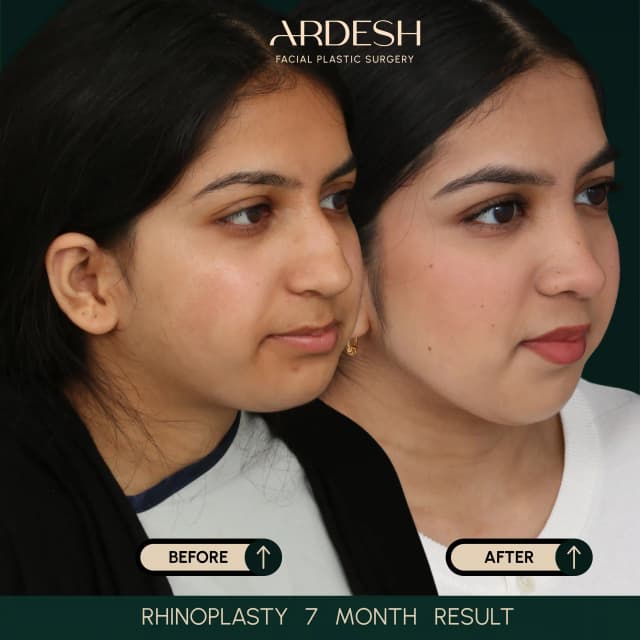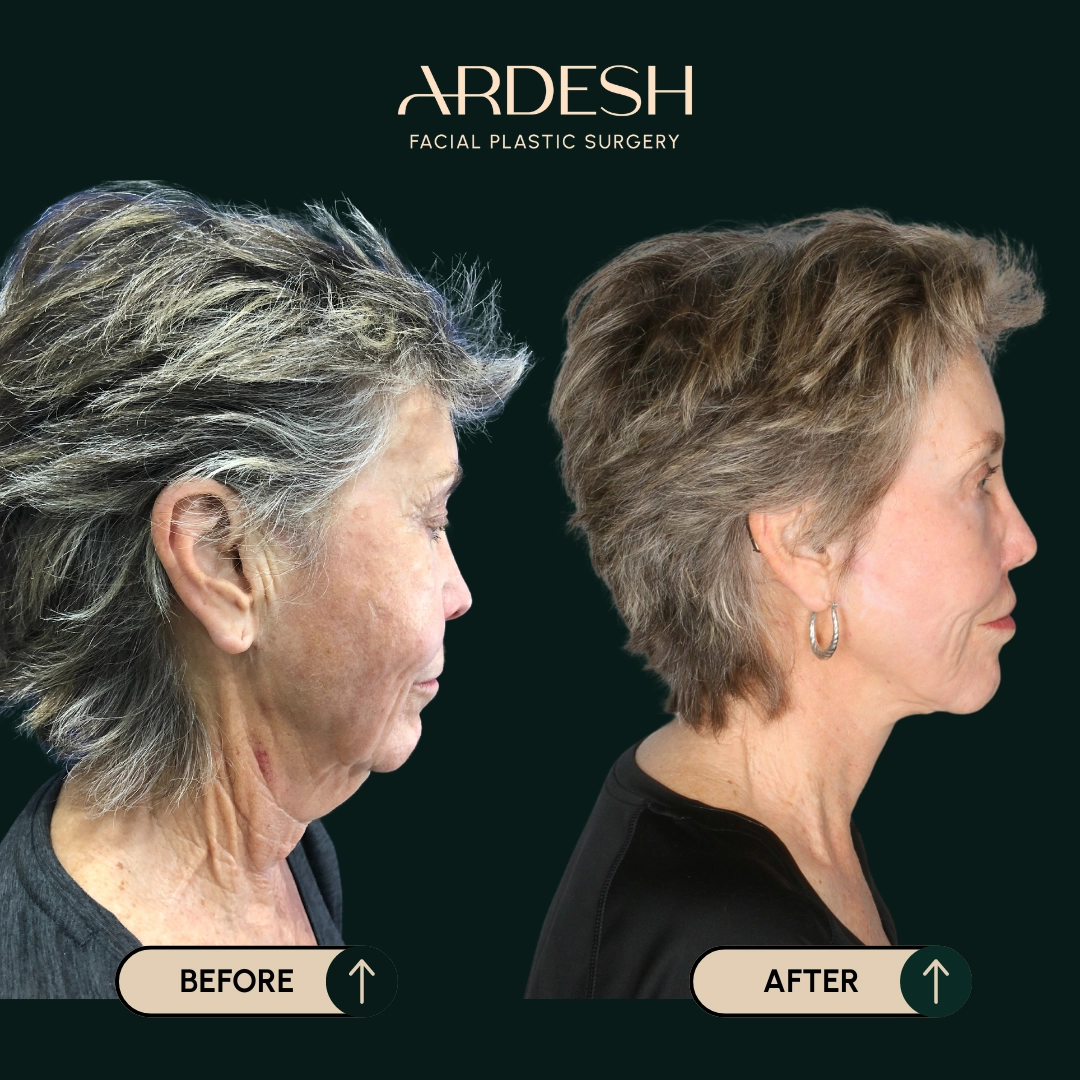
A common concern before neck lift surgery is surprisingly direct: Will I still look like myself afterwards?
Patients may want a sharper jawline, smoother neck skin, or less fullness beneath the chin, yet remain apprehensive that surgery could alter their facial expression or create an unfamiliar, overcorrected appearance. This concern is understandable.
The neck does not exist as a separate cosmetic unit. It forms the lower structural frame of the face, so improving it can influence how the entire face is perceived.
However, a properly planned neck lift is not intended to change a person’s identity.
Its purpose is to improve visible ageing or structural concerns involving the jawline and neck. The American Society of Plastic Surgeons defines a neck lift, also called a lower rhytidectomy, as surgery that improves visible signs of aging in these areas.
The most accurate answer is therefore this:
A neck lift can change the appearance of the lower facial contour, but it should not change the fundamental features that make your face recognisably yours.
About Dr. Ardesh
Dr. Ardesh of Beauty Mark MD is a double board-certified facial plastic and reconstructive surgeon known for delivering thousands of refined, natural outcomes. With an academic background that includes teaching in head and neck surgery, ophthalmology, and dermatology at Loma Linda University, he later transitioned into private practice to focus on patient-centred care. His philosophy emphasises subtle enhancement rather than obvious alteration, earning him recognition as a leading plastic surgeon in Beverly Hills and Newport Beach.
What Actually Changes After a Neck Lift?
Most neck lift face change results come from improved transitions between the chin, jawline, and neck.
Before surgery, several anatomical changes may obscure these transitions:
- Loose or redundant neck skin
- Vertical platysma muscle bands
- Fullness beneath the chin
- Reduced definition along the mandibular border
- Soft tissue laxity around the lower face
- An increasingly wide or poorly defined chin-to-neck angle
When these concerns are corrected, the jawline may appear stronger and the lower face may look more refined. In photographs, the face can appear slimmer or better proportioned even when no central facial feature has been changed.
The eyes, nose, lips, cheeks, and underlying skeletal identity remain the same. What changes is the structural outline around them.
This is similar to restoring the frame around a portrait. The subject has not changed, but clearer boundaries can affect how the entire image is perceived.
The Neck and Face Are Anatomically Connected
The idea that a surgeon can evaluate the neck entirely separately from the face is anatomically incomplete.
The platysma is a thin, broad muscle that extends from the upper chest and neck into the lower face. Ageing of this muscular layer can contribute to vertical neck bands, reduced jawline definition, and tissue descent around the mandibular border.
The skin and superficial soft tissues of the lower face also continue into the neck rather than stopping abruptly at the jaw.
This continuity explains why neck ageing can make the face appear heavier, tired, or less defined. It also explains why correcting neck laxity may make the lower face look more youthful without directly altering the central face.
Clinical literature emphasises that successful neck rejuvenation depends on identifying the specific anatomical problems involved rather than relying on skin tightening or fat removal alone.
A Neck Lift Is Not Automatically a Facelift
Although the two procedures may overlap anatomically, a neck lift and facelift are not interchangeable.
A neck lift generally concentrates on concerns such as:
- Neck skin laxity
- Platysma muscle changes
- Submental contour beneath the chin
- Loss of the chin-to-neck angle
- Reduced definition along the jawline
A facelift addresses ageing of the face more broadly, particularly tissue descent involving the cheeks, jowls, and lower facial structures.
Some patients have substantial neck ageing but relatively limited facial laxity. They may be candidates for a neck-focused procedure. Others have changes extending from the cheeks through the jawline and neck. In those cases, treating only the neck may leave an unnatural transition or fail to address the patient’s primary concern.
The appropriate approach cannot be determined from age alone. It requires an examination of the entire facial and cervical anatomy.
Why the Jawline May Look Different
The jawline is where patients most commonly notice a visible facial difference after neck lift plastic surgery.
A poorly defined jawline may not always result from the jawbone itself. It can be obscured by:
- Loose skin crossing the mandibular border
- Descending soft tissue
- Platysma laxity
- Fat above or below the platysma
- Limited chin projection
- Natural skeletal proportions
When the appropriate tissues are treated and redraped, the mandibular border becomes easier to see. The face may consequently appear more angular, balanced, or defined.
That does not mean the jaw has necessarily been surgically enlarged or reshaped. In many cases, existing anatomy has simply become more visible.
A neck lift can redefine the angle between the jawline and neck through management of excess skin, muscle laxity, and selected fatty deposits where appropriate.
Will a Neck Lift Make the Face Look Tight?
An excessively tight or pulled appearance is not an intended result of contemporary facial plastic surgery.
That appearance can occur when treatment depends too heavily on surface tension instead of addressing the deeper tissues responsible for the ageing pattern. Skin is not designed to function as the primary structural support system of the neck.
Thoughtful surgical planning considers:
- The direction in which tissues have descended
- The condition of the platysma
- The amount and location of fat
- Skin quality and elasticity
- Chin and jaw proportions
- Existing asymmetry
- How the neck behaves during movement
Modern neck rejuvenation may include different combinations of platysma management, tissue repositioning, fat modification, and skin redraping. There is no single manoeuvre appropriate for every patient. Recent medical literature continues to describe multiple surgical strategies because neck anatomy and ageing patterns vary substantially between individuals.
The objective should be a smoother, more coherent contour not a neck that appears unnaturally stretched.
Could the Results Look Too Dramatic?
The degree of visible change depends on the starting anatomy.
A patient with mild laxity may experience a subtle improvement that others interpret as looking rested or healthier. A patient with substantial redundant skin, severe banding, or marked loss of the cervicomental angle may see a more noticeable transformation.
Noticeable does not have to mean artificial.
The central question is whether the new contour remains proportionate to the patient’s face. A very sharp neck placed beneath a naturally soft or full face may appear disconnected. Similarly, correcting the neck without recognising significant jowling or lower-face descent may produce an incomplete result.
This is why preoperative facial analysis matters. The aim is not to impose one idealised neck shape on every patient. It is to determine what degree of correction is anatomically appropriate for that individual.
What a Neck Lift Cannot Change
A neck lift should not be presented as a procedure that corrects every aspect of facial ageing.
Depending on the surgical plan, it may not substantially change:
- Forehead lines
- Eyebrow position
- Upper or lower eyelid ageing
- Midface volume loss
- Nasolabial folds
- Skin pigmentation
- Fine surface wrinkles
- The shape of the nose or lips
It also cannot stop biological ageing. Surgery can reposition or refine tissues, but collagen degradation, sun exposure, gravity, and normal anatomical changes continue over time.
Clear expectations are essential. The strongest results usually come from matching the treatment to the structures actually causing the concern rather than expecting one operation to rejuvenate the entire face.
Natural Results Begin With Preserving Identity
Patients seeking neck rejuvenation in Los Angeles are often not asking to look like someone else. They want their outer appearance to feel more consistent with how they see themselves.
That is especially important in neck surgery because changes around the jawline can influence the perceived shape of the face.
Dr. Ardesh’s stated approach focuses on enhancing natural features while preserving patient identity. His treatment planning is centred on facial structure, movement, proportion, balance, and recommendations intended to produce meaningful improvement rather than trend-driven change.
This philosophy is directly relevant to patients worried that a neck lift may make them look unfamiliar. The goal is not simply to make tissues tighter. It is to determine what should be corrected, what should remain untouched, and how to keep the neck consistent with the rest of the face.
While a well-performed neck lift is designed to produce natural-looking improvement, many concerns online stem from stories about poor outcomes. Understanding why complications happen and how they're usually preventable, can help you make informed decisions. Our guide Neck Lift Gone Wrong: What Actually Happens explains the most common causes of unsatisfactory results and how choosing the right surgeon significantly reduces those risks.
See What a Neck Lift Could Mean for Your Face
Online photographs cannot reliably predict your neck lift face change results. Two patients may have similar loose skin yet require different treatment plans because their muscle anatomy, fat distribution, chin projection, and lower-face ageing are different.
Dr. Ardesh is a board-certified facial plastic surgeon who provides personalised facial and neck evaluation with a focus on refined, natural-looking results. During a consultation, he can assess whether your concern is primarily located in the neck, extends into the lower face, or involves another anatomical factor that should be considered before treatment.
Whether you are considering neck lift plastic surgery, researching neck rejuvenation in Los Angeles, or searching online for an affordable neck lift in Los Angeles, pricing language should not replace a proper medical assessment. The meaningful first step is determining which procedure, if any, is appropriate for your anatomy.
Schedule a consultation with Dr. Ardesh to discuss your neck and jawline concerns, understand how treatment could affect your facial proportions, and receive recommendations centred on preserving the features that make you look like yourself.
Frequently Asked Questions
1. Does a neck lift change the shape of your face?
It may improve the apparent outline of the lower face by defining the jawline and creating a clearer transition between the chin and neck. It is not intended to alter central facial features or fundamentally change your identity.
2. Will people be able to tell that I had neck lift plastic surgery?
The visibility of the change depends on the extent of the original concern and the treatment performed. Well-planned surgery aims to create an anatomically balanced result rather than an obviously operated appearance. Individual outcomes and healing vary.
3. Can a neck lift improve jowls?
A neck lift may improve definition near the jawline, but significant jowling can involve lower-face tissue descent that may not be fully corrected through a neck-only approach. A facial examination is necessary to determine the appropriate procedure.
4. Does a neck lift change your smile or facial expression?
A neck lift is not intended to change facial expression. However, all surgery carries risks, and the neck contains important nerves, muscles, and vascular structures. The potential risks and expected effects should be reviewed with the surgeon during consultation.
5. How can I predict my neck lift face change results?
A personalised consultation is more useful than generic simulations or online examples. Evaluation should include the skin, platysma, fat distribution, chin projection, jawline, lower face, medical history, and realistic treatment goals. Previous patient photographs may illustrate possibilities but cannot guarantee an identical result.