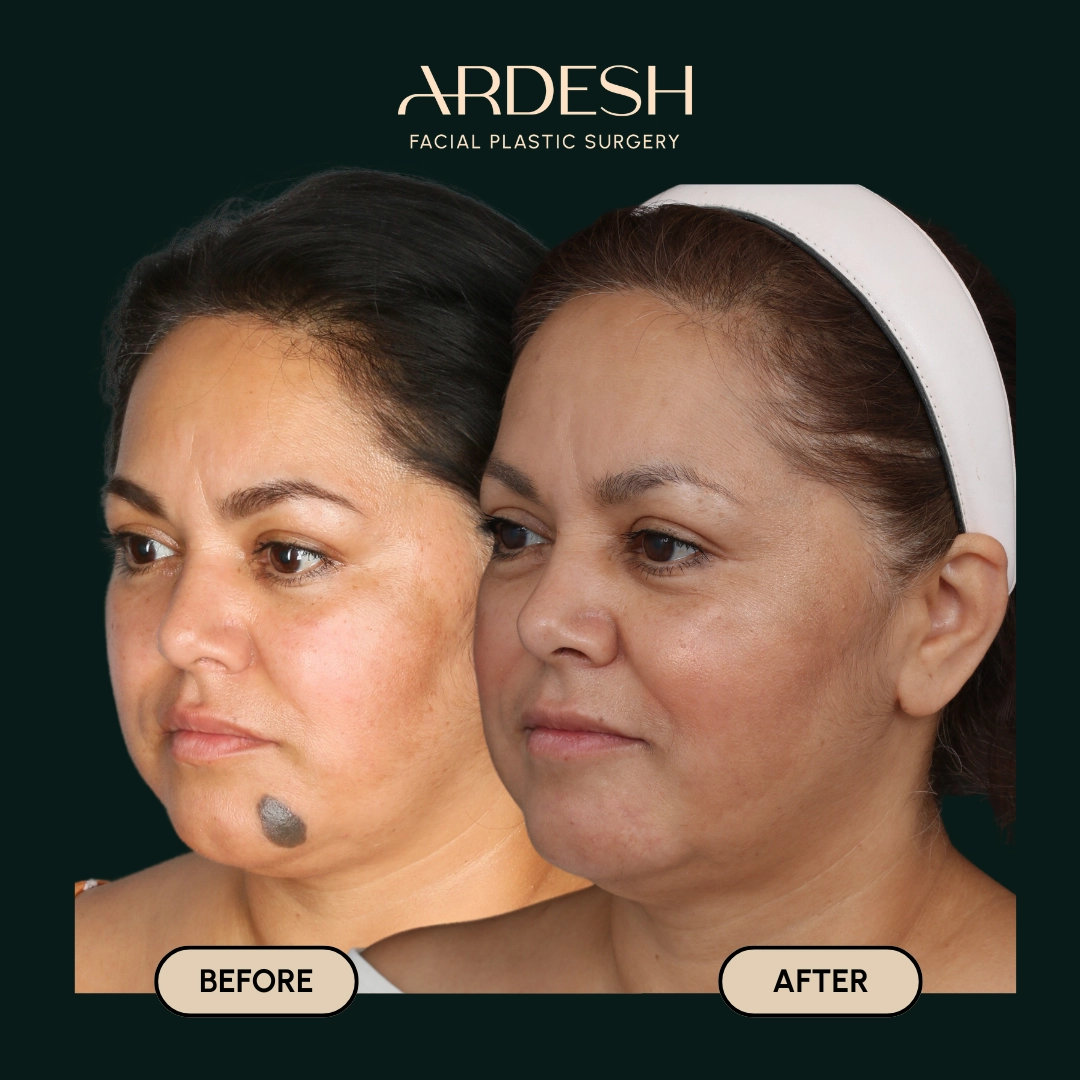
A facial mole can be entirely harmless yet still become a feature you notice every day. Whether it sits on the cheek, nose, eyelid, forehead, chin, or lip, even a small lesion may influence how you feel about your appearance. While many people begin searching for removal because of cosmetic concerns, the decision involves more than simply eliminating the mole.
The location of a facial mole makes treatment different from removing a lesion elsewhere on the body. The goal is not only to remove the growth safely but also to preserve the natural contours, movement, and appearance of the face.
When researching facial surgeon vs dermatologist mole removal, many patients assume they must choose between two completely different approaches. In reality, the most important consideration is ensuring the mole is carefully evaluated before treatment and that, if removal is appropriate, the procedure is performed with meticulous attention to both medical safety and cosmetic outcome.
For facial lesions, these two priorities should always go hand in hand.
About Dr. Ardesh
Dr. Ardesh of Beauty Mark MD is a double board-certified facial plastic and reconstructive surgeon known for delivering thousands of refined, natural outcomes. With an academic background that includes teaching in head and neck surgery, ophthalmology, and dermatology at Loma Linda University, he later transitioned into private practice to focus on patient-centred care. His philosophy emphasises subtle enhancement rather than obvious alteration, earning him recognition as a leading plastic surgeon in Beverly Hills and Newport Beach.
Every Facial Mole Deserves a Thorough Assessment
Not every mole needs to be removed. Many remain unchanged throughout life and never become medically concerning.
However, no mole should be considered "just cosmetic" until it has been properly assessed.
During a consultation, several factors are considered before recommending treatment, including:
- The appearance of the lesion
- Whether it has changed over time
- Its size and depth
- Its location on the face
- Whether further investigation may be appropriate
- The patient's cosmetic goals
A mole that changes in colour, shape, border, texture, or size—or develops symptoms such as bleeding or persistent irritation—should always be professionally evaluated.
Only after establishing an appropriate diagnosis should removal options be discussed.
Why Facial Mole Removal Requires a Different Approach
The face is unlike any other part of the body.
It contains highly visible aesthetic units that work together to create facial balance and expression. Every smile, blink, conversation, and photograph draws attention to these features.
Because of this, removing a facial mole involves more than making an incision.
The surgeon must consider:
- Natural facial contours
- Skin tension lines
- Facial symmetry
- Skin thickness
- Scar placement
- Long-term healing
These considerations influence not only how the procedure is performed but also how the skin appears months after healing has taken place.
For patients seeking cosmetic improvement, preserving these natural characteristics is often just as important as removing the mole itself.
Why Patients Choose a Facial Plastic Surgeon
A board-certified facial plastic surgeon brings specialised expertise in procedures involving the face, head, and neck.
Rather than viewing mole removal as an isolated skin procedure, facial plastic surgery considers how every treatment fits within the overall harmony of the face.
This includes careful attention to:
- Facial anatomy
- Precise tissue handling
- Surgical planning
- Wound closure techniques
- Scar optimisation
- Long-term cosmetic outcomes
These principles become particularly important when treating highly visible areas such as the:
- Nose
- Eyelids
- Lips
- Forehead
- Cheeks
- Chin
- Jawline
- Neck
Even a small facial mole deserves thoughtful planning because the surrounding skin contributes significantly to facial appearance.
Understanding Your Treatment Options
No single removal technique is appropriate for every mole.
The recommended procedure depends on several factors, including the characteristics of the lesion and the desired outcome.
Surgical Excision
For many facial moles, surgical excision provides excellent control over both complete lesion removal and wound closure.
This technique allows careful placement of the incision and meticulous closure designed to support favourable healing.
When clinically appropriate, tissue may also be submitted for pathological examination.
Shave Removal
Some raised benign moles may be suitable for shave removal.
Whether this technique is appropriate depends on the depth, location, and characteristics of the lesion rather than patient preference alone.
Choosing the correct technique requires careful clinical judgement rather than a one-size-fits-all approach.
Choosing the right specialist is only one part of the decision-making process. It is equally important to know whether the lesion is actually a mole or another common skin growth, as treatment recommendations vary depending on the diagnosis. Our guide on Mole vs Skin Tag vs Sebaceous Cyst explains how these common lesions differ, while Raised Mole on Face Removal explores when a facial mole is simply a cosmetic concern and when it should be professionally evaluated before treatment.
Cosmetic Planning Is Part of the Procedure
One of the most overlooked aspects of facial mole removal is that surgery begins long before the first incision.
Careful planning helps determine:
- Where the incision should be placed
- How surrounding skin will respond
- Which closure technique is most appropriate
- How the scar is likely to mature
- What aesthetic result can realistically be achieved
This planning stage plays an important role in achieving a result that looks natural rather than simply appearing as though a lesion has been removed.
For patients seeking cosmetic improvement, this level of detail can make a meaningful difference in the final outcome.
What to Expect During Your Consultation
A consultation for facial mole removal is an opportunity to discuss both medical and cosmetic considerations.
During the appointment, Dr. Farhad Ardesh evaluates the lesion, reviews your concerns, and explains whether removal is appropriate based on your individual circumstances.
The discussion may include:
- Evaluation of the mole
- Whether pathology is recommended
- The most appropriate removal technique
- Expected healing
- Scar placement
- Recovery timeline
- Realistic cosmetic expectations
Every recommendation is personalised rather than based on a standard treatment plan, ensuring that decisions are guided by both clinical findings and your aesthetic goals.
The Final Thought
The discussion around facial surgeon vs dermatologist mole removal should never be framed as diagnosis versus cosmetics.
The best outcomes often begin with both.
Facial plastic surgeons are specifically trained in facial anatomy, scar placement, tissue handling, wound closure, and facial reconstruction. This specialised training allows them to focus on both removing the lesion and achieving the most natural cosmetic result possible.
For moles located on areas such as the cheeks, nose, lips, eyelids, or forehead, factors such as incision placement, skin tension lines, facial symmetry, and long-term scar appearance become particularly important.
While accurate diagnosis should always be established before treatment, many patients ultimately choose a facial plastic surgeon because of their expertise in preserving facial appearance and optimising cosmetic outcomes after removal.
For highly visible facial moles, this combination of surgical precision and aesthetic planning is often a significant advantage. If you are considering facial mole removal, Dr Ardesh can assess the lesion, confirm the most appropriate treatment approach, and discuss how removal can be performed with careful attention to both medical safety and long-term cosmetic results.
Discover The Molectomy™ Method by Beauty Mark MD™
The Molectomy™ Method by Beauty Mark MD™ is our signature approach to cosmetic mole removal and beauty mark refinement. Designed to prioritize natural-looking results, scar minimization, advanced healing, and facial harmony, it offers a refined solution for patients seeking comprehensive facial enhancement.
FAQs
1. What is the difference between a facial plastic surgeon and a dermatologist for mole removal?
Dermatologists specialise in diagnosing and treating skin conditions, while facial plastic surgeons focus on surgical procedures involving the face and neck. For facial mole removal, the choice often depends on whether the priority is medical treatment, cosmetic outcome, or both.
2. Should I see a facial plastic surgeon for a mole on my face?
If the mole is located in a highly visible area and cosmetic appearance after removal is an important concern, consulting a facial plastic surgeon may be beneficial. They are trained in facial anatomy, scar placement, and techniques designed to optimise cosmetic results.
3. Can a dermatologist remove facial moles?
Yes. Dermatologists routinely remove moles and are highly qualified to evaluate skin lesions. They can determine whether a mole requires medical assessment, biopsy, monitoring, or removal based on clinical findings.
4. Will mole removal leave a scar?
Any procedure that removes a mole has the potential to leave some degree of scarring. The visibility of the scar depends on factors such as the mole's size and location, the removal technique used, individual healing characteristics, and post-procedure care.
5. How do I decide which specialist is right for my mole removal?
The decision should be based on the mole's location, whether there are medical concerns, your cosmetic goals, and the expertise of the treating professional. Consulting with a qualified specialist can help determine the most appropriate approach for your individual situation.