A patient arrives with a photograph of a nose they love. The bridge is smooth, the tip is defined, and the proportions appear almost perfect.
But there is one important question:
Would that exact nose still look attractive on a different face?
Often, the answer is no.
A nose that looks natural on one person may appear too narrow, too short, overly lifted or noticeably artificial on someone else. This is why successful rhinoplasty is not based on copying a photograph. It requires understanding how the nose interacts with the forehead, eyes, cheeks, lips, chin and overall facial structure.
For patients considering rhinoplasty treatment in Orange County, understanding this principle can help them choose a surgical plan based on their anatomy rather than a temporary beauty trend.
About Dr. Ardesh
Dr. Ardesh of Beauty Mark MD is a double board-certified facial plastic and reconstructive surgeon known for delivering thousands of refined, natural outcomes. With an academic background that includes teaching in head and neck surgery, ophthalmology, and dermatology at Loma Linda University, he later transitioned into private practice to focus on patient-centred care. His philosophy emphasises subtle enhancement rather than obvious alteration, earning him recognition as a leading plastic surgeon in Beverly Hills and Newport Beach.
The Nose Is Never Evaluated by Itself
Although rhinoplasty changes the nose, the visual outcome is judged against the entire face.
A prominent nasal bridge may look stronger when the chin is less projected. A slightly drooping tip may appear more noticeable when the upper lip is short. Narrowing a nose too aggressively can make wider cheeks appear more prominent.
During a rhinoplasty evaluation, the surgeon therefore examines relationships rather than isolated measurements.
These may include:
- The width of the nose compared with the distance between the eyes
- The projection of the nasal tip in relation to the lips and chin
- The angle between the nose and upper lip
- The transition between the forehead and nasal bridge
- Facial length, width and natural asymmetry
- The appearance of the nose from the front, profile and three-quarter views
The objective is not to create a mathematically “perfect” nose. It is to develop proportions that appear balanced from multiple angles.
Why Copying a Celebrity Nose Can Produce an Artificial Result
Reference photographs can be useful because they reveal what a patient finds attractive. They may show a preference for a smoother bridge, softer tip, straighter profile or less nostril visibility.
However, a reference image should begin a conversation, not determine the operation.
The person in the photograph may have different skin thickness, cartilage strength, nasal length, facial width or chin projection. Reproducing only the visible shape without accounting for those differences can create a nose that does not fit the patient’s features.
The more productive consultation question is not:
“Can you give me this person’s nose?”
It is:
“Which qualities of this nose could work naturally with my face?”
That distinction allows the surgeon to understand the desired aesthetic while protecting the patient’s individual identity.
Skin Thickness Can Change What Is Surgically Possible
One of the least visible, but most important factors in rhinoplasty planning is the skin covering the nasal framework.
Thin skin reveals small changes in the underlying bone and cartilage. This can make precise refinement visible, but it can also expose minor irregularities.
Thicker skin may conceal delicate structural changes, particularly around the nasal tip. In these cases, the surgeon may need to create stronger cartilage definition beneath the skin rather than simply making the nose smaller.
This explains why two patients requesting the same tip shape may require very different surgical strategies.
It also explains why an ethical surgeon may recommend modifying a patient’s inspiration photograph instead of promising an exact duplicate.
A Smaller Nose Is Not Automatically a Better Nose
Many patients initially describe their goal as wanting a smaller nose. But excessive reduction can weaken the framework responsible for both nasal shape and airflow.
Removing too much cartilage may leave insufficient support for the tip or sidewalls. Over time, this can contribute to pinching, collapse, unwanted nostril visibility or difficulty breathing.
Modern rhinoplasty often focuses on reshaping and supporting existing structures rather than simply removing tissue. Depending on the anatomy, cartilage may be repositioned, reinforced or used as a graft to maintain stability.
The most attractive outcome is therefore not necessarily the smallest possible nose. It is one that looks refined while retaining enough structural strength to function properly.
Breathing Must Be Considered Even When the Goal Is Cosmetic
A patient may request rhinoplasty solely because of a hump, wide bridge or undefined tip. However, the preoperative examination should still assess nasal airflow.
Clinical guidelines recommend evaluating rhinoplasty candidates for nasal obstruction and discussing how surgery could affect breathing.
The internal septum, nasal valves, turbinates and external sidewalls all influence airflow. Changing the outer shape without understanding these structures may improve the profile while unintentionally narrowing the airway.
When cosmetic and functional concerns overlap, the surgical plan may address both during the same procedure. This could involve straightening a deviated septum, strengthening a weak nasal valve or correcting structural asymmetry while refining the external appearance.
Natural Rhinoplasty Results Depend on What Is Preserved
People frequently assume that a successful nose job should create a dramatic transformation.
In reality, some of the most sophisticated outcomes are difficult to identify as surgery. The face appears more balanced, yet the patient remains recognizably themselves.
Achieving that effect may involve preserving:
- Characteristics that reflect the patient’s heritage
- Appropriate bridge height for the facial profile
- Tip strength and projection
- Natural transitions between nasal regions
- Features that give the face individuality
- Structures required for stable nasal breathing
Preservation does not mean avoiding meaningful improvement. It means changing the features that disrupt balance without removing every distinctive characteristic.
Why Digital Imaging Is a Planning Tool, Not a Promise
Computer imaging can help patients communicate what they would like to change. It may demonstrate how reducing a hump, refining a tip or adjusting projection could influence the profile.
However, an edited photograph cannot predict exactly how living tissue will heal.
Skin thickness, scar formation, swelling, cartilage behaviour and natural asymmetry can all influence the eventual result. Mayo Clinic notes that imaging is useful for discussing possible outcomes and surgical goals rather than guaranteeing a particular appearance.
Patients should therefore use simulations to clarify direction:
- Is the proposed bridge reduction too strong?
- Does the tip appear overly rotated?
- Would retaining slightly more projection look natural?
- Does the change improve the entire profile?
The value of imaging lies in creating a shared visual language between the patient and surgeon.
The Final Nose Does Not Appear When the Cast Comes Off
The early postoperative appearance can be misleading.
After the splint is removed, the nose may look swollen, wide, stiff or slightly uneven. The tip frequently retains swelling longer than the bridge, and changes may continue gradually for many months.
The American Society of Plastic Surgeons states that although initial swelling improves within several weeks, the nasal contour may require up to a year to fully refine.
This healing period matters when assessing success. A shape seen during the first few weeks should not be treated as the final outcome.
Patients who understand the timeline before surgery are generally better prepared for the gradual nature of rhinoplasty recovery.
What Should Be Personalized During a Rhinoplasty Consultation?
A meaningful consultation should go beyond asking which feature the patient dislikes.
It should explore:
- What specifically draws attention to the nose
- Whether the concern is visible from one angle or several
- Whether nasal breathing is restricted
- Which features should remain unchanged
- How skin and cartilage may affect refinement
- Whether the patient’s expectations are surgically realistic
- How the result may evolve during healing
Professional guidelines emphasize discussing the patient’s motivations, desired outcomes and whether those expectations can realistically be achieved.
This conversation is essential because technically successful surgery may still disappoint a patient when the original objective was unclear or unattainable.
Choosing Rhinoplasty Treatment in Orange County
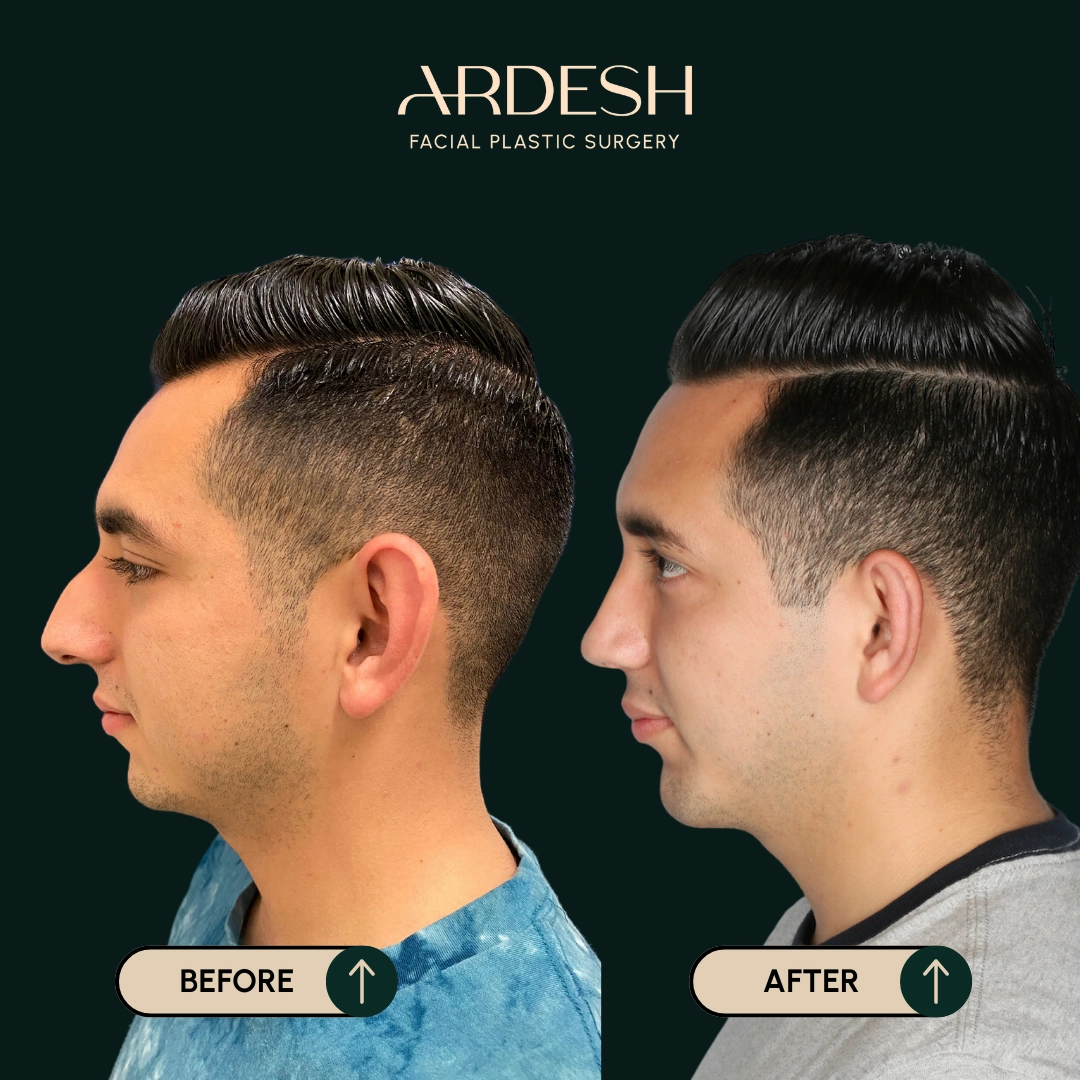
When researching rhinoplasty treatment in Orange County, patients should look beyond a surgeon’s most dramatic before-and-after photographs.
Review whether the results demonstrate different approaches for different faces. If every postoperative nose has the same bridge, tip or slope, the technique may be following a preferred template rather than the patient’s individual anatomy.
Dr. Ardesh is a double board-certified facial plastic and reconstructive surgeon who performs personalized rhinoplasty for cosmetic, structural and functional concerns. His approach evaluates the nasal framework in relation to the complete face, with the goal of producing refinement that looks balanced rather than operated.
Patients can review rhinoplasty treatment information and explore rhinoplasty before-and-after results before arranging a consultation.
The Question to Ask Is Not “Which Nose Is Perfect?”
The more valuable question is:
Which changes would make your nose fit your face more naturally?
An effective rhinoplasty plan respects anatomy, breathing, facial proportions and personal identity. It does not force every patient toward the same shape.
For those considering rhinoplasty treatment in Orange County, a detailed consultation with Dr. Ardesh can help determine which refinements are realistic, structurally appropriate and suited to the rest of the face.
Schedule a private consultation to receive an individualized assessment of your nasal shape, function and treatment options.