The question isn't really about surgery. It's about whether the change you want is significant enough to justify what getting there actually involves. Rhinoplasty and nose job procedures are among the most requested facial surgeries in the US, and also among the most revised. That second fact is worth sitting with before the first one feels straightforward.
Worth it is a personal calculation. But it should be an informed one.
About Dr. Ardesh
Dr. Ardesh of Beauty Mark MD is a double board-certified facial plastic and reconstructive surgeon known for delivering thousands of refined, natural outcomes. With an academic background that includes teaching in head and neck surgery, ophthalmology, and dermatology at Loma Linda University, he later transitioned into private practice to focus on patient-centred care. His philosophy emphasises subtle enhancement rather than obvious alteration, earning him recognition as a leading plastic surgeon in Beverly Hills and Newport Beach.
What people are actually asking when they ask "is it worth it"
Nobody asks this question about a haircut. They ask about decisions that carry real weight - time, money, recovery, and the possibility that the outcome doesn't match the expectation. Rhinoplasty sits squarely in that category.
The honest version of "is it worth it" breaks into three separate questions:
- Will the result look like what I'm imagining?
- Is the recovery process something I can realistically manage?
- What happens if something doesn't go as planned?
Each deserves a straight answer. None of them gets one in most places people look.
The expectation gap is where most regret originates
The patients who report wishing they hadn't had rhinoplasty - and they exist - almost always describe the same thing: the result wasn't what they pictured. Not necessarily a bad result by surgical standards. Just not the one they had in their head.
This gap between expectation and outcome is the single most preventable source of dissatisfaction in rhinoplasty. It's not closed by better technology. It's closed by better pre-surgical communication - specific, honest conversation about what the surgeon can achieve given the patient's existing anatomy, skin thickness, and structural starting point.
A patient who understands exactly what the plan is, why certain requests are anatomically feasible and others aren't, and what the healed result will realistically look like, that patient makes a genuinely informed decision. One who receives vague assurances and digitally altered images does not.
The real benefits - not the brochure version
Rhinoplasty and nose job procedures, when done well and chosen for the right reasons, produce meaningful outcomes. These aren't trivial.
Structural improvement in breathing:
A significant portion of rhinoplasty patients have a functional component to their concern - a deviated septum, collapsed nasal valves, or internal structural irregularities that compromise airflow. Addressing these simultaneously with cosmetic correction produces both aesthetic and functional improvement. Patients who struggled with nasal obstruction for years often describe the breathing improvement as the outcome they value most.
Proportion that changes how the whole face reads:
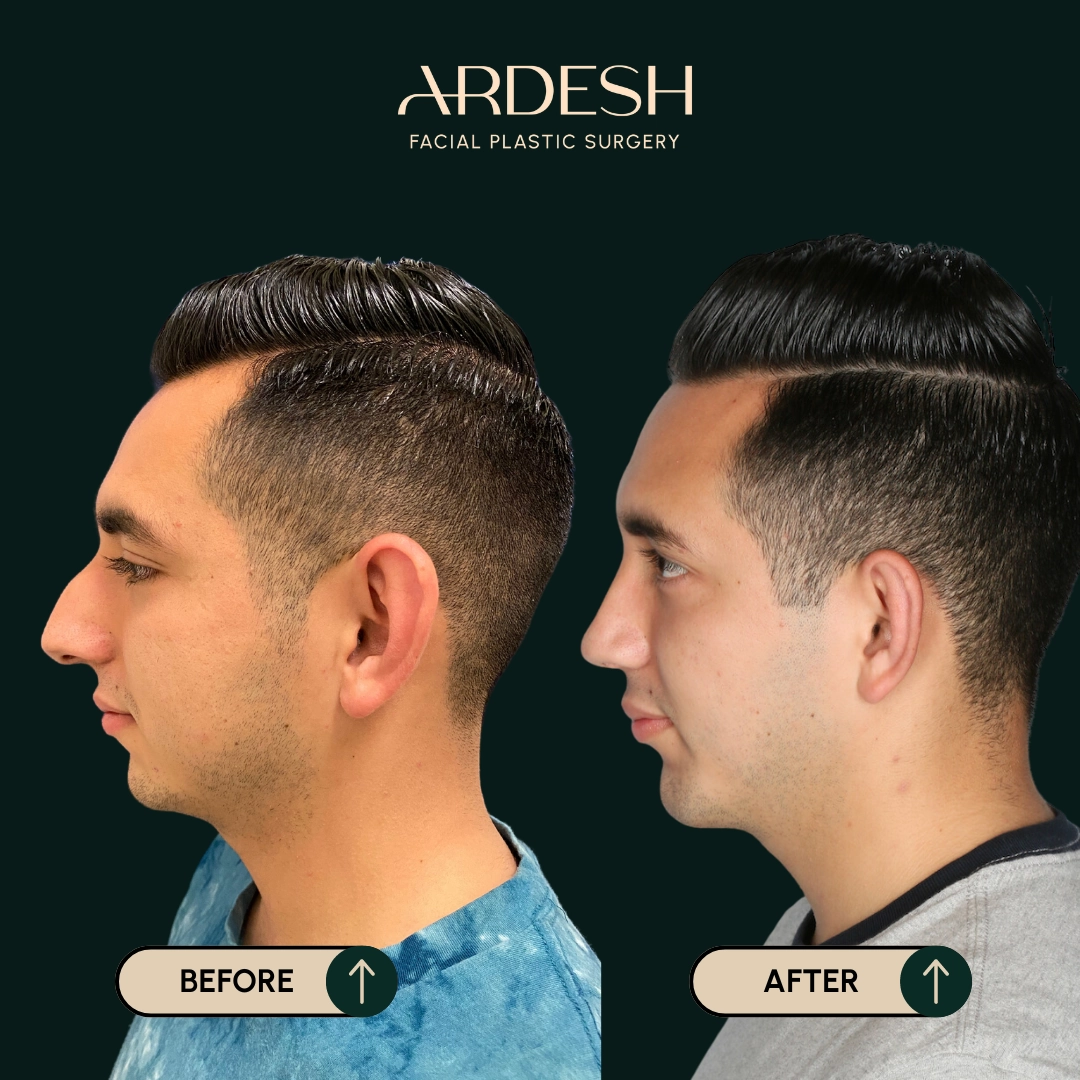
The nose sits at the center of facial composition. Small structural changes - a refined tip, a reduced dorsal hump, improved symmetry - can shift how the entire face is perceived without looking surgically altered. This is the result most patients are seeking and, in skilled hands, is genuinely achievable.
Correction of post-traumatic changes:
Noses that were broken and healed with visible deviation or internal displacement respond well to rhinoplasty. This category tends to have clearer surgical objectives and, often, more predictable outcomes than purely aesthetic cases.
Confidence that isn't performance:
This one is harder to quantify. Patients who had a specific feature they'd been self-conscious about for years - one that affected how they photographed, how they presented in professional settings, how they felt meeting people - often describe post-rhinoplasty confidence as genuinely different from what they expected. Not euphoric. Just quieter. The thing they used to think about stopped occupying mental space.
The risks, without minimizing them
This is where most promotional content gets selective. The risks of rhinoplasty are real and worth understanding completely before deciding.
Revision rates:
Rhinoplasty has one of the higher revision rates among facial procedures. Estimates vary, but the range cited in surgical literature sits between 5 and 15 percent. Some revisions are for minor refinements. Others address more significant concerns. The point isn't to be alarming - it's to recognize that rhinoplasty is technically demanding and outcomes aren't guaranteed to match the plan precisely on the first procedure.
Healing that takes longer than expected:
The majority of swelling resolves within the first 2 to 3 months. But the final result - particularly tip definition and subtle refinements - continues to develop for up to 12 to 18 months. Patients who judge their result at 6 weeks are often looking at a work in progress. Managing this timeline expectation upfront matters.
Specific risks by anatomy:
- Thick skin limits how much tip refinement is visible after surgery - the underlying structure can be refined but the skin envelope determines how much shows through
- Very thin skin shows irregularities more readily, requiring greater precision in the structural work underneath
- Revision rhinoplasty on previously operated noses is significantly more complex due to scar tissue and altered anatomy
General surgical risks:
- Anesthesia reactions (rare but possible)
- Infection at surgical sites
- Asymmetry that requires correction
- Breathing changes - in most cases improved, but in rare cases the internal structure is affected in ways that require further management
None of these risks make rhinoplasty categorically inadvisable. They make the surgeon selection decision consequential.
The anatomy factor most patients underestimate
Here's something that doesn't get enough space in the standard rhinoplasty conversation. The nose is structurally complex in a way that differs from almost every other facial procedure. It has a bony upper third, a cartilaginous middle third, and a lobular lower third - each with different structural properties, different healing behavior, and different technical demands.
Changes to one area affect the others. Reducing a dorsal hump changes how the tip reads. Refining the tip affects the apparent width of the middle vault. Nothing happens in isolation.
Surgeons who understand this three-dimensional relationship - who plan the procedure as a coherent structural exercise rather than a series of isolated modifications - produce more natural results. The nose ends up looking like the patient's nose, improved. Not like a procedure happened.
This is the difference between a result people notice and one they can't quite name but recognize as right.
What the recovery actually involves
Rhinoplasty and nose job recovery has a reputation for being harder than it is, partly, and easier than it is in other ways.
The first week involves:
- A nasal splint or cast worn externally for 7 to 10 days
- Significant swelling and bruising around the eyes and nose, most pronounced in the first 3 to 4 days
- Nasal congestion from internal swelling - breathing through the mouth is common early on
- Sleeping with the head elevated to reduce swelling
- Avoiding strenuous activity, bending, and anything that risks contact with the nose
By week two, the majority of visible bruising has faded for most patients. The splint comes off. Presentable in social and professional settings, with some residual swelling that's not obviously surgical.
Weeks three through eight are where most people return to normal life without obvious signs of recent surgery. The swelling is still present internally - patients can feel it before they can see it - but the visible result is beginning to approximate the final outcome.
Months three through twelve: progressive refinement. The tip clears last. Patience during this window is genuinely part of the process.
The question underneath the question
When someone asks whether rhinoplasty is worth it, they're usually asking something more specific: is the version of myself I'm imagining on the other side of this actually attainable? And is the surgeon I'm considering capable of getting me there?
Those are the right questions. They're also the ones that only get answered in an honest consultation with a surgeon who has seen enough cases to know what's achievable for a given patient's anatomy - and who will say so clearly rather than tell you what you want to hear.
The worth-it calculation gets a lot cleaner when the expectations are accurate going in.
Closing thought
Dr. Farhad Ardesh is a dual-board certified facial plastic surgeon with a practice built on results that look natural - never operated upon. For patients weighing rhinoplasty and nose job options with a surgeon who will give them a direct, anatomy-based assessment rather than a sales conversation, his Beverly Hills and Newport Beach consultations are worth booking first.