Rhinoplasty is one of the most technically demanding procedures in facial plastic surgery because even subtle modifications can significantly influence facial harmony. While the objective of surgery is often described as improving nasal aesthetics, the true measure of success is far more nuanced. A well-executed rhinoplasty should integrate seamlessly with the patient's facial anatomy, preserving both function and identity. When a nose appears obviously operated on, it is rarely due to a single surgical maneuver. Instead, it is often the result of disregarding structural principles, facial proportions, or long-term tissue behavior.
Patients frequently describe this outcome as fake looking rhinoplasty. From a surgical perspective, however, the issue is not simply appearance; it reflects an imbalance between aesthetic modification and preservation of the nose's native architecture. This is one reason many patients spend significant time researching rhinoplasty surgeons in Los Angeles before choosing a provider, looking for someone whose results consistently appear natural rather than obviously surgical.
About Dr. Ardesh
Dr. Ardesh of Beauty Mark MD is a double board-certified facial plastic and reconstructive surgeon known for delivering thousands of refined, natural outcomes. With an academic background that includes teaching in head and neck surgery, ophthalmology, and dermatology at Loma Linda University, he later transitioned into private practice to focus on patient-centred care. His philosophy emphasises subtle enhancement rather than obvious alteration, earning him recognition as a leading plastic surgeon in Beverly Hills and Newport Beach.
Rhinoplasty Is a Structural Procedure, Not Simply Cosmetic Reshaping
The external nose is supported by a complex osteocartilaginous framework consisting of paired nasal bones, upper lateral cartilages, lower lateral cartilages, the septum, ligamentous attachments, and overlying soft tissue. Every alteration to one component influences adjacent structures.
Historically, rhinoplasty techniques focused on reduction. Surgeons often removed prominent dorsal humps, narrowed the nasal bridge aggressively, or excised substantial portions of the lower lateral cartilages to create a smaller nose. While these methods achieved immediate cosmetic changes, long-term outcomes frequently demonstrated structural compromise.
Modern facial plastic surgery has shifted toward preservation and structural support because excessive tissue removal increases the likelihood of postoperative deformities.
Over-Resection Is One of the Most Common Causes
Many patients associate refinement with making the nose smaller. Anatomically, this assumption is misleading.
Aggressive reduction may weaken the structural framework responsible for maintaining both nasal contour and airway stability. Over-resection can produce several recognizable deformities, including:
- Pinched nasal tip
- Excessive supratip break
- Alar retraction
- Pollybeak deformity
- Internal nasal valve narrowing
- Tip ptosis over time
- Loss of smooth dorsal aesthetic lines
These findings are commonly associated with fake looking rhinoplasty because the nose no longer behaves or appears like a naturally supported anatomical structure.
Contemporary rhinoplasty instead emphasizes preservation of cartilage whenever possible and reinforcement of weakened structures using grafting techniques when indicated.
Facial Harmony Is More Important Than Nasal Symmetry
Patients often request a straighter bridge, narrower tip, or more refined profile. While these may be reasonable objectives, they cannot be evaluated independently.
Comprehensive facial analysis considers:
|
Facial Parameter |
Surgical Importance |
|
Radix height |
Influences profile balance |
|
Nasal projection |
Determines facial proportion |
|
Tip rotation |
Affects age, gender, and expression |
|
Chin projection |
Alters perceived nasal size |
|
Upper lip relationship |
Maintains profile harmony |
|
Facial thirds |
Preserves overall balance |
An anatomically perfect nose may still appear unnatural if it is disproportionate to the surrounding facial structures.
This is why individualized planning consistently produces superior outcomes compared with attempting to replicate another person's nose.
The Soft Tissue Envelope Cannot Be Ignored
One of the most underestimated variables in rhinoplasty is skin thickness.
Patients with thick sebaceous skin may experience less visible tip definition despite meticulous cartilage refinement. Conversely, patients with extremely thin skin may reveal even minor contour irregularities following surgery.
For this reason, surgical planning extends beyond cartilage modification. The characteristics of the soft tissue envelope influence:
- Technique selection
- Cartilage preservation
- Graft placement
- Anticipated healing
- Long-term contour visibility
Understanding tissue behavior is fundamental to achieving natural rhinoplasty outcomes that remain stable over time.
Structural Preservation Has Become the Modern Standard
Advances in rhinoplasty have moved the specialty away from purely reductive techniques toward preservation and reconstruction.
Current surgical philosophy emphasizes:
- Maintaining dorsal support whenever appropriate
- Preserving ligamentous attachments
- Reinforcing tip support mechanisms
- Stabilizing the septal framework
- Protecting nasal airway function
- Conserving native anatomy whenever feasible
Rather than asking, "How much tissue can be removed?" experienced surgeons increasingly ask, "How much normal anatomy can be preserved?"
This preservation-first philosophy is one of the qualities many patients associate with a great rhinoplasty surgeon. Rather than focusing on making every nose smaller, experienced surgeons work to maintain structural integrity while creating improvements that complement the rest of the face.
Functional Integrity Is Closely Linked to Aesthetic Success
An aesthetically pleasing result should never compromise respiration.
Weakening the internal or external nasal valve through excessive reduction may lead to persistent airflow obstruction despite cosmetic improvement.
For this reason, structural grafts-including spreader grafts, septal extension grafts, or alar batten grafts-are frequently incorporated when additional support is required.
Functional preservation is no longer viewed as separate from cosmetic rhinoplasty. Instead, both objectives are addressed simultaneously to promote durable outcomes.
Revision Rhinoplasty Frequently Addresses Structural Deficiencies
Many patients seeking revision surgery are not dissatisfied because their nose is imperfect-they are concerned because it appears surgically altered.
Revision procedures commonly involve correction of:
- Tip asymmetry
- Cartilage collapse
- Dorsal irregularities
- Pinched middle vault
- Valve insufficiency
- Over-rotation
- Loss of structural projection
Unlike primary rhinoplasty, revision surgery often requires reconstruction rather than further reduction, making it technically more complex.
Defining Natural Rhinoplasty
Natural rhinoplasty is not defined by a particular nose shape.
Instead, it is characterized by restraint, proportion, and preservation of facial identity.
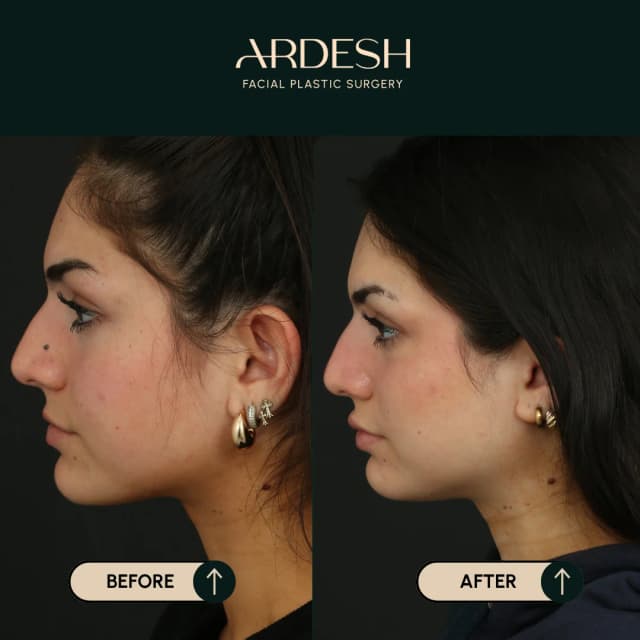
The objective is to create a nose that appears anatomically consistent with the patient's unique facial features while maintaining long-term structural stability. Successful rhinoplasty should improve facial harmony without drawing attention to the operation itself.
Patients should look refreshed and balanced-not surgically transformed.
Why Surgical Philosophy Matters
Technical skill alone does not determine rhinoplasty outcomes. Equally important is the philosophy guiding surgical decision-making.
Surgeons who prioritize preservation, structural integrity, and individualized facial analysis are generally better positioned to produce results that remain stable, functional, and aesthetically harmonious for years after surgery.
Rather than pursuing trends or exaggerated refinement, modern rhinoplasty aims to preserve what is naturally unique about each patient's face while correcting features that disrupt overall balance.
Achieving a natural-looking result starts long before surgery. If you're researching surgeons, Rhinoplasty Red Flags: How to Spot a Bad Surgeon highlights the warning signs that may indicate an approach focused on trends rather than long-term facial harmony. It's also worth remembering that the nose can look quite different during recovery, so Rhinoplasty Swelling: What's Normal, What's Not explains how temporary swelling can affect your appearance before the final result becomes visible.
Schedule a Consultation with Dr. Farhad Ardesh
Achieving a natural rhinoplasty requires more than technical precision. It demands a comprehensive understanding of facial anatomy, structural preservation, and long-term aesthetic balance. Dr. Farhad Ardesh is a board-certified facial plastic surgeon whose approach focuses on creating refined, natural-looking results while maintaining both nasal support and function. Patients searching for a great rhinoplasty surgeon often value this individualized, preservation-focused philosophy because it aims to enhance facial harmony without creating an over-operated appearance.
Whether you are considering primary rhinoplasty or seeking correction of a fake looking rhinoplasty, Dr. Ardesh develops individualized surgical plans based on detailed facial analysis rather than one-size-fits-all techniques. If you're researching rhinoplasty surgeons in Los Angeles, schedule a consultation to learn how a preservation-focused approach can help achieve results that complement your facial identity and stand the test of time.