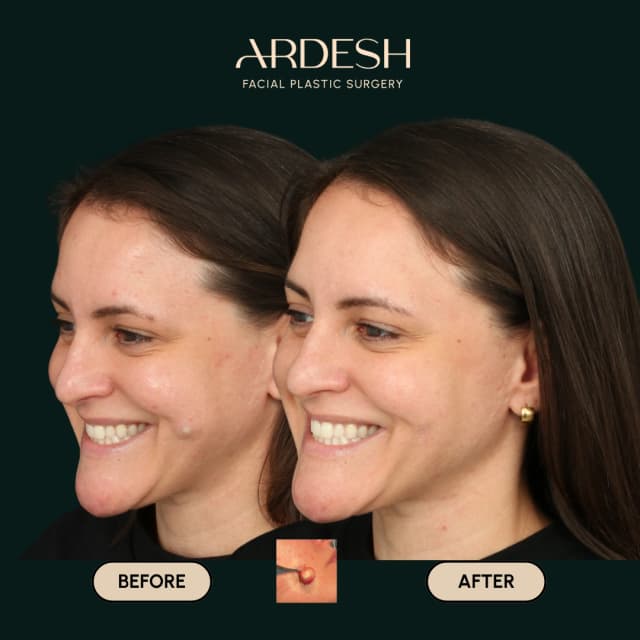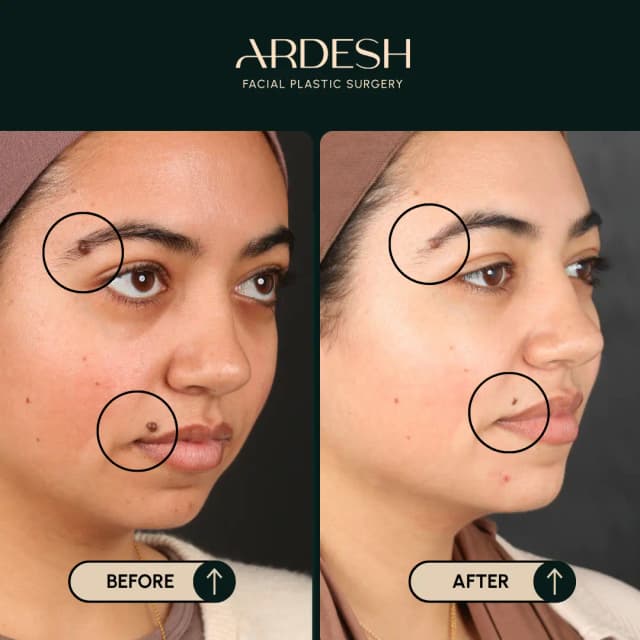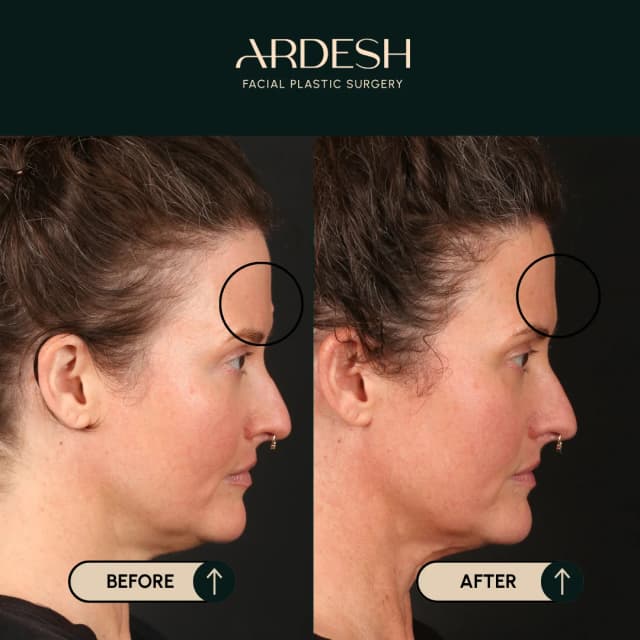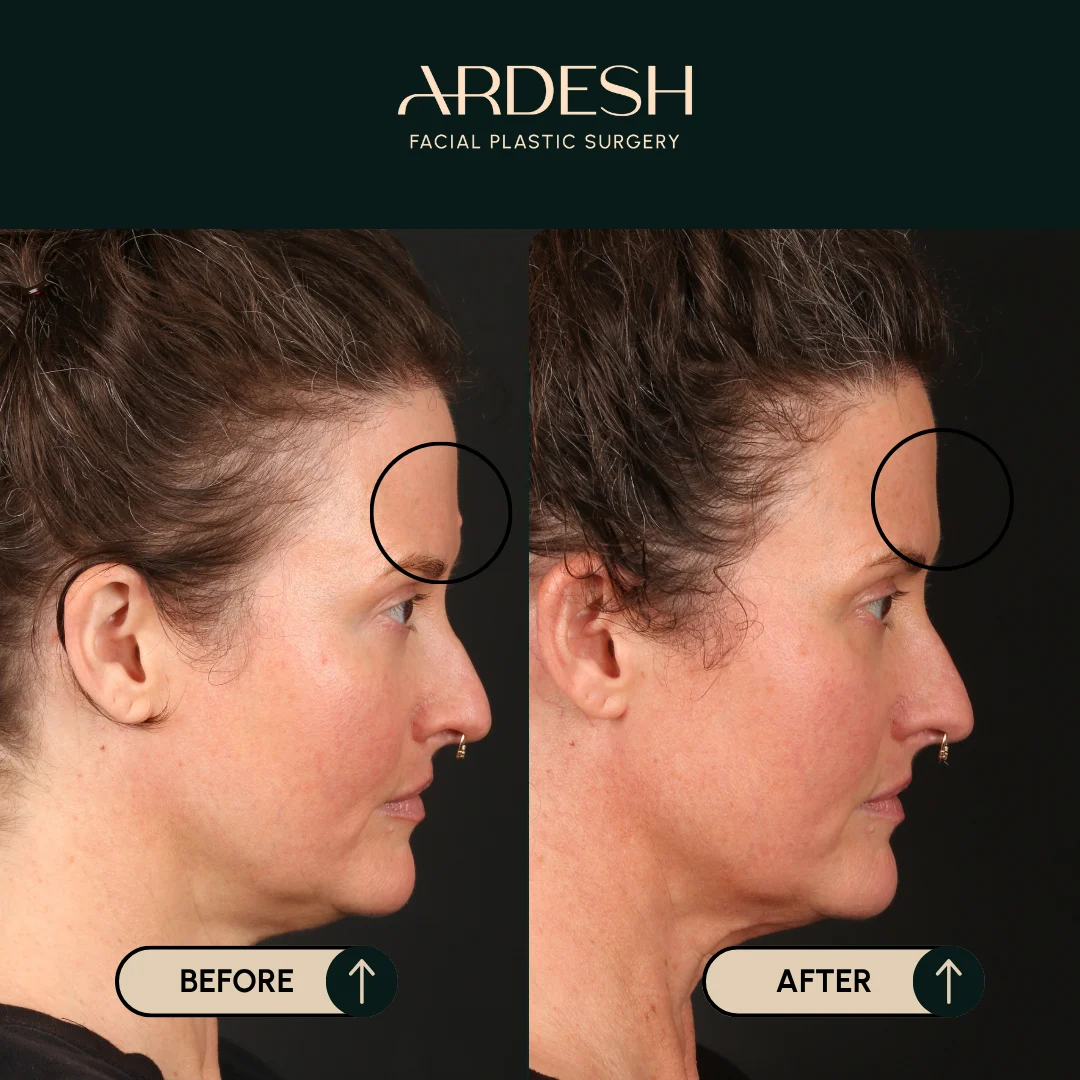
Most people postpone small mole removal for one reason: they assume it's going to hurt more than it does. The procedure itself - whether laser or surgical - is performed under local anesthesia. The mole removal part is essentially painless. What patients actually feel is the anesthetic injection, a brief sting that lasts a few seconds, and then nothing significant until the numbing wears off hours later.
That's the honest version. The rest of this article fills in the specifics.
About Dr. Ardesh
Dr. Ardesh of Beauty Mark MD is a double board-certified facial plastic and reconstructive surgeon known for delivering thousands of refined, natural outcomes. With an academic background that includes teaching in head and neck surgery, ophthalmology, and dermatology at Loma Linda University, he later transitioned into private practice to focus on patient-centred care. His philosophy emphasises subtle enhancement rather than obvious alteration, earning him recognition as a leading plastic surgeon in Beverly Hills and Newport Beach.
Pain is mostly a pre-procedure fear, not a post-procedure reality
There's a gap between what people expect and what they experience. It shows up consistently. Patients who came in tense about pain almost always describe the actual procedure as far less eventful than they anticipated.
Part of this is the word "removal." It sounds more aggressive than it is. A small mole - flat or slightly raised, a few millimeters across - takes a matter of minutes to address. The local anesthetic numbs the site completely before anything else happens.
What the injection actually feels like
The anesthetic is typically lidocaine, sometimes with epinephrine to reduce bleeding and extend the numbing effect. The injection is a small needle, placed just beneath the skin surface at and around the mole site.
Most patients describe it as:
- A sharp pinch lasting one to two seconds
- Mild burning sensation as the anesthetic spreads, also brief
- Complete numbness within 60 to 90 seconds
After that, the procedure itself produces pressure and movement sensations but no pain. Patients are awake throughout. They feel the surgeon working but not in a way that registers as discomfort.
During the procedure
For surgical excision of a small mole, the sequence is straightforward. The surgeon marks the excision boundary, makes a precise incision, removes the lesion, and closes the wound. For lesions a few millimeters in diameter, this takes roughly 10 to 20 minutes from start to finish.
For laser removal of a flat pigmented mole, the sensation is described differently - a series of quick snapping or rubber-band flicks as the laser pulses. Still under topical or local anesthesia for most patients, still brief.
Neither procedure, done correctly on a small mole by an experienced surgeon, should be a significant pain event.
What happens when the anesthesia wears off
This is where patient experiences diverge more meaningfully. The post-procedure period varies based on the removal method, the mole's location on the body or face, and individual pain tolerance.
After surgical excision:
- Mild soreness or tenderness at the site begins as the anesthesia fades, typically 2 to 4 hours post-procedure
- The sensation is closer to a minor cut than to a wound - most patients describe it as easily managed
- Over-the-counter pain relief (acetaminophen or ibuprofen) handles the discomfort for most people
- Prescription pain medication is rarely needed for small mole removal
- Tenderness at the site typically resolves within 3 to 5 days
After laser removal:
- The treated area often feels like a mild sunburn for the first 24 to 48 hours
- Redness and mild swelling are normal, not signs of a problem
- Discomfort is generally lower than after excision, but healing takes longer as the body processes destroyed tissue
- Some patients report intermittent itching during the healing phase - a normal part of the skin repair process
Neither recovery requires significant downtime. Most people return to desk work the same day or the next morning.
The face heals differently - and that matters
For moles located on the face, the recovery experience has specific nuances worth understanding.
Facial skin has a richer blood supply than most other areas of the body. This means two things: it heals faster, and it tends to swell more in the first 24 to 48 hours post-procedure. Neither is a problem. The swelling is mild for small lesions and typically resolves within a few days.
What patients notice more, practically speaking, is the social visibility of facial healing. A small bandage or healing wound on the face is more apparent than one on the arm or back. Planning the procedure timing around social or professional commitments is reasonable and something surgeons discuss during consultation.
Specific locations on the face also have slightly different recovery profiles:
- Around the eyes - thinner skin, slightly more bruising possible, resolves quickly
- On the nose - more movement during daily activity, important to keep the area protected
- Near the mouth or lips - talking and eating require mild care for the first few days
- Cheeks and forehead - generally the most straightforward healing sites on the face
A surgeon who works primarily on facial anatomy factors these location-specific details into both the technique and the post-procedure instructions. That specificity matters more than it might seem.
The healing timeline most patients don't fully expect
Recovery from small mole removal is short in terms of discomfort. It's longer in terms of the full cosmetic result. Understanding both timelines prevents unnecessary concern.
First week: The wound site is healing actively. Sutures (if used) are present. Redness at the wound edges is normal. Keeping the area clean, avoiding sun exposure, and following the surgeon's aftercare instructions is the main job here.
Weeks two through four: Sutures are removed within 5 to 7 days for facial sites. The wound closes fully. A pink or slightly raised scar line appears - this is not the final result. It's the inflammatory phase of healing and it's expected.
Months one through six: The scar matures. The pinkness fades. The texture flattens. This is the phase where the real cosmetic outcome becomes visible, and it's also where the quality of the initial closure technique becomes apparent. Layered wound closure, fine sutures, and active scar management (silicone gel, sun protection) during this window significantly affect where the scar ends up.
Six months and beyond: For most patients who had small mole removal done with precise technique and followed post-care protocols, the scar at this stage is faint to barely visible. Facial skin, properly managed, heals better than most people expect going in.
What slows healing down - and what patients control
Some recovery variables are fixed - skin type, age, mole location. Others are directly within the patient's control.
Things that extend recovery or worsen scarring:
- Sun exposure on healing skin without protection (causes hyperpigmentation)
- Picking at healing tissue or sutures
- Skipping follow-up appointments
- Not using recommended scar management products during the maturation phase
- Smoking, which reduces circulation and slows tissue repair
Things that support faster, cleaner healing:
- Keeping the wound clean and covered as instructed
- Applying sunscreen diligently once the wound has closed
- Using silicone gel or sheets during the scar maturation phase if recommended
- Staying hydrated and avoiding significant physical strain during the first week
- Attending all scheduled follow-up visits
None of this is complicated. The patients who get the best long-term cosmetic results from small mole removal are almost always the ones who followed through consistently on the basics.
When to call the clinic before your scheduled follow-up
Most post-procedure healing is uneventful. But knowing what's normal versus what warrants a call saves unnecessary anxiety.
Contact the clinic if you notice:
- Increasing redness or warmth at the site after the first 48 hours (rather than decreasing)
- Any discharge that isn't clear or light pink
- Fever developing in the days after the procedure
- Sutures loosening or coming apart before the scheduled removal date
- Pain that worsens rather than gradually improving after day two
These are uncommon with properly performed procedures. But they're worth flagging early.
The part where surgeon selection actually determines your experience
Here's the honest reality. The pain experience and the final cosmetic result from small mole removal are influenced less by the method and more by who performs it.
A clean, precise excision closed in layers heals with a finer scar than a hurried one. A surgeon who accounts for facial anatomy at specific sites - the tension lines, the skin thickness, the healing behavior - produces a result that a less experienced hand doesn't reliably match.
Dr. Farhad Ardesh built his practice specifically around this standard. As a dual-board certified facial plastic surgeon operating under the Beauty Mark MD trademark, with over 5,000 procedures behind him, his focus has been on cosmetic mole removal where the outcome looks like nothing was ever there. Not just removed - handled with the kind of precision where the healing process becomes part of the result.
Practices at Beverly Hills and Newport Beach locations. For patients who want the procedure done once and done well - with a clear clinical process, honest recovery expectations, and a surgeon who performs both the evaluation and the excision - a consultation with Dr. Ardesh is the right starting point.