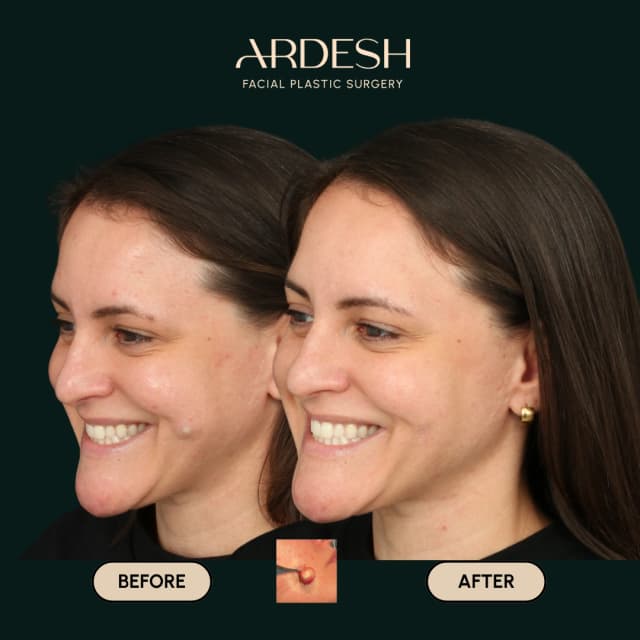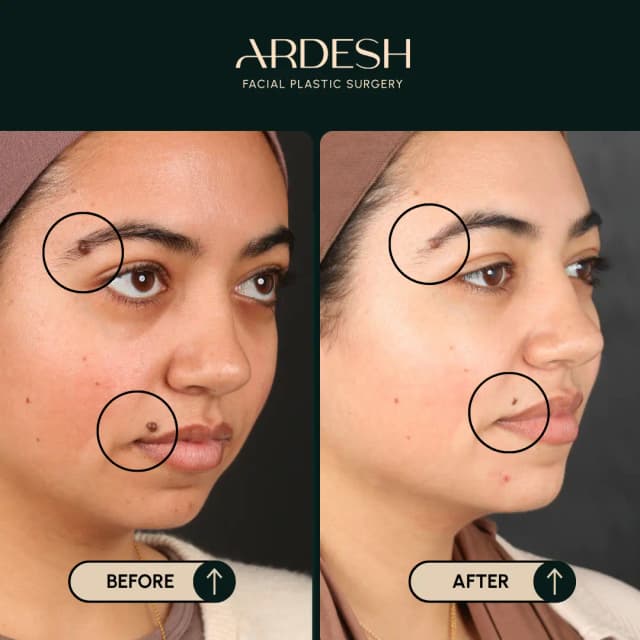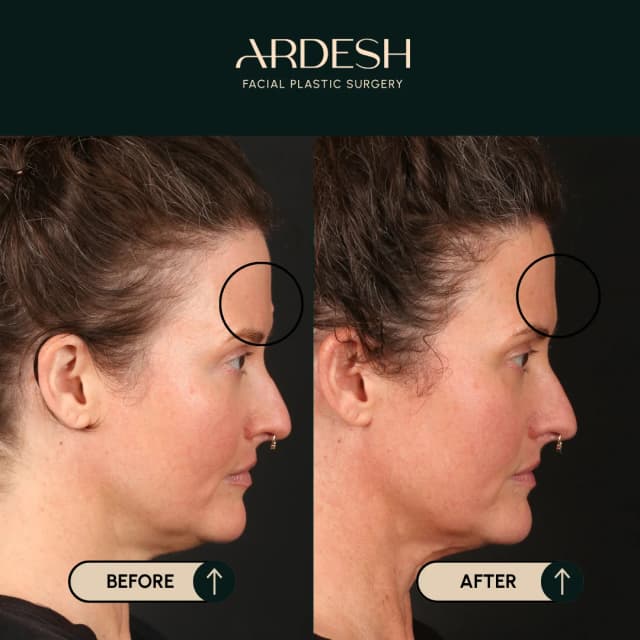
Most people who find skin tags on the neck do the same thing: ignore them for two years, then suddenly decide they want them gone. Fair enough. They're harmless. They're also surprisingly common - roughly half of adults develop at least one at some point, usually in midlife.
But there's a question that keeps coming up in clinical settings, and it's worth answering plainly: do skin tags on the neck mean something? Diabetes. Hormones. Insulin. You've probably seen those words in the same sentence as skin tags somewhere online. Here's what the research actually supports, what it doesn't, and what removal looks like when you're ready to do something about it.
About Dr. Ardesh
Dr. Ardesh of Beauty Mark MD is a double board-certified facial plastic and reconstructive surgeon known for delivering thousands of refined, natural outcomes. With an academic background that includes teaching in head and neck surgery, ophthalmology, and dermatology at Loma Linda University, he later transitioned into private practice to focus on patient-centred care. His philosophy emphasises subtle enhancement rather than obvious alteration, earning him recognition as a leading plastic surgeon in Beverly Hills and Newport Beach.
What a skin tag actually is
Technically called an acrochordon. Soft, flesh-colored, hangs from a thin stalk. The internal structure is straightforward - collagen fibers and a few blood vessels, wrapped in normal epidermis.
They don't have significant nerve supply, which is why they're painless under normal circumstances. They become a nuisance when they catch on jewelry, shirt collars, or necklace chains - at which point a minor irritation that was easy to ignore becomes one you notice every day.
The neck is one of the most common locations. So are armpits, inner thighs, and under the breasts. The pattern is friction. Skin rubbing against skin or clothing, repeatedly, over years. That mechanical explanation covers most cases. Age accelerates the process. So does weight gain, because more skin surface contact means more opportunity for tags to form.
The insulin connection - and why it matters more than people realize
Here's the part that actually has clinical backing.
Elevated insulin levels stimulate a receptor in skin tissue called insulin-like growth factor receptor. When that receptor gets chronically activated - as it does in insulin resistance and type 2 diabetes - it triggers abnormal cell proliferation in certain skin areas. Skin tags are one result. The neck and axillae tend to show it first.
So the association is real. People with type 2 diabetes and prediabetes do develop skin tags on the neck and other friction zones at higher rates than the general population. A 2007 study published in the Journal of the German Society of Dermatology found that patients with multiple acrochordons had significantly higher fasting insulin and blood glucose levels compared to controls.
What that doesn't mean:
- One skin tag is not a red flag. Everyone gets them.
- Multiple tags appearing quickly, clustered in metabolically associated areas, alongside other symptoms - that's the combination worth flagging to a physician.
- Skin tags don't diagnose anything. They're a signal, not a result.
The practical takeaway: if you're developing new tags regularly, have a family history of type 2 diabetes, carry significant weight around the midsection, and haven't had recent bloodwork - it's a reasonable prompt to schedule a checkup. Not an emergency. Just a nudge.
What about hormones
Pregnancy is the clearest hormonal driver. Estrogen and progesterone both affect skin tissue behavior during the second and third trimesters, and skin tags often multiply noticeably during this window. Some resolve after delivery. Others don't.
Beyond pregnancy, the hormonal picture is murkier but follows a familiar thread.
Polycystic ovary syndrome involves elevated androgens and, frequently, underlying insulin resistance. Both contribute to skin tag formation. PCOS patients develop them at higher rates, particularly around the neck and axillae. Thyroid dysfunction - both underactive and overactive - has been observed alongside skin tag development in some patients, though the mechanism is less direct.
The thing most of these hormonal conditions share: disrupted insulin signaling. PCOS, obesity-related hormonal shifts, cortisol dysregulation from chronic stress - they all affect how the body processes insulin at the tissue level. That's likely the actual driver in many "hormonal" skin tag cases, with the hormone label being the more visible upstream cause.
There's also acromegaly - excess growth hormone, typically from a pituitary tumor. Skin tags are a listed dermatological feature. But acromegaly is rare, and if that's the cause, skin tags are the least of the diagnostic concerns.
The location and quantity question
A single tag on the neck of someone in their late 40s who wears a collar to work every day? Almost certainly mechanical. Nothing to read into it.
The picture changes when multiple skin tags on the neck appear in a short period, particularly if they show up alongside the following:
- Acanthosis nigricans - the velvety, darker patches in neck folds and armpits that are a more established insulin resistance marker
- Unexplained weight gain concentrated around the abdomen
- Fatigue that's out of proportion to lifestyle
- Irregular menstrual cycles (in women)
- Increased thirst or urination
Tags plus acanthosis nigricans together is a combination most clinicians treat as grounds for metabolic screening. Either alone is less diagnostic. Together, they're telling a consistent story.
One more thing worth naming: if a tag changes. Grows noticeably. Bleeds. Develops irregular coloring. That's a different conversation from cosmetic removal - it warrants a proper skin check before anyone does anything else.
When to just remove them
The health question is worth investigating if the context warrants it. But plenty of people want their skin tags on the neck removed for no reason beyond the fact that they don't like them there. That's a completely sufficient reason.
Removal makes sense when:
- A tag catches on jewelry or shirt collars regularly and causes repeated minor irritation
- Tags in a visible location are affecting confidence in professional or social settings
- Multiple tags have accumulated over time and become a consistent source of self-consciousness
- A tag has grown larger over the years and become more noticeable
No medical justification required. Skin tags are benign. The decision to remove them is yours.
What removal actually involves
Several methods exist for skin tags on the neck, and the right one depends on tag size, number, and exact placement.
Snip excision is the most direct approach. A small surgical scissors or scalpel removes the tag at its stalk after local anesthetic. Fast, precise, immediately effective. Works well for isolated or larger neck tags.
Radiofrequency ablation uses electrical current to destroy tissue at the stalk. Handles multiple small tags efficiently in a single session. The site forms a small scab that separates naturally within 7 to 10 days.
Cryotherapy uses liquid nitrogen to freeze the tag. The tissue dies and detaches over about 10 days. Less precise than snip excision, which matters more on the neck where proximity to visible skin makes cosmetic outcome a priority.
Laser removal offers good precision with minimal surrounding tissue disruption. A reasonable choice for patients with multiple tags or anyone particularly concerned about the post-procedure appearance on a visible area like the neck.
Worth saying clearly: home removal methods are not in this list for good reason. Tying off tags, cutting them without anesthetic, or applying over-the-counter chemical treatments introduces infection risk and produces worse cosmetic results than any of the methods above. The neck is visible. The healing is part of the result.
The neck is specific - and that specificity matters
The neck heals well. Good blood supply. But a small healing wound there is visible in ways that one on the forearm isn't - in conversation, in photographs, across a meeting table.
That visibility is exactly why the removal technique and the person performing it both matter. A precise snip excision closed cleanly, with proper aftercare, heals to be near-invisible on most patients. A hasty or imprecise removal in the same location heals differently.
The bottom line
Neck skin tags are rarely something to worry about. In most cases, they’re the result of friction, age, or common metabolic factors that many people experience over time.
But they can still tell you something useful.
If you’re noticing multiple skin tags appearing quickly, especially alongside changes in weight, energy levels, or skin texture, it’s worth paying attention. Not because it signals something urgent, but because it gives you an opportunity to check in on your overall health.
And if the concern is purely cosmetic, that’s just as valid.
Removing skin tags on the neck is a straightforward process when done correctly. The key is choosing a method that prioritises both precision and how the skin heals afterwards. Techniques like snip excision or controlled medical removal tend to offer more predictable, cleaner results compared to less precise approaches, especially on a visible area like the neck.
That’s where the choice of provider makes a difference.
Dr. Farhad Ardesh approaches skin tag removal with the same attention to detail applied to facial procedures, focusing on clean technique, minimal marks, and outcomes that blend naturally with the surrounding skin. The goal isn’t just removal. It’s removal that doesn’t draw attention later.
If you’re considering getting neck skin tags removed, or want a professional opinion on whether they’re purely cosmetic or worth evaluating further, scheduling a consultation is the right first step.