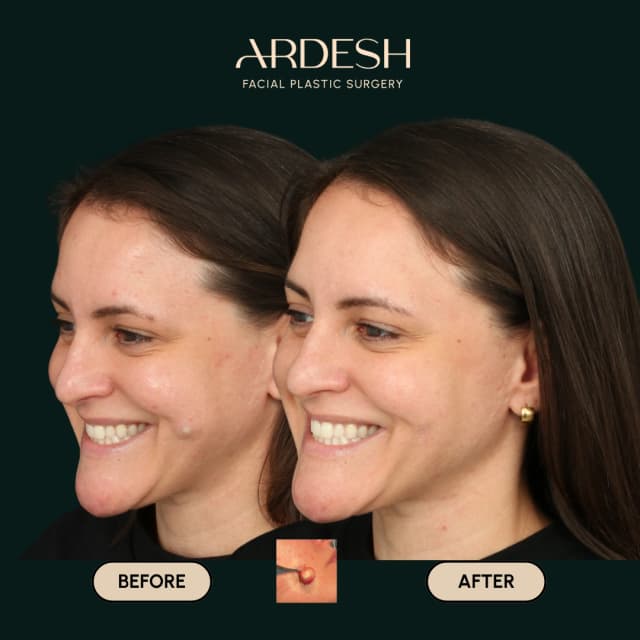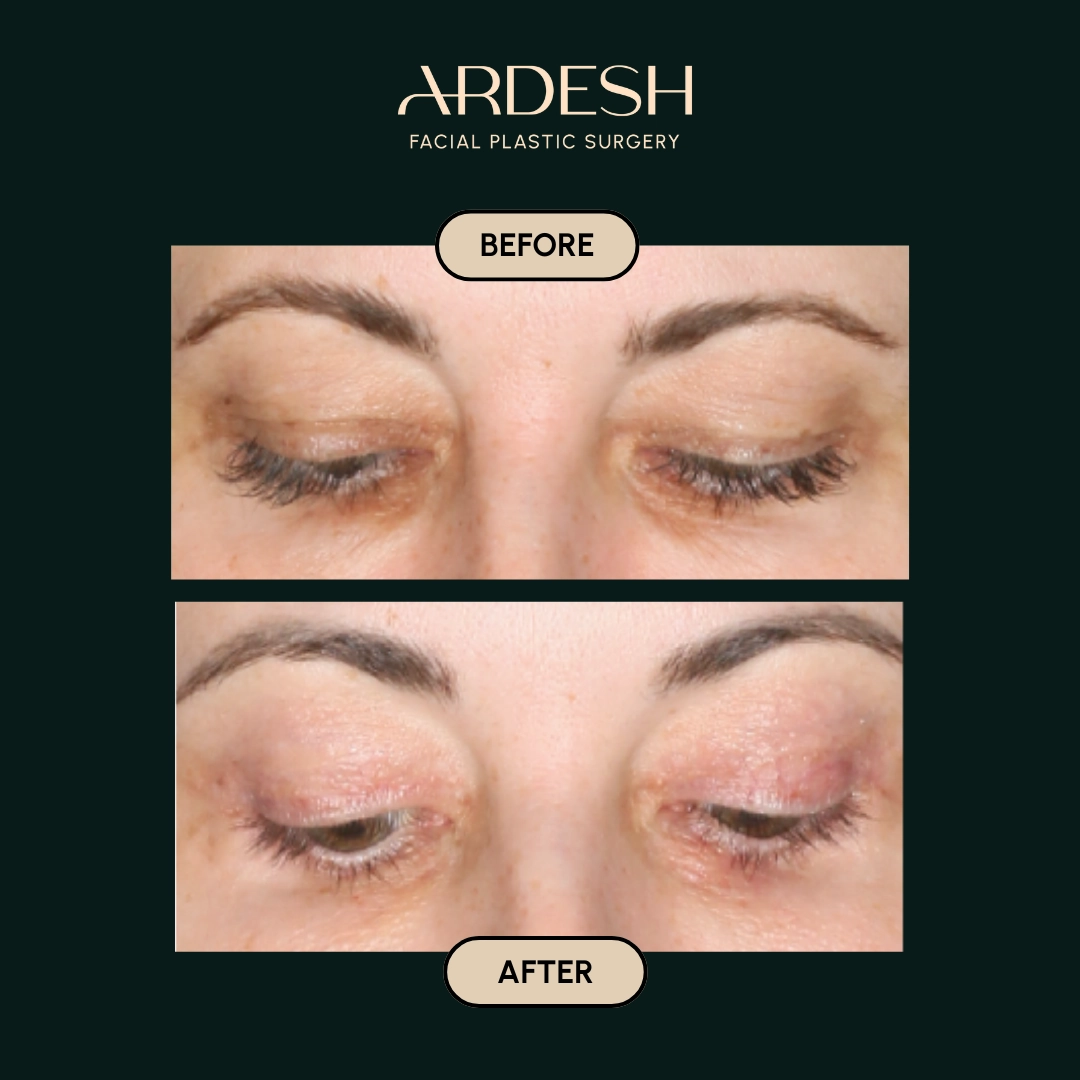
The answer is yes - and mostly in ways you won't mind. Upper lid surgery removes excess skin and, in some cases, a small amount of fat from the upper eyelid. That structural change affects the surface you're working with when you apply makeup.
The crease sits differently. The lid space opens up. Shadows land in new places. For most patients, the adjustment period is short and the end result is a canvas that's actually easier to work with than what they had before.
But there are specific things to know, a timeline to respect, and a few habits worth changing. This article covers all of it.
About Dr. Ardesh
Dr. Ardesh of Beauty Mark MD is a double board-certified facial plastic and reconstructive surgeon known for delivering thousands of refined, natural outcomes. With an academic background that includes teaching in head and neck surgery, ophthalmology, and dermatology at Loma Linda University, he later transitioned into private practice to focus on patient-centred care. His philosophy emphasises subtle enhancement rather than obvious alteration, earning him recognition as a leading plastic surgeon in Beverly Hills and Newport Beach.
What the surgery actually changes about your eyelid anatomy
Before getting into the makeup specifics, it helps to understand what upper lid surgery - clinically called upper blepharoplasty - does to the eyelid structure.
The procedure removes a carefully measured strip of redundant skin from the upper lid. Depending on the case, a small amount of herniated fat may also be addressed. The incision follows the natural crease of the upper lid, which means the scar sits in a location that's already a shadow line on most people's faces.
After healing, the upper lid has:
- More visible lid space between the lash line and the brow
- A more defined natural crease
- Less skin overhang that previously obscured the lid surface
- In many cases, improved symmetry between both eyes
Each of these changes has a direct downstream effect on how eye makeup applies and reads on the face. None of them are problems. They're just a different starting point than what you were used to.
The healing window: when makeup is off the table entirely
This is the part most patients underestimate going in. Not the long-term change - the short-term restriction.
For the first two weeks post-procedure, eye makeup is not an option. The incision is fresh. The tissue is actively healing. Applying any product to or near the incision line during this window risks infection, disrupts the healing process, and can affect how the scar matures.
Specifically:
- Week one: No eye products of any kind - no liner, shadow, mascara, or eye cream near the incision. The area is kept clean and dry per the surgeon's instructions.
- Week two: Still no eye makeup. Swelling and bruising are resolving. The incision is closing but not healed. Skincare products around (not on) the eye area can typically resume with surgeon clearance.
- Week three onward: Most surgeons clear patients for light eye makeup at the three-week mark, assuming healing is progressing normally. Start with gentle formulas before returning to your full routine.
The two-week restriction feels longer than it sounds. Plan around it. If there's a significant event - a work presentation, a wedding, anything where you rely heavily on eye makeup - schedule the procedure with that timeline in mind.
What changes about application after you heal
Once healing is complete and you return to your full makeup routine, you'll notice the eyelid feels and responds differently. This isn't a problem. It's an adjustment that most patients find genuinely positive once they work through it.
The crease is now your new landmark
Before surgery, many patients had a partially obscured or difficult-to-find crease due to excess skin. After upper lid surgery, the crease is clear, consistent, and easier to use as a placement guide.
Eye shadow placement that previously required compensating for skin overhang now lands exactly where you put it. Cut crease techniques that were difficult or impossible to execute on a hooded lid become accessible. The lid space you now have is the space you're actually working with - no subtracting for fold.
Liner application reads differently
Pre-surgery liner on a hooded lid often gets partially or fully covered by the overhanging skin when the eyes are open. Post-surgery, the liner is visible. This is a good thing, but it means the thickness and placement that worked before may feel heavier now.
A few practical adjustments worth making:
- Start with thinner liner applications and build from there
- The tightline (inner rim) may now be more effective and visible than before
- Wing placement may need repositioning - with more lid space, the angle that worked previously can look different
- Pencil liners along the lash line may smudge differently on the post-surgical lid, particularly in the first few months as the skin continues to settle
Mascara and lash behavior
Some patients notice that lashes appear more lifted and visible after surgery because the skin that previously compressed them is gone. This is usually a pleasant surprise. Mascara application reads more dramatically on lashes that are no longer partially obscured.
If you had any chronic contact between the upper lid skin and your lashes before surgery - skin heavy enough to press lashes downward - that's resolved. Lash curling may feel less necessary.
Eye creams and skincare near the surgical site
This is worth its own section because it's where patients sometimes make well-intentioned mistakes during recovery.
Eye creams, particularly rich or occlusive formulas, should stay away from the incision line until the surgeon clears you for their use - typically around weeks three to four. The incision needs to breathe and heal without product interference.
After clearance:
- Fragrance-free, gentle formulas near the orbital area are the sensible starting point
- Retinol-containing eye creams should wait until the scar is fully mature - at least 3 to 6 months post-procedure - as retinol affects skin cell turnover and can interfere with scar development
- SPF around the eye area is non-negotiable during the scar maturation window; UV exposure on a healing scar causes hyperpigmentation that's difficult to correct
The scar and how it interacts with makeup long-term
The incision from upper lid surgery sits in the natural crease of the lid. In most patients, once healed, it's functionally invisible - it sits in a shadow line and blends into the crease's natural fold.
That said, during the maturation phase (roughly months one through six), the scar may appear pink or slightly raised. This is normal. Makeup can be used to minimize this during the maturation window once healing is confirmed:
- A neutral matte shadow in a skin-tone shade pressed gently over the crease area can neutralize pinkness without requiring heavy coverage
- Avoid shimmer or glitter directly on the incision line during maturation - texture products adhere unevenly to healing tissue
- Color-correcting products are rarely needed but available if the pink tone during early healing bothers you in social settings
By month six, in most cases, the scar has faded to near-invisible. By twelve months, most patients cannot identify the incision line in the mirror.
When the makeup routine actually gets easier
Here's the part that surprises people the most, and it's worth stating plainly.
Most patients who had hooded or heavy upper lids before surgery report that their eye makeup routine is simpler afterward. Not more complicated. Simpler.
The compensating techniques - the heavy dark shadow to create depth that the lid fold was stealing, the liner drawn thicker to remain visible, the careful avoidance of anything that drew attention to an asymmetric crease - most of that goes away. The lid that results from well-executed upper lid surgery is symmetrical, open, and consistent on both sides. You're working with what's there, not around what was in the way.
That shift is practical and psychological. A lot of patients describe spending less time on eye makeup post-surgery, not more. The canvas works with the technique instead of against it.
Read More About Eyelid Surgery
What to ask your surgeon before the procedure
Before booking, a few direct questions are worth raising:
- What will my specific crease position look like after surgery, and how will that change my current lid geometry?
- When can I safely return to a full eye makeup routine, including contact lenses?
- Are there product types I should avoid near the incision during the first six months?
- What does the scar maturation timeline typically look like for patients with my skin type?
A surgeon who works primarily on the face will answer these with specificity. Vague reassurances aren't useful here - the details matter for planning recovery and managing expectations.