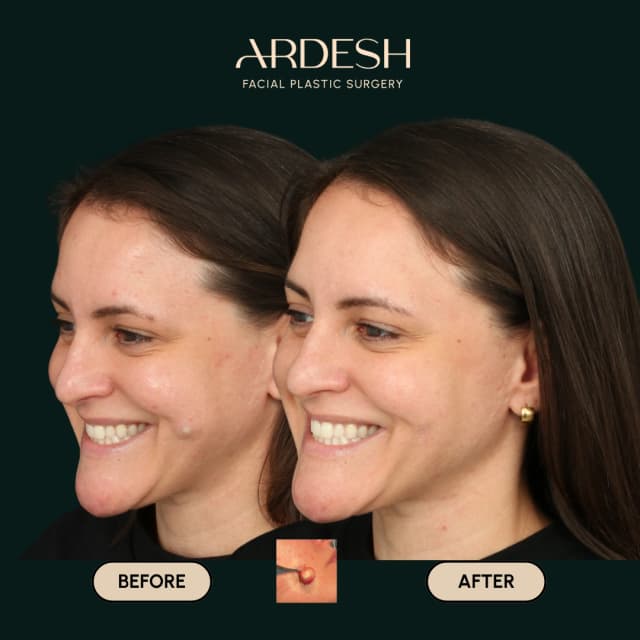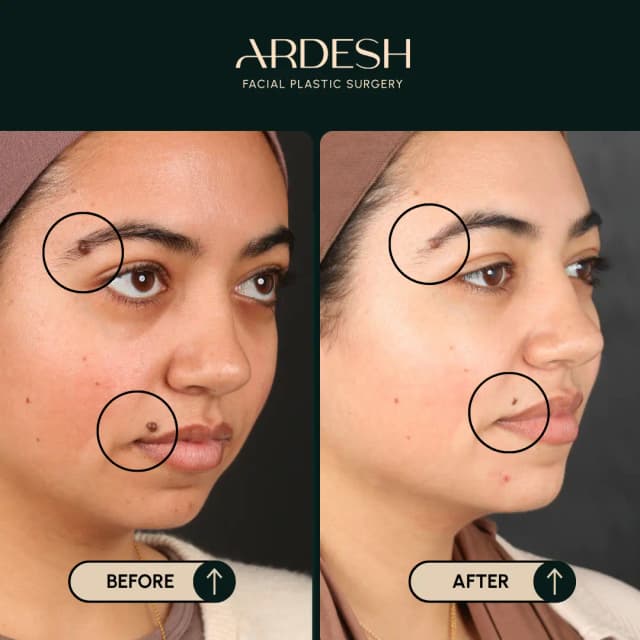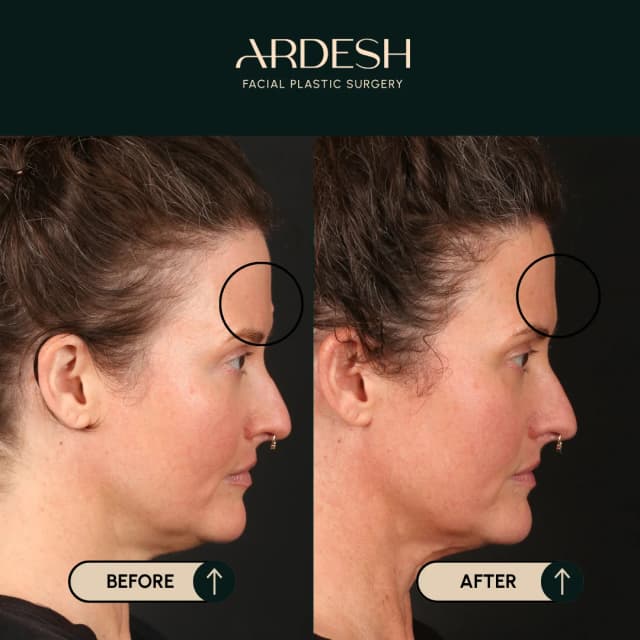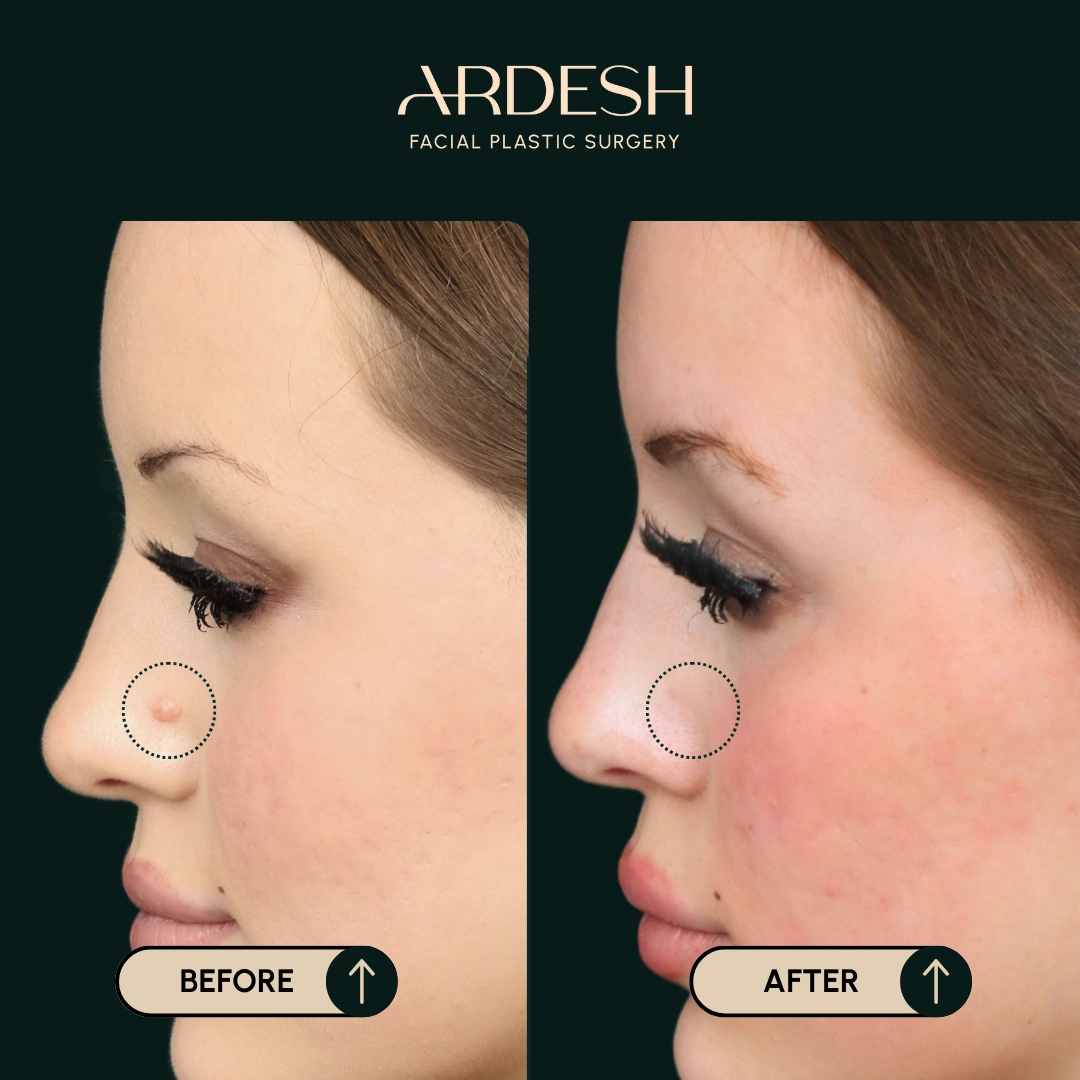
Bad outcomes from mole removal don't usually happen because something went catastrophically wrong in the procedure room. They happen earlier - in the decisions made before anyone picks up a scalpel or a laser handpiece.
For anyone considering mole removal in Los Angeles, understanding what actually drives poor results is more useful than any before-and-after gallery. Because the gallery shows the wins. The consultation process is where the losses get decided.
Here's what goes wrong, and why.
About Dr. Ardesh
Dr. Ardesh of Beauty Mark MD is a double board-certified facial plastic and reconstructive surgeon known for delivering thousands of refined, natural outcomes. With an academic background that includes teaching in head and neck surgery, ophthalmology, and dermatology at Loma Linda University, he later transitioned into private practice to focus on patient-centred care. His philosophy emphasises subtle enhancement rather than obvious alteration, earning him recognition as a leading plastic surgeon in Beverly Hills and Newport Beach.
The result is set before the procedure begins
Most patients focus on the procedure itself. The laser, the technique, the recovery. Understandable. But the outcome is largely determined by two things that happen earlier: the clinical evaluation and the method selection. Get those right and the procedure follows logically. Get them wrong and no amount of technical skill fully corrects the trajectory.
A mole that needed surgical excision, treated instead with laser because it was cheaper or faster, doesn't get cleanly removed. A mole with ambiguous features that skipped pathological review creates a different category of problem entirely. These aren't rare edge cases. They're patterns.
Skipping the diagnostic step
The dermoscope - a handheld instrument used to examine a mole's internal structure - is standard equipment in any serious practice. It allows a trained clinician to assess pigment patterns, border regularity, and vascular features that aren't visible to the naked eye.
Clinics that skip dermoscopic evaluation and move straight to booking a treatment are making a significant clinical error. Not every mole is a cosmetic problem. Some require pathological confirmation before any removal happens. When that step gets skipped, two bad outcomes become possible: incomplete treatment of a lesion that needed more aggressive management, or removal without any record of what the tissue actually contained.
Neither is acceptable. Neither is rare in practices that prioritize volume over process.
Method mismatch is the most common technical cause of bad cosmetic results
Assume the evaluation was done properly. The mole is benign, purely cosmetic, and the patient wants it gone. The next decision point is method selection - and this is where a meaningful number of cosmetic failures originate.
The methods available for mole removal aren't interchangeable. They have specific applications.
Laser on the wrong mole type:
Laser removal - whether Q-switched or picosecond - works on flat, superficial, pigmented lesions. It doesn't penetrate deep enough to fully address raised moles with a significant dermal component. Treating a compound or intradermal nevus with a laser often produces partial removal. The surface clears. The deeper portion remains. The mole recurs, sometimes with irregular borders that are now harder to assess clinically.
Surgical excision with insufficient margin:
Excision done with too narrow a margin around the lesion leaves residual cells at the wound edge. The mole grows back. The patient returns. A second procedure on previously operated tissue is always more complicated than the first.
Wound closure that ignores tension:
This one shows up months later, not immediately. A wound closed under tension - where the skin edges are pulled together tightly without accounting for the underlying tissue planes - heals with a wider, more visible scar. Layered closure, where the wound is repaired in multiple tissue planes before the surface is sutured, distributes tension and produces a finer result. Skipping that step saves a few minutes in the procedure room and costs the patient months of visible scarring.
Where the face specifically raises the stakes
Mole removal in Los Angeles tends to concentrate heavily on facial lesions. That's not a surprise given the population and the aesthetic culture. But the face is where technical errors become most visible and most difficult to correct.
Facial skin has location-specific healing properties that change the risk profile of any procedure. The skin around the eyelids is thin enough that even minor tension at closure produces distortion. The nose has limited tissue laxity, meaning excision margins need careful planning. The upper lip heals with a tendency toward hypertrophic scarring in some skin types if wound edges aren't managed precisely.
Clinics that perform mole removal across the body without differentiated expertise in facial anatomy sometimes treat a cheek lesion the same way they'd treat one on the forearm. The results reflect that approach.
The specific errors that show up most often on facial removals:
- Incision orientation that crosses natural skin tension lines instead of following them, producing a more visible scar
- Removal technique that creates a wound larger than necessary for the lesion size
- Surface-only closure that leaves underlying tissue unsupported, leading to scar widening over time
- No post-procedure scar management protocol, leaving patients without guidance during the critical maturation window
The provider category problem
Here's something the glossy clinic websites don't address directly. The category of provider performing the procedure matters, and not all categories carry the same risk profile.
Mole removal in the US can legally be performed by a range of providers - from board-certified surgeons to medical aestheticians working under physician supervision, depending on the state and the specific procedure. The patient experience walking into a medspa and walking into a facial plastic surgery practice may look similar. The clinical depth behind it isn't.
Specific things worth asking before booking anyone for mole removal in Los Angeles:
- Is a physician performing the clinical evaluation, or is intake handled by non-clinical staff?
- Will a physician examine the mole with dermoscopy before a treatment is recommended?
- Who specifically is performing the removal - a surgeon or a supervised technician?
- What is the surgeon's specific experience with facial lesions versus general dermatology?
- What does post-procedure follow-up look like, and who conducts it?
These questions aren't adversarial. Any practice worth using will answer them without hesitation. The ones that hedge or redirect are telling you something.
What recurrence actually means and why it happens
A mole that comes back after removal is almost always a sign of incomplete initial treatment. Not a coincidence. Not bad luck.
For surgical excision, recurrence means residual cells were left at the margin. This happens when the excision boundary was too conservative, when the wound was closed in a way that allowed edge retraction, or when the surgeon didn't verify clearance.
For laser removal, recurrence usually means the lesion had a deeper dermal component that the laser didn't reach. This is particularly common with compound nevi that appear flat on the surface but have significant activity below it.
A single recurrence is manageable. It requires a second procedure on previously treated tissue, which carries higher complication risk, but it's correctable. Multiple recurrences, or recurrence following a procedure that didn't include pathological review, is a more serious situation requiring a more thorough clinical assessment before any further treatment.
Scarring that didn't need to happen
Not all scars from mole removal are failures. Surgical procedures on skin produce scars. That's biology. But there's a significant difference between a fine, pale line that fades to near-invisible at twelve months and a raised, wide, or discolored scar that draws more attention than the mole ever did.
The factors that separate those outcomes:
- Surgeon technique at closure (layered versus surface-only)
- Incision planning relative to skin tension lines
- Suture choice and placement precision
- Active scar management during the maturation phase (silicone gel, sun protection, scheduled follow-up)
- Patient adherence to post-care protocols
The last point is genuinely shared responsibility. Patients who skip sun protection on healing tissue, pick at suture sites, or don't use recommended scar management products during the 3 to 6 month window contribute to their own outcomes. But the foundation - the quality of the initial closure - is entirely on the surgeon.
The cost-cutting decision that creates expensive problems
One pattern shows up consistently among patients who come in for revision after a bad result. The initial procedure was chosen partly on price.
That's not a judgment. Cosmetic procedures aren't covered by insurance and the out-of-pocket cost is real. But the economics of mole removal don't actually favor the cheaper option when you factor in revision procedures, additional consultations, and the extended timeline of managing a poor result.
A single well-executed procedure done once, on the right patient, with the right method, by a surgeon with genuine facial expertise - that is almost always less expensive in total than a cheaper initial procedure followed by correction work.
The revision is harder. The tissue has already been operated on. The options narrow.
A note on finding the right practice
For patients weighing options for mole removal in Los Angeles, the differentiators that actually matter aren't found in the equipment list or the pricing page. They're in the clinical process: who evaluates you, what that evaluation includes, who performs the procedure, and what the follow-up looks like.
Dr. Farhad Ardesh is a dual-board certified facial plastic surgeon whose practice is built specifically around cosmetic mole removal - scar-minimizing technique, precise closure, and outcomes that look natural. For patients who want the procedure done right the first time, a consultation at his Beverly Hills or Newport Beach location is worth the conversation.