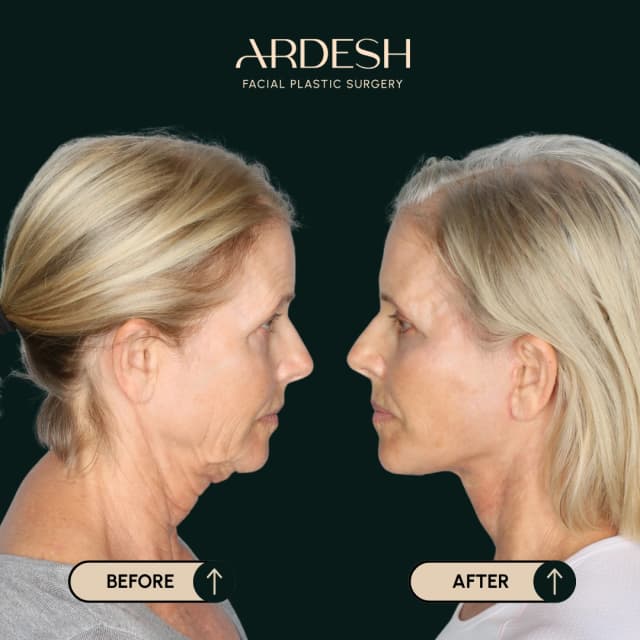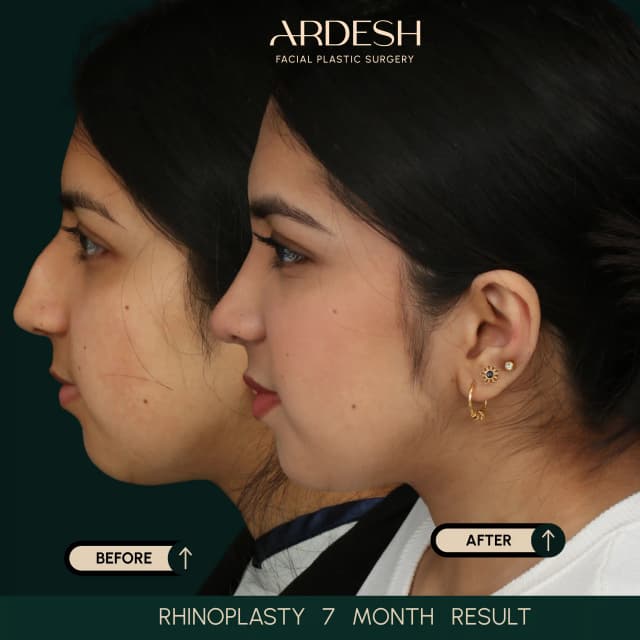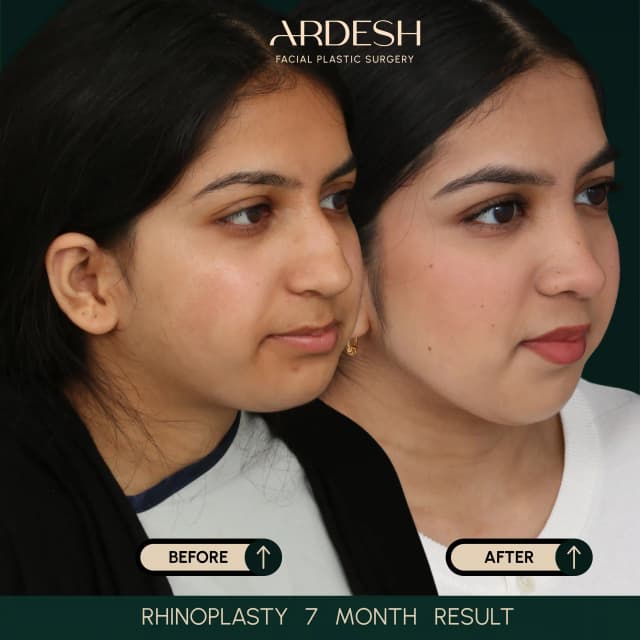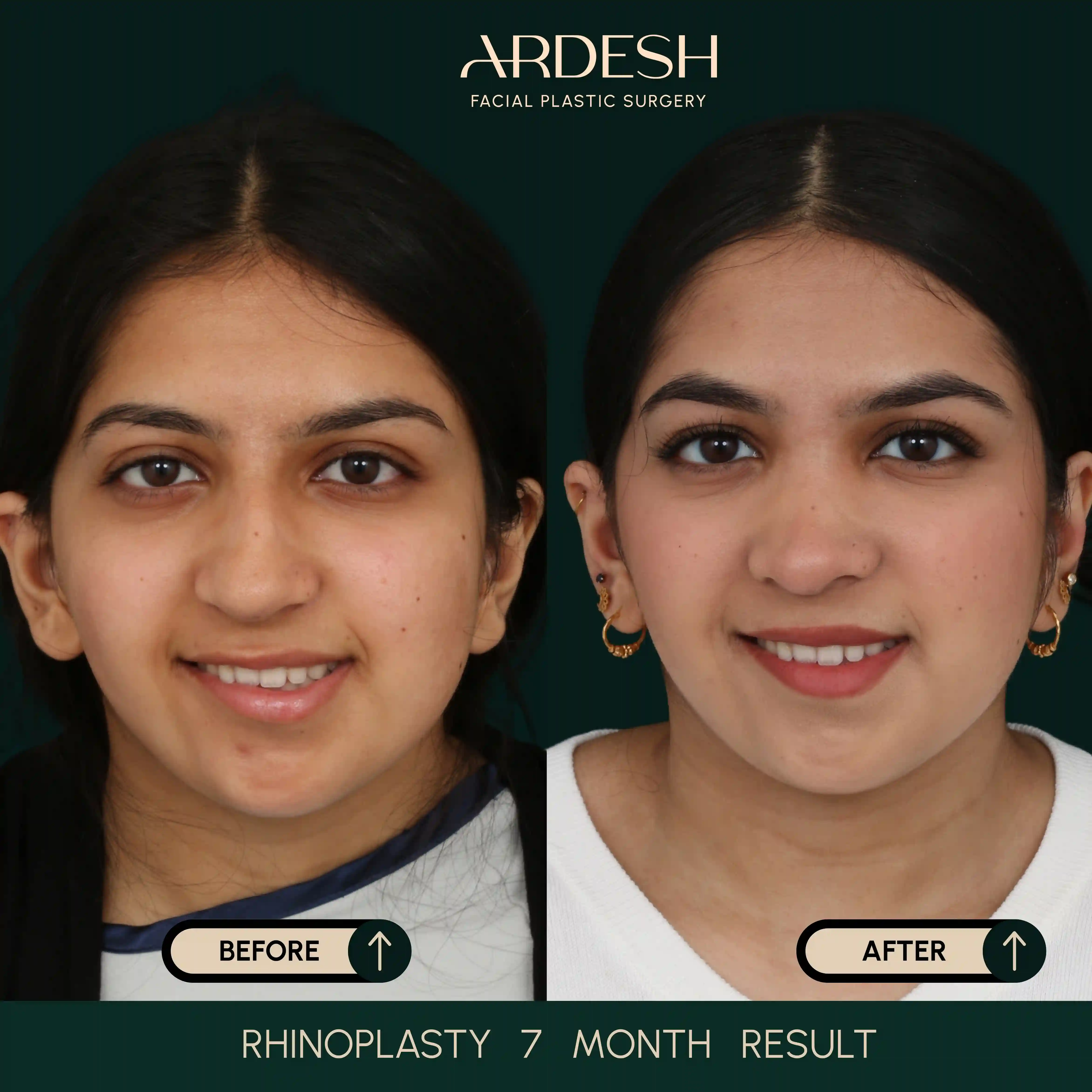
A common concern before rhinoplasty surgery is not whether the nose can be changed, but whether it might be changed too much. Many patients want improvement in a hump, tip, width, projection or asymmetry while still wanting friends and family to recognise the same face.
Natural-looking nose reshaping rhinoplasty therefore requires more than creating an attractive nose in isolation. The objective is to plan a nose that remains proportionate to the patient's existing facial anatomy and preserves recognisable characteristics rather than replacing them with a standardised shape.
About Dr. Ardesh
Dr. Ardesh of Beauty Mark MD is a double board-certified facial plastic and reconstructive surgeon known for delivering thousands of refined, natural outcomes. With an academic background that includes teaching in head and neck surgery, ophthalmology, and dermatology at Loma Linda University, he later transitioned into private practice to focus on patient-centred care. His philosophy emphasises subtle enhancement rather than obvious alteration, earning him recognition as a leading plastic surgeon in Beverly Hills and Newport Beach.
A Natural Nose Is Not a Specific Nose Shape
There is no single nasal shape that looks natural on every face.
The nose exists in relation to the forehead, eyes, cheeks, lips and chin. Its apparent size and projection can change depending on these surrounding structures. A technically refined nose may still appear unnatural if its proportions do not correspond with the rest of the face.
During planning for rhinoplasty in Newport Beach, rhinoplasty in Los Angeles or rhinoplasty in Orange county, the surgeon should therefore evaluate the nose as one component of the overall facial profile.
Important considerations may include:
- Nasal length and width
- Bridge height and contour
- Tip projection and rotation
- Nostril shape and symmetry
- Relationship between the nose, lips and chin
- Skin thickness and soft-tissue characteristics
- Existing cartilage and bone structure
These variables help determine how much change may be appropriate.
Start by Defining What You Actually Want Changed
"I want a smaller nose" is not a sufficiently precise surgical objective.
A patient may actually be concerned about one particular feature, such as a prominent dorsal hump, a drooping tip or excessive projection. Altering several unrelated features simply because surgery makes it possible can produce more change than the patient originally wanted.
A more useful consultation identifies three things:
What bothers you?
The specific features drawing your attention.
What do you want preserved?
Characteristics of your nose that already fit your face or contribute to your identity.
How much change feels acceptable?
Some patients want a subtle refinement, while others have more substantial anatomical concerns.
This conversation can be more meaningful than searching only for the best rhinoplasty surgeon, best rhinoplasty surgeon in Newport Beach or a great rhinoplasty surgeon.
Why Surgical Restraint Can Matter
Rhinoplasty is not simply a process of removing cartilage and bone.
The nose is also a functional structure requiring sufficient support. Excessive reduction can affect proportions and may compromise structural stability. Contemporary planning therefore requires careful consideration of what should be changed and what should remain intact.
This becomes particularly important when patients compare rhinoplasty before and after photographs. A dramatic transformation may attract attention online, but dramatic change is not automatically the appropriate objective for every patient.
The goal of rhinoplasty nose surgery should be individualised to anatomy, concerns and realistic surgical possibilities.
Should You Bring Reference Photographs to Your Consultation?
Reference photographs can help communicate preferences, but they should not be treated as templates.
A celebrity's nose, for example, exists within completely different facial proportions, skin characteristics and skeletal anatomy. Reproducing that exact nose may neither be anatomically feasible nor aesthetically harmonious.
Instead, photographs can help explain characteristics you prefer, such as:
- A straighter bridge
- Less tip projection
- A more defined tip
- A smoother profile
- Preservation of certain ethnic or familial characteristics
The surgeon can then discuss which elements may reasonably translate to your anatomy.
This is more useful than choosing between rhinoplasty surgeons in Los Angeles, rhinoplasty temecula or rhinoplasty surgery nearby purely from photographs.
Computer Imaging Can Support the Conversation, Not Guarantee a Result
When imaging or simulations are used during consultation, they can help surgeon and patient discuss the intended direction of change.
However, a simulation should be understood as a communication and planning aid rather than a guaranteed prediction of the surgical outcome. Living tissue heals differently between individuals, and postoperative swelling changes considerably over time.
The same caution applies when evaluating non surgical rhinoplasty before and after images or researching los angeles nonsurgical rhinoplasty. Injectable contour modification and surgical rhinoplasty are fundamentally different interventions.
Cost Should Follow the Treatment Plan, Not Define It
Patients naturally investigate the cost of rhinoplasty in Beverly Hills, rhinoplasty cost in Newport beach and overall rhinoplasty nose cost while considering surgery.
Cost is relevant, but it does not establish whether a proposed nasal shape is appropriate. The more important first questions concern anatomy, surgical goals, breathing function and whether the surgeon understands the degree of change the patient wants.
Similarly, searches for the best rhinoplasty in Newport beach should lead to a detailed consultation rather than a decision based solely on marketing claims or price.
What If You Have Already Had Rhinoplasty?
Planning can become more complex after previous nasal surgery because the cartilage, scar tissue and structural relationships may already have been altered.
Patients considering revision rhinoplasty in Beverly Hills or looking for a best rhinoplasty revision surgeon require individual assessment of what was previously changed, what remains structurally available and what realistically can be improved.
Natural Rhinoplasty Begins With Preserving Identity
A natural result is not necessarily the smallest, straightest or most sculpted nose. It is one that fits the surrounding facial anatomy while addressing the patient's specific concerns without unnecessary alteration.
Dr. Ardesh's practice provides facial plastic and reconstructive surgery, including rhinoplasty, in Beverly Hills and Newport Beach. Consultation provides an opportunity to discuss your anatomy, aesthetic priorities and how an individualised rhinoplasty plan may approach them.
FAQs
1. Will rhinoplasty completely change how my face looks?
Not necessarily. The degree of facial change depends on the anatomy being treated and the surgical plan. Patients concerned about preserving their appearance should clearly discuss which features they want changed and which they want maintained.
2. How does a surgeon plan a natural-looking rhinoplasty?
Planning involves evaluating nasal anatomy together with overall facial proportions, skin characteristics, structural support and the patient's specific goals.
3. Can I ask for only a very subtle rhinoplasty?
Yes, but whether a particular subtle change is technically appropriate depends on your anatomy. The desired degree of change should be discussed explicitly during consultation.
4. Can I ask for the same nose as someone in a photograph?
A photograph can communicate aesthetic preferences, but another person's nose cannot simply be transferred to your face. Facial proportions and nasal anatomy differ between individuals.
5. How can I explain that I do not want an overdone result?
Be specific. Identify the feature you want improved, describe how much change you are comfortable with, and point out characteristics you want preserved. Clear expectations are an important part of surgical planning.