A small piece of skin hanging from your neck may look completely harmless. Most of the time, it is.
But then something changes.
Perhaps the growth becomes darker. It seems larger than you remember. It catches on clothing and bleeds. Or you search photographs online and discover that some skin cancers can also appear raised, fleshy, pigmented, or irregular.
That is usually when the question becomes more frightening:
Is this really a skin tag, or could it be cancer?
For anyone comparing skin tag vs cancer, there is one important fact to establish immediately: a true skin tag, medically called an acrochordon, is a benign skin growth and typically lacks malignant potential.
The problem is not that ordinary skin tags routinely become cancer.
The problem is that several different skin lesions can sometimes resemble one another, and appearance alone does not always provide a definitive diagnosis.
Understanding that distinction can replace unnecessary panic with appropriate medical vigilance.
About Dr. Ardesh
Dr. Ardesh of Beauty Mark MD is a double board-certified facial plastic and reconstructive surgeon known for delivering thousands of refined, natural outcomes. With an academic background that includes teaching in head and neck surgery, ophthalmology, and dermatology at Loma Linda University, he later transitioned into private practice to focus on patient-centred care. His philosophy emphasises subtle enhancement rather than obvious alteration, earning him recognition as a leading plastic surgeon in Beverly Hills and Newport Beach.
What Does a True Skin Tag Usually Look Like?
An acrochordon is a benign growth arising from the skin.
Under the microscope, skin tags generally contain loosely arranged collagen fibres and small blood vessels covered by epidermis. Clinically, they tend to be soft and are commonly attached to the skin through a narrow stalk, producing the characteristic hanging appearance.
Common locations include:
- Neck
- Underarms
- Groin
- Eyelids
- Other areas where skin folds or friction occurs
Skin tags may be skin-coloured or darker and can vary considerably in size. They also become increasingly common with age.
For an experienced clinician, a classic acrochordon can often be recognised from its morphology and clinical history.
But "looks like a skin tag" and "has been medically identified as a skin tag" are not necessarily the same thing.
For additional information about growths that commonly appear around this area, you can read about skin tags on the neck and the factors that can make them more noticeable.
Skin Tag vs Cancer: The Difference Is Biological, Not Just Visual
The fundamental distinction lies in what the cells are doing.
A skin tag is a benign proliferation of skin and connective tissue. It does not demonstrate the uncontrolled malignant cellular behaviour characteristic of cancer.
Skin cancer is fundamentally different.
The major forms include basal cell carcinoma, squamous cell carcinoma, and melanoma. Melanoma develops from malignant melanocytes, while basal and squamous cell carcinomas originate from other populations of skin cells.
This biological difference is enormous.
The visual difference, however, is not always equally obvious.
Some benign lesions can look concerning, while certain cancers can initially appear relatively innocuous.
That is why photographs found through an internet search cannot reliably establish a diagnosis.
Can Cancer Actually Look Like a Skin Tag?
Occasionally, yes.
This point needs careful interpretation because it can easily create unnecessary anxiety.
Skin cancer does not commonly develop from an ordinary skin tag. Instead, another lesion may sometimes have a raised or pedunculated appearance that resembles an acrochordon.
The recognised differential diagnosis for skin tags includes melanocytic nevi, pedunculated seborrhoeic keratoses, warts and, less commonly, polypoid forms of melanoma and certain other tumours.
That does not mean every unusual skin tag should be presumed malignant.
It means that when morphology is atypical or the diagnosis is uncertain, professional examination becomes important.
Because a raised mole can sometimes be confused with a skin tag, understanding mole vs skin tag can help patients understand why these lesions should not automatically be treated as the same thing.
Is a Skin Tag Dangerous If It Changes Colour?
Not necessarily.
This is where online symptom lists can cause considerable confusion.
A skin tag can become irritated through friction or trauma. It may also darken if it twists on its stalk and compromises its blood supply.
Therefore, colour change alone does not establish malignancy.
At the same time, a changing pigmented lesion should not automatically be dismissed as a skin tag.
For melanoma, clinicians commonly consider the ABCDE features:
A , Asymmetry
One side differs significantly from the other.
B , Border
The edges become irregular or poorly defined.
C , Colour
There is uneven or changing pigmentation.
D , Different
The lesion appears different from surrounding spots. Diameter has historically also been considered.
E , Evolving
The lesion changes in size, shape, colour, elevation, or other characteristics.
These criteria are useful warning signs, but they are not a diagnostic test. Some melanomas do not demonstrate classic ABCDE characteristics at all.
So if you are asking “is skin tag dangerous?”, the answer remains: a confirmed skin tag is generally harmless, but a changing or uncertain lesion deserves appropriate evaluation.
What About Bleeding?
Context matters.
Imagine a soft growth on your neck repeatedly rubbing against a shirt collar or necklace. It may become inflamed and bleed following mechanical trauma.
That does not automatically suggest cancer.
Spontaneous or recurrent unexplained bleeding is different.
Skin cancers may present as lesions that enlarge, crust, ulcerate, or bleed. Clinicians therefore evaluate bleeding together with the lesion's history, surface, growth pattern, colour, symmetry, and surrounding tissue.
One symptom should never be interpreted in isolation.
The “Ugly Duckling” Principle Can Be More Useful Than Size Alone
One useful concept in skin examination is the ugly duckling sign.
Most people's benign moles and spots tend to share certain visual characteristics. A lesion that looks distinctly different from everything else on the person's skin may deserve closer attention.
DermNet recommends medical assessment for an unusual lesion that changes in colour, shape, or size, becomes painful or itchy, or noticeably stands apart from surrounding spots.
This is particularly useful because there is no universal appearance that defines every melanoma.
Some are dark.
Some contain several colours.
Some can be relatively uniform.
Others may have little pigmentation at all.
The safest principle is therefore not:
"Does mine look exactly like a photograph of melanoma?"
It is:
"Has this lesion developed characteristics that make its diagnosis uncertain?"
Why a Photograph Cannot Give You a Definitive Answer
Skin-lesion diagnosis involves more than visual pattern matching.
A clinician may consider:
- When the lesion first appeared
- Whether it has changed
- How rapidly it has grown
- Whether it bleeds spontaneously
- Symptoms such as pain or itching
- Surface characteristics
- Pigmentation
- Anatomical location
- Personal and family medical history
A dermatologist may also examine the lesion using dermoscopy, which magnifies structures and patterns that cannot be adequately evaluated with the naked eye.
When the diagnosis remains uncertain, tissue sampling may be required. Skin cancers are ultimately confirmed through histopathological examination of biopsy material.
This is why an online article, even a medically detailed one, cannot tell you whether a particular lesion is cancerous.
Should You Remove a Suspicious “Skin Tag” Yourself?
No.
Home removal becomes particularly problematic when the diagnosis has not been established.
Cutting, burning, tying off, or chemically treating an unidentified lesion can cause bleeding, infection, and tissue damage. Medical guidance advises against self-removing skin tags because of these risks.
More importantly, destroying a questionable lesion before medical evaluation can interfere with appropriate diagnosis.
The correct sequence is straightforward:
Identify first. Treat second.
If a lesion is ultimately diagnosed as a mole and removal is appropriate, understanding when to consider mole removal can help patients make a more informed decision.
When a “Skin Tag” Turns Out to Be a Mole
Patients do not always use dermatological terminology precisely.
A raised melanocytic nevus may be called a mole, beauty mark, bump, or even a skin tag. Yet a nevus and an acrochordon are biologically different lesions.
That distinction becomes particularly important on the face.
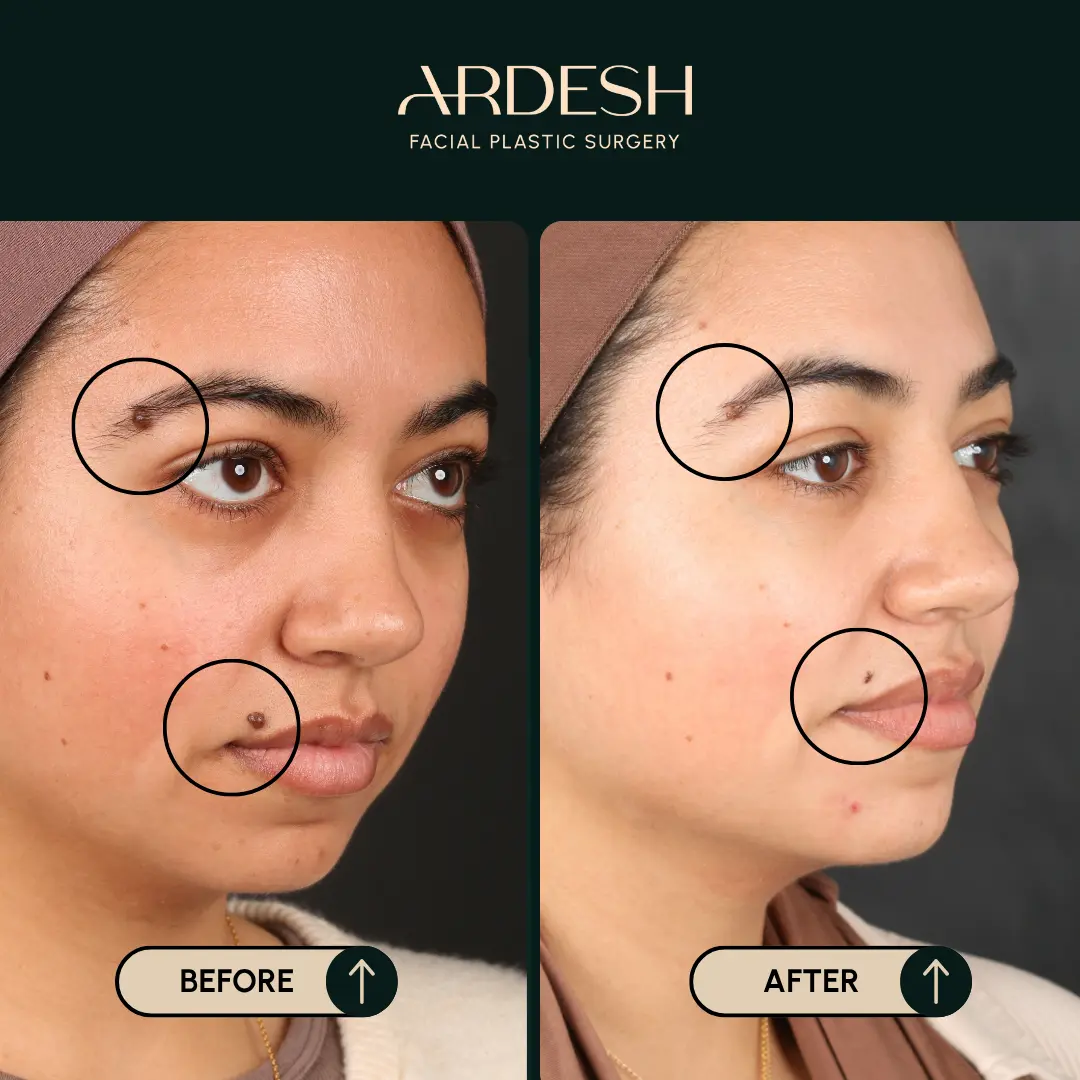
If a lesion is medically determined to be a mole and the patient wants cosmetic removal, the treatment objective extends beyond simply eliminating visible tissue. Incision placement, closure technique, skin integrity, scar quality, and the relationship of the resulting scar to surrounding facial structures all become relevant aesthetic considerations.
This is an area specifically aligned with Dr. Farhad Ardesh's published practice.
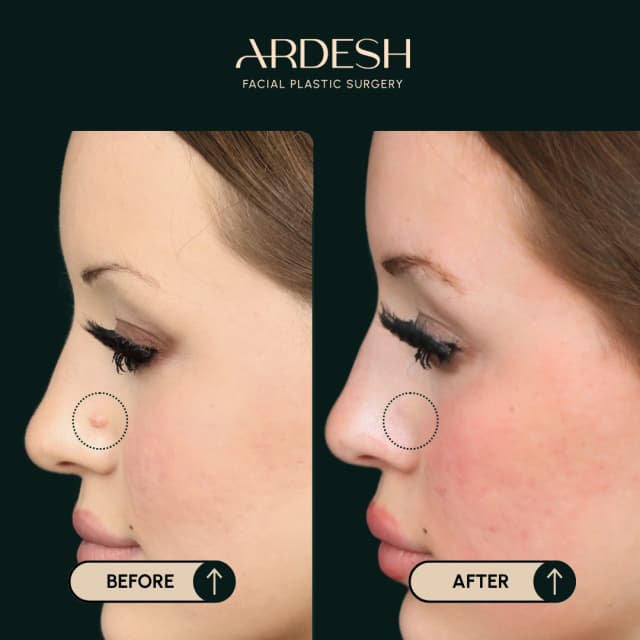
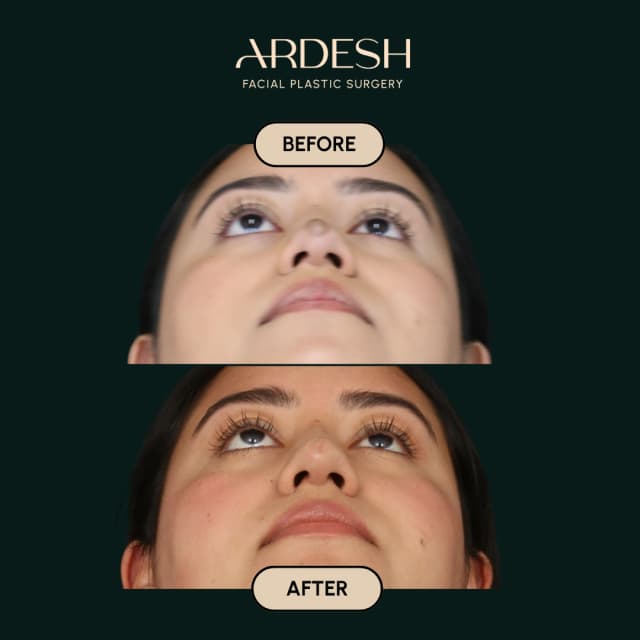
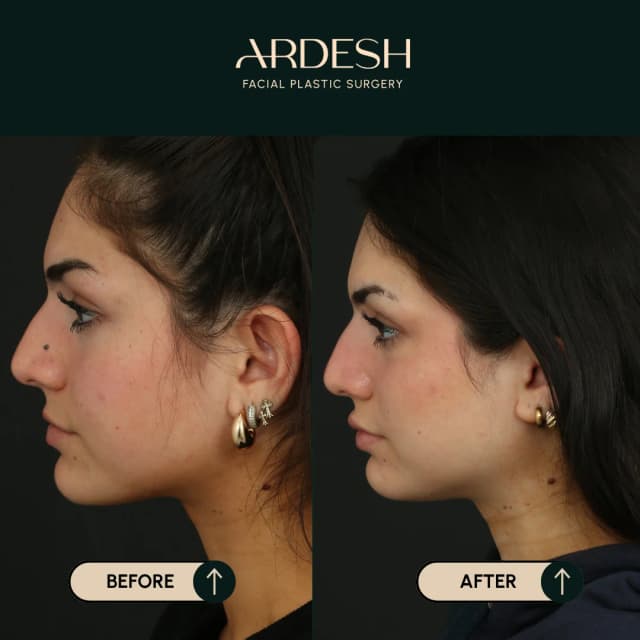
Dr. Ardesh provides cosmetic mole removal through Beauty Mark MD™, applying a facial plastic and reconstructive surgery approach with attention to incision placement, fine stitching, scar quality, and natural integration with surrounding skin. His practice describes personalised Molectomy techniques developed for cosmetic mole-removal cases.
Patients interested in the available treatment approach can also review the mole removal treatment page before discussing their individual situation with a qualified professional.
Do Not Guess What a Facial Growth Is Before Deciding How to Remove It
The most reassuring fact in the skin tag vs cancer discussion is that genuine skin tags are common benign lesions. Finding one does not mean you have skin cancer.
But reassurance should follow appropriate identification, not assumptions based on photographs.
If a growth is new, evolving, unusually pigmented, repeatedly bleeding without obvious injury, ulcerated, or simply does not behave like your other skin lesions, have it medically assessed rather than attempting to diagnose or remove it yourself.
If that assessment determines that your facial lesion is a mole and cosmetic removal is appropriate, Dr. Ardesh offers specialised cosmetic mole removal through Beauty Mark MD™ at his Beverly Hills and Newport Beach practices. His approach focuses on precise removal, careful closure, scar quality, and preserving a natural appearance.
For patients interested in the aesthetic aspects of treatment, facial mole removal provides additional information about how surgical technique and closure can influence the final result.
Patients considering treatment in Beverly Hills can also explore mole removal in Beverly Hills as they consider their consultation and treatment options.
The priority is not getting a suspicious-looking spot removed as quickly as possible. It is knowing exactly what you are treating.
Once a facial lesion has been appropriately identified as a mole, schedule a consultation with Dr. Ardesh to discuss whether cosmetic mole removal and his personalised approach are appropriate for your individual case.
Frequently Asked Questions
1. What is the biggest difference between a skin tag and skin cancer?
A skin tag is a benign growth, whereas skin cancer involves malignant cellular growth. Although their biology is fundamentally different, appearance alone may occasionally be misleading, which is why atypical lesions require professional evaluation.
2. Is a skin tag dangerous?
A true skin tag is generally harmless and typically lacks malignant potential. Concern arises primarily when a lesion has not been confidently identified or develops unusual characteristics.
3. Can melanoma look like a skin tag?
Certain polypoid or nodular lesions can occasionally enter the differential diagnosis of a growth resembling a skin tag. This is uncommon and does not mean ordinary skin tags commonly become melanoma.
4. What changes in a skin growth should I have checked?
Seek professional assessment for unexplained evolution in size, shape, colour, or structure, particularly if accompanied by spontaneous bleeding, persistent ulceration, or other unusual characteristics. No single warning sign confirms cancer.
5. Can I tell whether a skin tag is cancerous from a photograph?
Not reliably. Clinical history and examination are important, dermoscopy may be used, and suspicious lesions sometimes require biopsy and histopathological examination for definitive diagnosis.