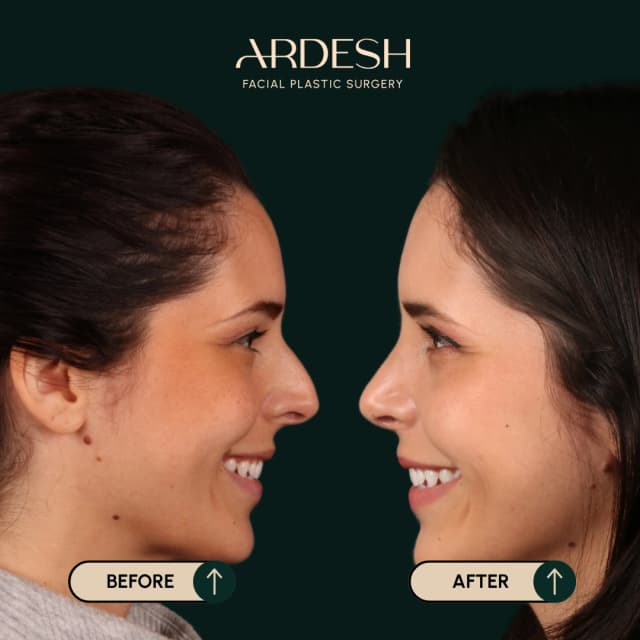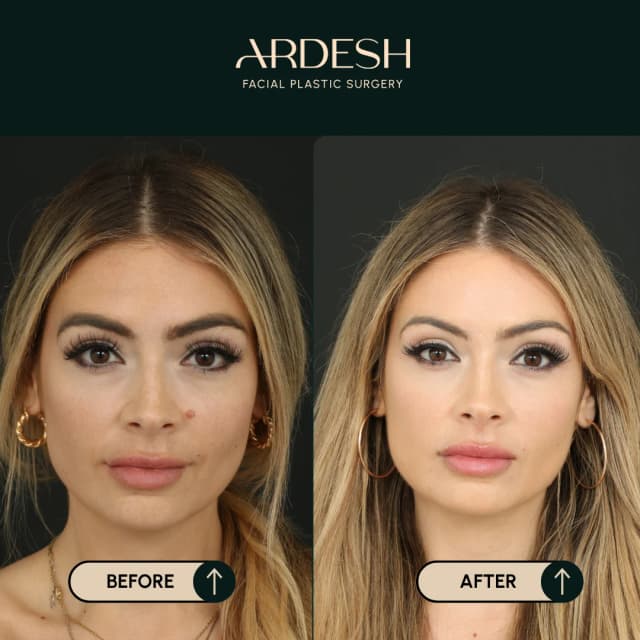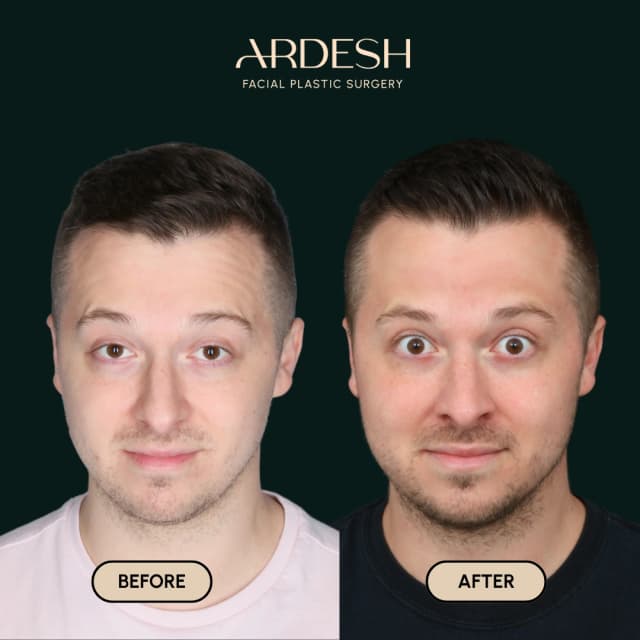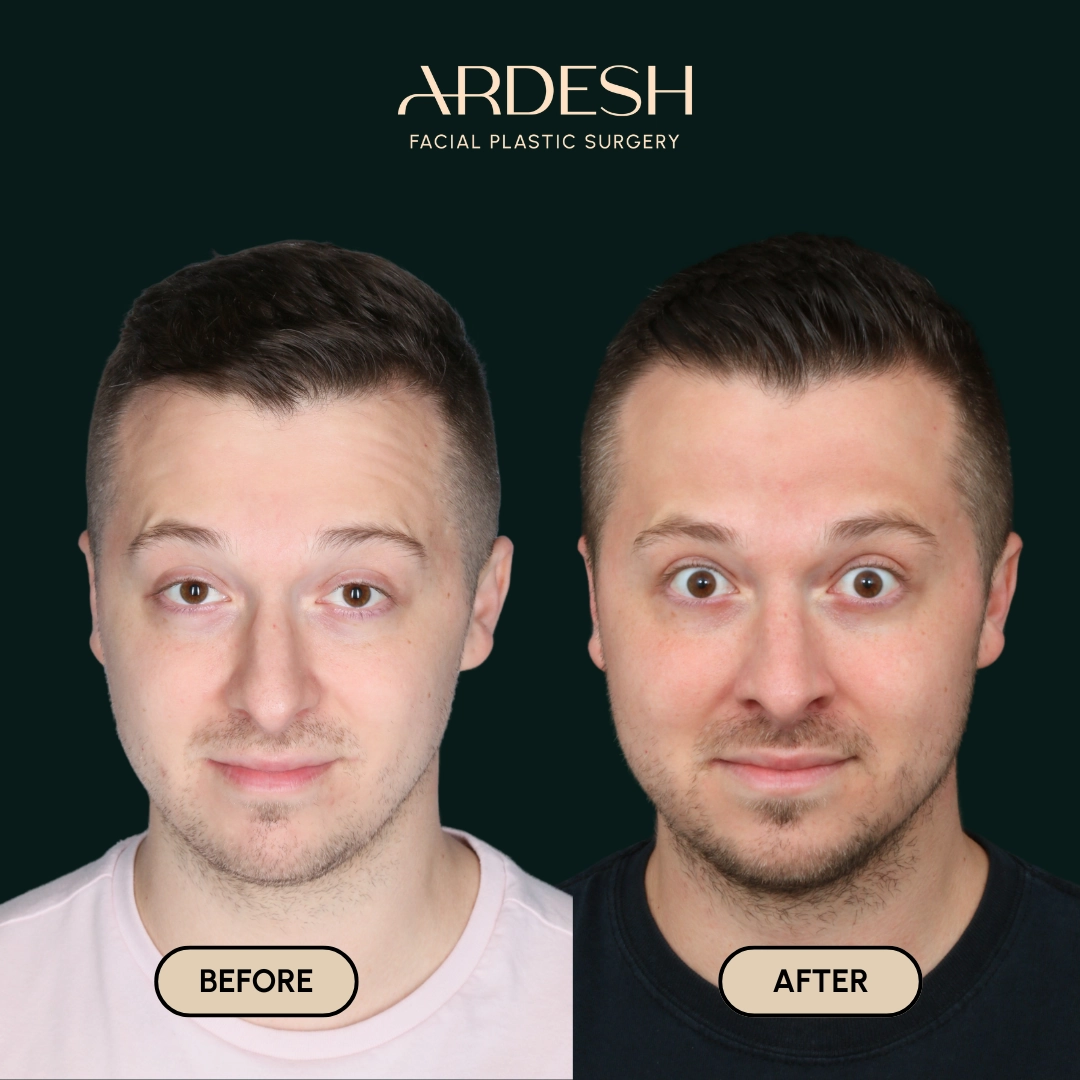
A nasal tip that points downwards can affect the balance of your facial profile. Some people notice it in photographs, while others find that their nose appears to droop when they smile. The natural question is whether correcting it requires surgery.
Not necessarily. Depending on the cause, botox treatment or injectable fillers may improve the appearance of a drooping nasal tip. However, neither approach works for every nose, and the distinction matters.
For patients considering nose fillers in Los Angeles, understanding what injectables can realistically achieve is essential before choosing a procedure.
About Dr. Ardesh
Dr. Ardesh of Beauty Mark MD is a double board-certified facial plastic and reconstructive surgeon known for delivering thousands of refined, natural outcomes. With an academic background that includes teaching in head and neck surgery, ophthalmology, and dermatology at Loma Linda University, he later transitioned into private practice to focus on patient-centred care. His philosophy emphasises subtle enhancement rather than obvious alteration, earning him recognition as a leading plastic surgeon in Beverly Hills and Newport Beach.
Why Does the Nasal Tip Droop?
A drooping nasal tip isn't always an age-related concern. Some people naturally have a downward-pointing tip because of their nasal anatomy.
Several factors can contribute:
- Muscle activity: The depressor septi nasi muscle can pull the nasal tip downwards, particularly when smiling.
- Natural anatomy: The shape and support of the nasal cartilage influence tip projection and rotation.
- Ageing: Changes in skin elasticity and structural support may make the tip appear lower over time.
- Previous surgery or injury: Alterations to nasal support can affect tip position.
Identifying the underlying cause is important. A treatment that improves a muscle-related droop won't necessarily correct weak cartilage support.
Can Botox Lift a Drooping Nasal Tip?
In selected patients, yes.
A carefully placed botox treatment may temporarily weaken the depressor septi nasi muscle, reducing its downward pull on the nasal tip.
This approach is most relevant when the tip drops noticeably during smiling.
What Can Patients Expect?
- Treatment involves targeted injections rather than surgery.
- The procedure generally takes only a few minutes.
- Changes typically develop over several days.
- Results are temporary, commonly lasting around three to four months, although individual responses vary.
The improvement is usually subtle. Botox cannot reshape nasal cartilage, narrow the nose or permanently reposition its underlying structures.
Using botulinum toxin to lift the nasal tip is also an off-label application, making appropriate patient selection and injection expertise particularly important.
Can Nose Fillers Correct a Downward-Pointing Tip?
Fillers work differently. Rather than relaxing muscles, they add volume to carefully selected areas to alter how the nose appears.
In certain cases, hyaluronic acid fillers can improve the appearance of tip projection or create a more balanced nasal profile.
Patients exploring Los Angeles nonsurgical rhinoplasty should understand that filler placement changes contours without removing tissue or correcting the underlying cartilage.
When Might Fillers Help?
A clinician may consider fillers when:
- Minor contour irregularities affect the nasal profile.
- The tip appears poorly defined because of surrounding proportions.
- Subtle volume adjustments could improve visual balance.
However, adding filler doesn't automatically lift a drooping tip. In some noses, additional volume may make the area look heavier.
The nose also contains important blood vessels. Accidental injection into a vessel can cause skin damage, tissue loss or, rarely, blindness. Careful anatomical assessment is therefore essential.
Botox vs Nose Fillers: Which Is More Suitable?
The choice depends on what's causing the droop.
Botox primarily addresses muscle movement. Fillers primarily address contour and volume.
For example, someone whose nasal tip moves downwards when smiling may be considered for botox treatment. Someone with a minor contour concern might be assessed for filler-based correction.
Neither option reliably fixes significant structural drooping.
Although nose fillers in Los Angeles are often discussed as an alternative to surgery, they cannot reproduce every result achievable through surgical rhinoplasty.
A qualified facial plastic surgeon can determine whether injectables are appropriate or whether structural correction deserves consideration.
What Should You Consider Before Treatment?
A consultation should establish more than whether you dislike your nasal profile.
Important questions include:
- Does the tip droop at rest, when smiling or both?
- Is muscle movement or cartilage structure responsible?
- Would added volume improve or worsen the profile?
- Are the expected changes worth the potential risks?
- Would surgical correction offer a more suitable long-term solution?
Patients considering Los Angeles nonsurgical rhinoplasty should also discuss the temporary nature of injectable results and the possibility of complications.
Making an Informed Treatment Decision
A drooping nasal tip doesn't have one universal solution. Botox treatment may help selected muscle-related cases, while nose fillers in Los Angeles may improve certain contour concerns. Neither should be considered a guaranteed substitute for surgery.
At Dr. Ardesh Facial Plastic Surgery, Dr. Farhad Ardesh provides personalised facial aesthetic consultations, including assessments for rhinoplasty and non-surgical treatments. Patients can discuss their concerns and explore options suited to their individual facial anatomy.
Frequently Asked Questions
1. Can Botox permanently lift a drooping nasal tip?
No. Botox temporarily relaxes targeted muscles. Results generally last several months, and repeat treatment may be necessary to maintain the effect.
2. Can nose fillers make a drooping tip worse?
Yes. Poorly selected or excessive filler placement can add unwanted bulk, making the tip appear heavier or less defined.
3. Is nonsurgical rhinoplasty painful?
Patients may experience brief discomfort during injections. The level of discomfort varies according to the technique, treatment area and individual sensitivity.
4. Can Botox and nose fillers be used together?
Sometimes. A clinician may consider combining treatments when both muscle activity and contour contribute to the concern. Suitability requires individual assessment.
5. Is surgical rhinoplasty better for a severely drooping tip?
Surgical rhinoplasty is generally more appropriate when substantial cartilage reshaping or structural support is required. A specialist assessment can establish the most suitable approach.