Patients frequently ask whether saggy neck treatment exercises, facial yoga, or other non-surgical techniques can improve a sagging neck and restore jawline definition. While exercise plays an important role in overall health and body composition, its ability to address age-related changes of the neck is often misunderstood.
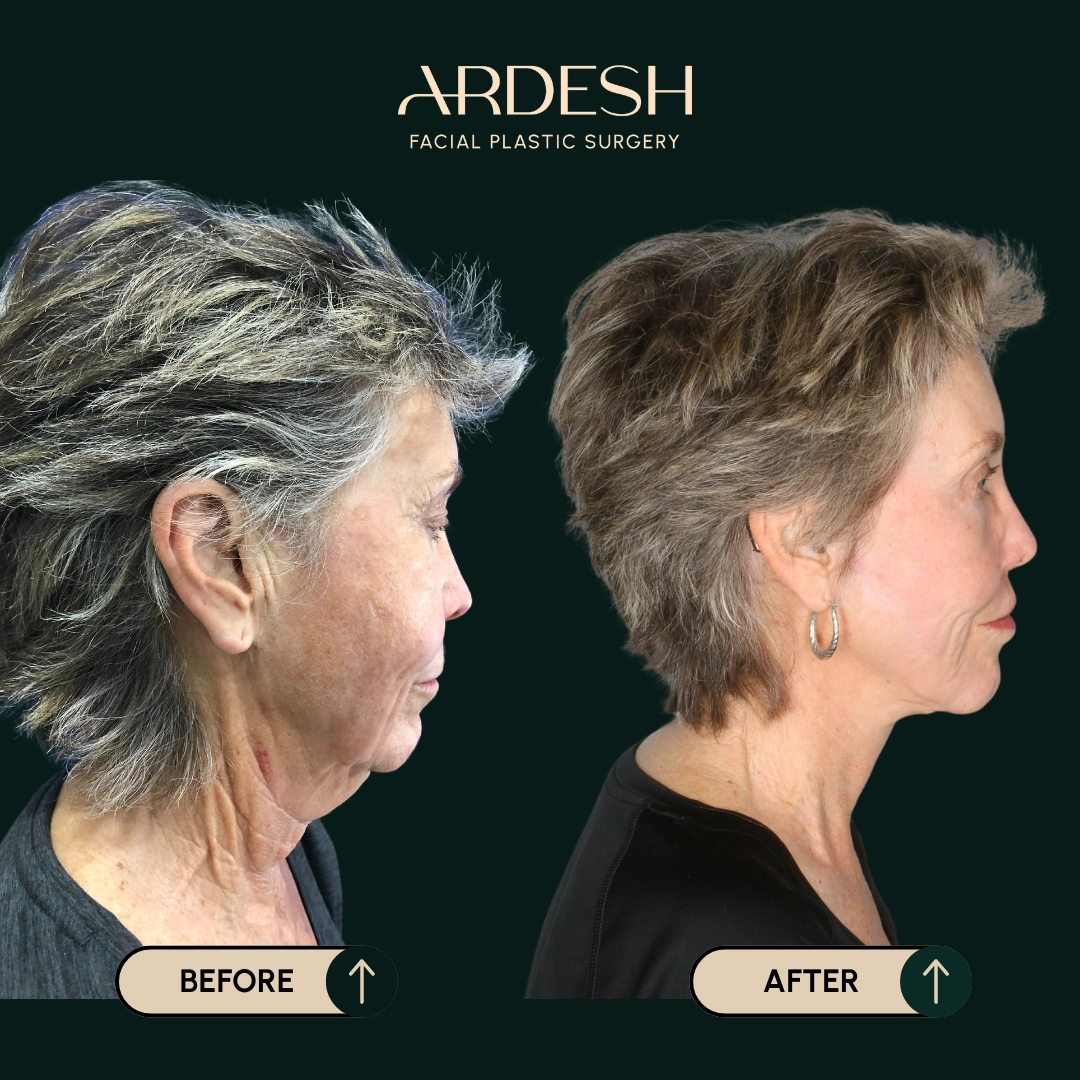
The appearance of a "saggy neck" can result from several anatomical factors, including skin laxity, submental fat accumulation, platysmal muscle banding, loss of soft tissue support, and age-related changes in collagen and elastin. Because these underlying causes differ significantly from one patient to another, the effectiveness of exercise varies considerably depending on the source of the concern.
In some cases, improved posture and weight management may provide modest aesthetic benefits. However, exercise cannot reverse structural changes such as significant skin redundancy, platysmal muscle separation, or advanced tissue laxity. Understanding the distinction between muscular conditioning and anatomical aging is essential when evaluating treatment options.
This article examines the role of exercise in neck rejuvenation, explains its limitations, and discusses when non-surgical treatments or surgical intervention may be more appropriate for achieving meaningful improvement.
About Dr. Ardesh
Dr. Ardesh of Beauty Mark MD is a double board-certified facial plastic and reconstructive surgeon known for delivering thousands of refined, natural outcomes. With an academic background that includes teaching in head and neck surgery, ophthalmology, and dermatology at Loma Linda University, he later transitioned into private practice to focus on patient-centred care. His philosophy emphasises subtle enhancement rather than obvious alteration, earning him recognition as a leading plastic surgeon in Beverly Hills and Newport Beach.
Not every "saggy neck" is the same problem
Patients often use the same description for very different concerns. One person points to loose skin beneath the chin. Another is bothered by excess fat under the jawline. Someone else notices vertical neck bands when they speak or smile. All three may describe their concern as a saggy neck.
Yet the underlying cause is completely different.
Before discussing exercises, treatments, or surgery, it's important to understand what may be contributing to the appearance:
- Skin laxity from aging
- Excess fat beneath the chin
- Muscle banding in the neck
- Loss of jawline definition
- Genetics and natural anatomy
- Weight fluctuations
The challenge is that exercise only influences certain factors.
It cannot address all of them.
These anatomical changes often become noticeable during the fourth and fifth decades of life. Our article "Turkey Neck at 40 – Is It Too Early for a Neck Lift or the Perfect Time?" explores why neck aging frequently becomes apparent around age 40 and how surgeons evaluate candidacy for treatment.
Why neck exercises became so popular
The appeal is obvious.
Exercise feels proactive.
It feels healthy. And unlike surgery, it feels familiar.
Many people have successfully transformed other parts of their body through consistent exercise. It's natural to assume the neck should work the same way.
Unfortunately, the neck doesn't always follow those rules. When people perform neck exercises, they are primarily working muscles. The problem is that many age-related neck concerns are not caused by weak muscles.
They're caused by changes in skin elasticity and tissue position. You can strengthen a muscle. You cannot exercise loose skin back into place. That's an important distinction because it shapes realistic expectations.
When exercise may help
This doesn't mean neck exercises are completely useless. In certain situations, they may provide modest improvement.
People with mild concerns may notice subtle benefits through:
- Improved posture
- Better muscle awareness
- Reduced appearance of fullness caused by poor head positioning
- Increased confidence in overall appearance
Posture deserves special mention.
Many people spend hours each day looking down at phones, laptops, and tablets. Over time, this habit can exaggerate the appearance of fullness beneath the chin and contribute to a less defined profile.
Correcting posture won't reverse aging. It can improve how the neck presents itself. That's different from treating the underlying cause.
When exercise is unlikely to change much
This is where many patients become frustrated.
They commit to months of exercises. They follow online routines faithfully. They buy devices that promise dramatic tightening.
Yet the mirror looks almost exactly the same.
The reason is usually simple.
The issue isn't muscle tone.
It's skin.
Once skin has stretched and lost elasticity, exercise has limited influence over the situation.
The same applies to significant neck banding and pronounced tissue laxity.
No amount of repetition can reposition skin that has already descended.
This is often the moment people begin exploring Saggy neck treatment options beyond exercise.
Not because they failed.
Because they finally understand what they're trying to fix.
What about non-surgical options?
Many patients aren't ready to jump directly from exercise to surgery.
That's completely understandable.
As a result, they start researching every possible neck lift alternative available.
Depending on anatomy and the severity of the concern, non-surgical treatments may play a role.
Some individuals seek options that focus on:
- Skin tightening
- Collagen stimulation
- Mild contour improvement
- Early signs of laxity
These treatments can be appropriate for selected patients.
The important word there is selected.
Someone with mild skin laxity may have a very different experience than someone dealing with significant loose skin beneath the jawline.
This is why treatment recommendations vary so much from person to person.
How surgeons evaluate the neck differently
Patients often focus on what they see. Surgeons focus on why they're seeing it. During an evaluation, the goal isn't simply identifying a saggy neck.
The goal is identifying the source of the problem.
Questions often include:
- Is the issue primarily fat?
- Is it loose skin?
- Are neck muscles contributing?
- Is the jawline losing support?
- Is the concern isolated to the neck or connected to facial aging?
Those answers determine whether exercise, a neck lift alternative, or surgical treatment is likely to provide meaningful improvement.
Without understanding the cause, treatment becomes guesswork.
Determining the cause of neck aging is critical because different anatomical findings require different treatment approaches. In "Neck Lift vs. Facelift vs. Neck Liposuction: Which One Actually Fixes YOUR Problem?" we explain how surgeons select procedures based on skin laxity, fat distribution, muscle anatomy, and lower facial aging.
Signs surgery may be worth discussing
Surgery isn't the right answer for everyone.
At the same time, there are situations where it becomes increasingly difficult to achieve noticeable improvement through conservative approaches alone.
Common signs include:
- Significant loose skin beneath the chin
- Poor jawline definition caused by tissue laxity
- Visible neck bands
- Advanced neck aging
- Frustration despite trying multiple non-surgical approaches
Patients often spend years searching for the perfect neck lift alternative before realizing the concern they're trying to correct is structural rather than superficial.
That realization doesn't automatically mean surgery is necessary.
It does provide valuable clarity.
Patients who begin considering surgical correction often have questions regarding procedural safety and anesthesia requirements. Our article "Neck Lift Without General Anesthesia: Is It Possible and Is It Safe?" discusses available anesthesia approaches and factors that influence treatment planning.
The goal isn't surgery. It's the right solution.
One of the biggest misconceptions in facial plastic surgery is that consultations are about convincing people to have procedures.
In reality, good consultations are often about eliminating options that aren't likely to work.
If exercise can help, that's useful information.
If a non-surgical Saggy neck treatment is appropriate, that's useful information too.
And if surgery is ultimately the option most likely to address the concern, patients deserve to understand that honestly rather than spending years chasing disappointing results.
The right recommendation should match the problem.
Not the trend.
Not the latest social media routine.
And not wishful thinking.
Understanding what's really causing the change
A saggy neck can result from several different factors, and each one requires a different approach. That's why one person may benefit from posture improvements and non-surgical care, while another may find that surgery offers the most meaningful correction.
For individuals exploring Saggy neck treatment options or considering a neck lift alternative, a personalized evaluation can help identify what's actually driving the concern. At Dr. Ardesh's practice, the focus remains on natural-looking facial enhancement and treatment recommendations tailored to the individual's anatomy, goals, and stage of aging.
Discover The Molectomy™ Method by Beauty Mark MD™
The Molectomy™ Method by Beauty Mark MD™ is our signature approach to cosmetic mole removal and beauty mark refinement. Designed to prioritize natural-looking results, scar minimization, advanced healing, and facial harmony, it offers a refined solution for patients seeking comprehensive facial enhancement.
FAQs
1. Can exercise tighten loose skin on the neck?
No. Exercise can strengthen underlying muscles and improve overall body composition, but it cannot restore skin elasticity or eliminate excess skin. Significant skin laxity typically requires skin-tightening procedures or surgical correction.
2. Why does a neck continue to appear saggy despite regular exercise and weight loss?
Many neck concerns are caused by structural aging changes rather than excess body weight. Skin redundancy, platysmal muscle laxity, genetic anatomy, and age-related collagen loss are not corrected through exercise alone.
3. Can facial yoga improve neck contour?
There is limited scientific evidence demonstrating that facial yoga can produce meaningful improvement in moderate to severe neck aging. While some patients report subjective benefits, facial exercises do not reposition descended tissues or tighten excess skin.
4. How do surgeons determine whether a saggy neck is caused by fat, skin, or muscle laxity?
Evaluation typically includes assessment of skin quality, submental fat volume, platysmal banding, cervical contour, jawline definition, and overall facial aging patterns. These findings help determine the most appropriate treatment approach.
5. When should a patient consider surgery instead of non-surgical treatment?
Surgical consultation may be appropriate when significant skin laxity, platysmal banding, poor jawline definition, or advanced neck aging are present and non-surgical treatments are unlikely to provide meaningful or lasting improvement.