That necklace you wear every day is probably building skin tags underneath. Not overnight. But every single time you put it on, you're doing exactly what your skin needs to start growing these little flaps. Friction. Pressure. Sweat pooling underneath. Repeat daily for months and skin tags form. Most people think it's genetics or just bad luck. What they don't realize: skin tags from necklace wear are almost always preventable. You just have to know what's actually happening under there.
About Dr. Ardesh
Dr. Ardesh of Beauty Mark MD is a double board-certified facial plastic and reconstructive surgeon known for delivering thousands of refined, natural outcomes. With an academic background that includes teaching in head and neck surgery, ophthalmology, and dermatology at Loma Linda University, he later transitioned into private practice to focus on patient-centred care. His philosophy emphasises subtle enhancement rather than obvious alteration, earning him recognition as a leading plastic surgeon in Beverly Hills and Newport Beach.
Why Your Favorite Necklace Is A Skin Tag Factory
Something shifts when you wear the same chain every day.
Your skin can handle rubbing. Pressure. Even repeated irritation for short periods. But months of the same friction in the same spot? That's a different story. The constant movement starts breaking down cells. The skin responds by thickening. Then it starts growing extra tissue these soft, hanging flaps we call skin tags.
This isn't your skin rebelling against an allergen. It's not an infection spreading. Your skin is literally building extra material because it's under constant mechanical stress.
Four things collide to make this happen:
- Friction - The chain moves against your skin constantly
- Moisture - Sweat gets trapped, keeping the area wet and soft
- Pressure - The necklace weight bears down on that exact spot
- Heat - Your neck warms up under the jewelry, making skin more pliable
That combination is how friction skin tags neck growth happens. It's almost automatic at that point.
The Worst Offenders
Not all necklaces are equal.
Heavy chains do the most damage. The constant weight tugging down on the same patch, the movement, the sustained pressure, it's a recipe for skin tags. Delicate pieces are better, but even lightweight chains cause problems if you wear them in the exact same spot every day without breaks.
Materials matter. A rough chain scratches and irritates. Smooth metal is gentler, but the best solution is rotating what you wear.
The clasp area gets hit hardest. That's where everything bunches. Where moisture pools. Where pressure concentrates. If you get a skin tag, it's usually right where the clasp sits.
Heavy pendants accelerate everything. A light chain alone might take months. Add a stone or charm and you're cutting that timeline in half.
How Skin Tags From Necklace Develops
It doesn't happen overnight.
- Weeks 1 - 4: The skin underneath feels irritated. Maybe slightly red. It itches when you sweat. You adjust the necklace, but it keeps bothering you.
- Month 2 - 3: Something's forming. The skin feels bumpy under the clasp. You can feel a tiny protrusion. Small enough that you're not entirely sure it's real.
- Month 4 - 6: It's real now. A visible skin tag. Flesh-colored or darker. The necklace rubs it sometimes, especially after you sweat.
- Month 6+: The tag gets bigger. Other small ones might start forming nearby because that area is still taking the same friction.
Stop wearing the necklace at this point and the growth stops. But the tag doesn't shrink. It doesn't disappear.
Prevention Is The Easy Path
Rotate your necklaces
Wearing the same piece every single day is how this starts. Take breaks. Wear something different.
Vary the position
Wear pieces at different lengths so irritation spreads across different areas instead of hitting one spot.
Tighten it right
Too loose and it slides constantly, creating friction. Too tight and it creates pressure. Find the middle ground.
Wash underneath daily
Sweat and bacteria build up under necklaces. Clean that area, especially after workouts.
Give your neck rest days
Skip the necklace sometimes. Your skin recovers faster when it's not under constant stress.
That's the whole strategy.
While repeated friction from jewellery is one of the most common triggers for neck skin tags, it is not the only cause. Hormonal changes, particularly during pregnancy, can also increase the likelihood of developing these benign growths, even without constant irritation. If you're unsure whether the growth is actually a skin tag or another type of skin lesion, understanding the differences can help guide your next step before considering treatment. Read our guides on Skin Tag on the Neck During Pregnancy: Is Removal Safe and When Should You Consider Treatment? and Skin Tag vs Mole on the Neck: How to Identify the Difference and When Professional Evaluation Is Recommended.
When It's Too Late For Prevention
You didn't know this was happening. You've been wearing the same chain for years. Now there's visible skin tags from necklace situation staring back at you.
The tag won't disappear on its own. Creams don't work because the problem is mechanical, not chemical. Even if you stop wearing the necklace, the tag stays put. It's still there.
Removal becomes the practical option. The thing is, your neck moves constantly. It's visible. If the removal isn't done carefully, scarring becomes more noticeable than the original tag ever was. This is exactly where precision matters.
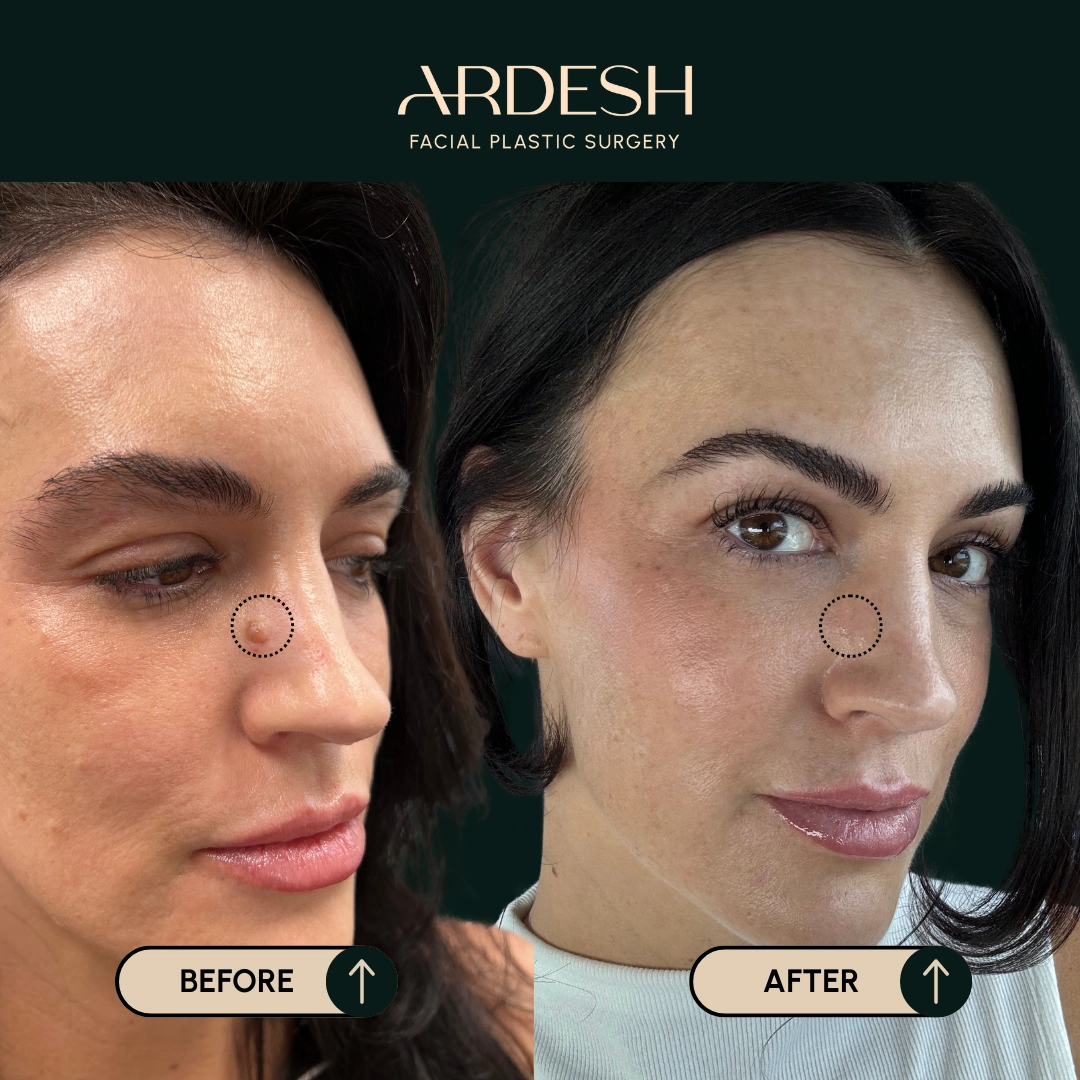
A surgeon experienced in facial and neck work understands how to remove these growths without creating visible marks. Dr. Ardesh's approach focuses on scar minimization, especially on visible areas like the neck where any mark shows up clearly.
Ditch the necklace that started this. Get professional removal. Then rotate your jewelry going forward.
Your favorite chain can stay in your life. Your neck just needs breaks from the constant friction.
If you have developed a skin tag on your neck from repeated necklace friction, Dr Ardesh can assess the growth and recommend the most suitable removal option. With careful treatment planning and a focus on visible areas like the neck, Dr Ardesh helps patients remove bothersome skin tags while minimising the risk of noticeable scarring.
Discover The Molectomy™ Method by Beauty Mark MD™
The Molectomy™ Method by Beauty Mark MD™ is our signature approach to cosmetic mole removal and beauty mark refinement. Designed to prioritize natural-looking results, scar minimization, advanced healing, and facial harmony, it offers a refined solution for patients seeking comprehensive facial enhancement.
FAQs
1. Can wearing a necklace cause skin tags on the neck?
Repeated friction from a necklace may contribute to the development of skin tags, particularly in areas where the jewellery consistently rubs against the skin. Factors such as pressure, moisture, and prolonged irritation can increase the likelihood of skin tag formation.
2. Why do skin tags often appear around the neckline?
The neck is a common location for skin tags because it experiences frequent friction from clothing, jewellery, and skin-to-skin contact. Constant rubbing can stimulate excess skin growth over time in susceptible individuals.
3. Are certain types of necklaces more likely to cause skin irritation?
Heavy chains, tight necklaces, rough materials, and jewellery worn in the same position every day can create more friction and pressure on the skin. This may increase irritation and contribute to skin tag development.
4. Will a skin tag disappear if I stop wearing the necklace?
In most cases, an existing skin tag will not disappear on its own simply by removing the source of friction. However, avoiding continued irritation may help prevent additional skin tags from developing in the same area.
5. What is the best way to remove a skin tag on the neck?
Professional removal is often the safest option, particularly for skin tags located on visible areas such as the neck. A qualified medical professional can assess the growth and recommend an appropriate treatment method while minimising the risk of scarring.