A skin tag appears on your neck, eyelid, underarm, or another area of skin. It does not hurt. It may have been there for months, or even years. But every time you notice it, the same question returns:
Should I remove it now, or is it better to leave it alone?
For most genuine skin tags, there is no medical countdown.
Skin tags, medically known as acrochordons, are common benign skin growths. They typically do not require treatment simply because they exist. Removal is generally considered when they become symptomatic, repeatedly irritated, cosmetically bothersome, or when there is uncertainty about whether the growth actually is a skin tag.
That makes skin tag removal timing less about how long the lesion has been present and more about its diagnosis, behaviour, location, and effect on the patient.
Understanding those distinctions can prevent both unnecessary procedures and inappropriate delays in evaluating a lesion that deserves another look.
About Dr. Ardesh
Dr. Ardesh of Beauty Mark MD is a double board-certified facial plastic and reconstructive surgeon known for delivering thousands of refined, natural outcomes. With an academic background that includes teaching in head and neck surgery, ophthalmology, and dermatology at Loma Linda University, he later transitioned into private practice to focus on patient-centred care. His philosophy emphasises subtle enhancement rather than obvious alteration, earning him recognition as a leading plastic surgeon in Beverly Hills and Newport Beach.
First Question: Does a Normal Skin Tag Need to Be Removed?
Usually, no.
A typical skin tag is a benign growth consisting of epidermis overlying connective tissue. They commonly occur in areas exposed to friction, including the neck, underarms, groin, eyelids, and skin folds.
If a clinician is confident that a lesion is an ordinary acrochordon and it causes no symptoms, observation is often entirely appropriate.
There is generally no medical advantage to removing every skin tag preventively.
That distinction matters because some patients assume:
"If I leave it there, could it eventually become dangerous?"
A conventional skin tag is not considered a precancerous lesion and generally lacks malignant potential. Removing one early is therefore not normally a strategy for preventing skin cancer.
The decision should be based on the lesion that exists today, not fear about what an ordinary skin tag might theoretically become.
When to Remove a Skin Tag: Four Situations That Matter
There is no universal timeline such as "remove it within six months."
Instead, there are circumstances in which removal or reassessment becomes more reasonable.
1. It Is Constantly Being Traumatised
Location can turn an otherwise harmless skin tag into a persistent nuisance.
A tag on the neck may repeatedly catch on:
- Shirt collars
- Necklaces
- Seat belts
- Razors
- Hair or grooming tools
Similarly, tags within skin folds may experience repeated friction.
Mechanical trauma can cause inflammation, tenderness, and occasional bleeding.
If the same lesion repeatedly becomes irritated because of its location, discussing removal with an appropriate clinician may be reasonable even when the lesion itself is benign.
In this situation, when to remove a skin tag is determined by symptoms rather than cancer risk. If you are concerned about a growth specifically located in this area, you can learn more about skin tags on the neck and the factors that can make these lesions noticeable or irritating.
2. It Interferes With Everyday Activities
Some skin tags occur in anatomically inconvenient locations.
A lesion close to the eyelid, for example, may become distracting or uncomfortable. A larger pedunculated lesion may repeatedly catch on clothing.
Treatment may therefore be considered when the growth interferes with normal activities or creates persistent discomfort.
Again, the important distinction is that treatment is being considered because the benign lesion is troublesome, not because every skin tag medically requires removal.
For people considering professional treatment in Southern California, information about skin tag removal in Los Angeles can help clarify the importance of having a growth properly evaluated before deciding on treatment.
3. You Want It Removed for Cosmetic Reasons
A benign lesion does not have to be medically dangerous to bother someone.
This is particularly relevant to visible facial and neck lesions.
A patient may understand that a growth is harmless yet remain conscious of it in photographs, conversations, or professional situations.
Cosmetic concern is a legitimate reason to discuss removal once the lesion has been appropriately identified.
However, cosmetic removal introduces another consideration:
What will replace the lesion after it is gone?
Every procedure that disrupts the skin creates some degree of healing response. Depending on the lesion and technique, this can include temporary redness, pigmentation changes, textural changes, or scarring.
Therefore, removal should not be considered purely in terms of eliminating the growth. The expected appearance after healing matters too.
If the facial growth is actually a mole rather than a skin tag, the treatment discussion can be very different. Patients can review information about cosmetic mole removal to better understand the cosmetic considerations involved.
4. You Are No Longer Certain It Is a Skin Tag
This is the most important reason not to focus solely on timing.
A lesion that was never professionally identified, or one that develops atypical characteristics, may need assessment before anybody considers cosmetic removal.
Features deserving professional attention can include:
- Unexpected or rapid growth
- Significant evolution in shape
- New irregular pigmentation
- Persistent ulceration
- Recurrent unexplained bleeding
- A lesion that looks distinctly different from nearby growths
None of these features automatically means cancer.
Skin tags can become irritated, traumatised, thrombosed, or darker after their blood supply is compromised.
But when the diagnosis becomes uncertain, the priority changes from "When should I remove it?" to "What exactly is this lesion?"
That is the more medically important question.
Patients who are unsure whether a growth is a mole or skin tag may find mole vs skin tag useful when considering the differences between these types of growths.
When Is Waiting Completely Reasonable?
Waiting can be appropriate when a lesion has been clinically identified as a conventional skin tag and remains stable and asymptomatic.
There is no need to remove a benign growth simply because it has reached a particular age or size.
This is an important part of responsible medical decision-making.
Treatment itself has consequences.
Depending on the removal method and anatomical site, potential issues can include:
- Bleeding
- Infection
- Post-inflammatory pigmentation
- Discomfort
- Scarring
- Recurrence or development of additional tags elsewhere
The existence of a treatment does not automatically mean treatment provides greater benefit than observation.
Sometimes leaving a harmless lesion alone is the medically appropriate decision.
If a growth is instead suspected to be a mole and removal is being considered, understanding when to consider mole removal can help distinguish cosmetic concerns from situations requiring closer evaluation.
Does Removing a Skin Tag Earlier Give a Better Scar?
Not necessarily.
Scar quality is influenced by multiple variables, including:
- Anatomical location
- Size of the lesion
- Depth of treatment
- Individual healing biology
- Skin tension
- Removal technique
- Post-procedure care
The idea that every skin lesion should be removed while it is small to "prevent a scar later" oversimplifies wound healing.
It also creates a potentially dangerous incentive to remove unidentified lesions without adequate assessment.
Diagnosis must come before cosmetic strategy.
For patients concerned specifically about whether mole removal can result in visible scarring, resources discussing mole removal and scarring provide additional context about factors that can influence the final appearance.
Why You Should Not Let Home Remedies Decide the Timing
Search for skin tag removal timing, and you will quickly encounter products and home techniques claiming to remove a tag within hours or days.
That convenience can obscure the central medical problem:
What if it is not actually a skin tag?
Cutting, burning, freezing, chemically treating, or tying off a lesion before establishing what it is can cause bleeding, infection, burns, tissue injury, or unnecessary scarring.
More importantly, destroying an atypical lesion can interfere with subsequent medical evaluation.
Anyone considering removal should first understand what to expect during a mole removal procedure, particularly when the growth may actually be a mole rather than a skin tag.
Skin Tag, Mole, and Beauty Mark Are Not Interchangeable Terms
Patients commonly describe any small raised growth as a "skin tag."
Clinically, however, several different lesions can appear raised from the skin.
One important example is a melanocytic nevus, a mole.
Moles and skin tags are biologically different. Their evaluation and appropriate treatment can therefore differ as well.
This distinction is particularly important when discussing Dr. Ardesh's practice.
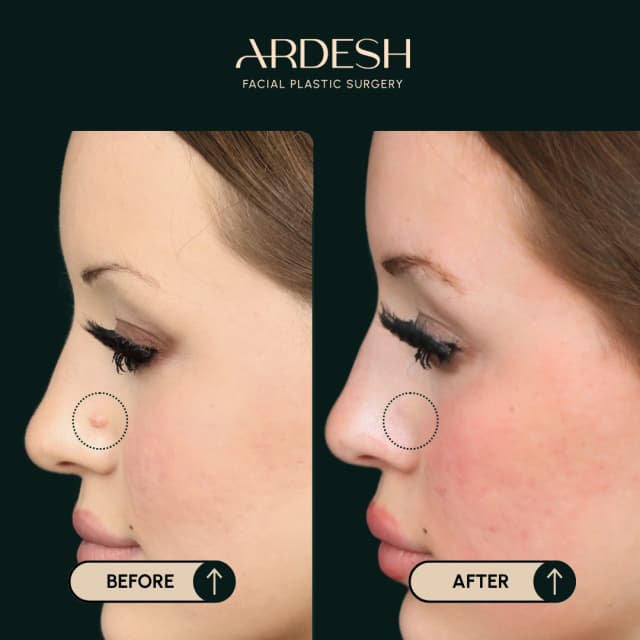
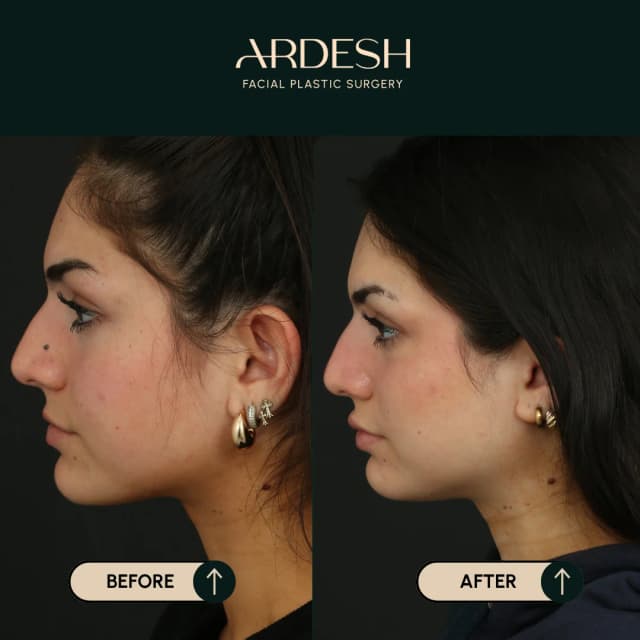
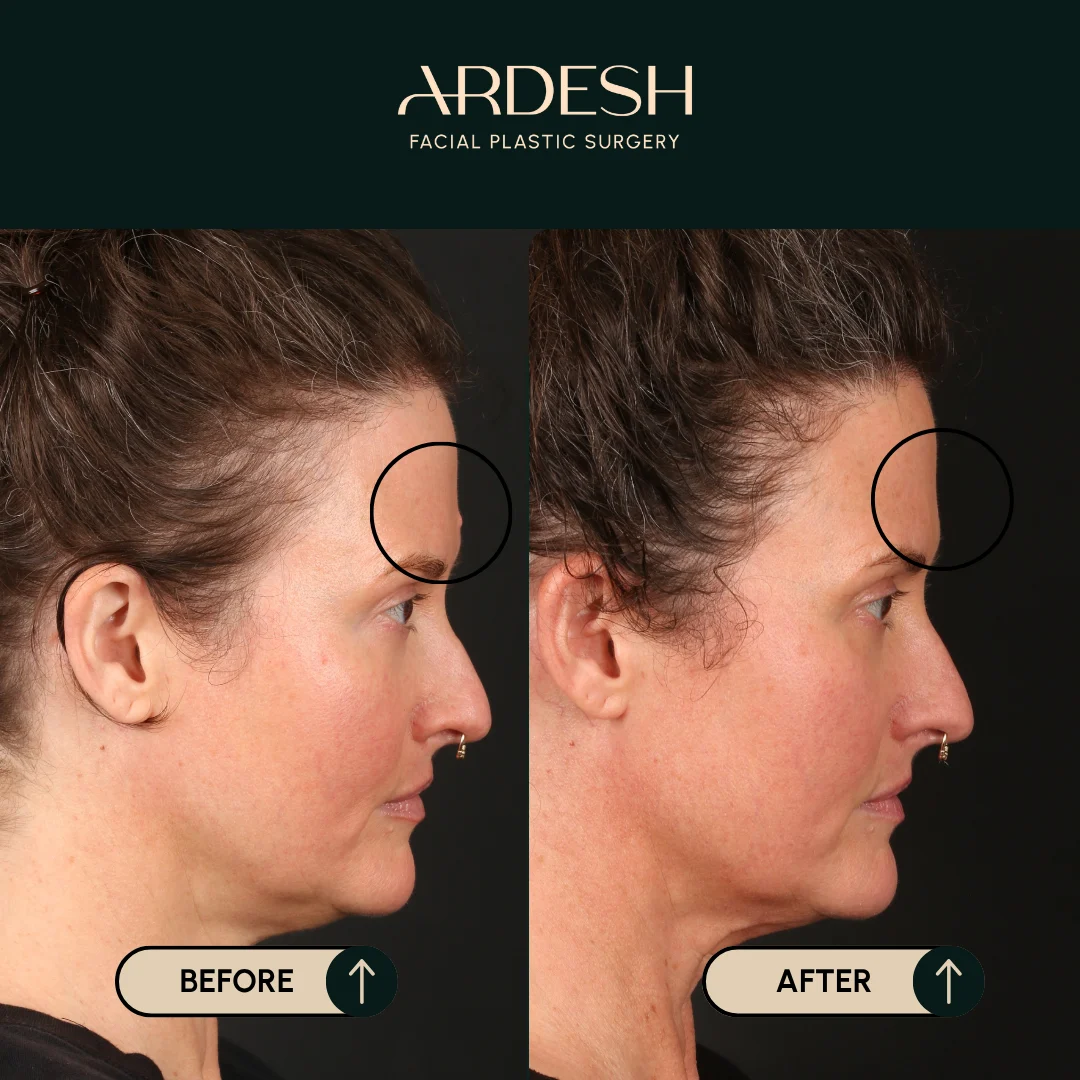
Dr. Farhad Ardesh's published specialty is cosmetic mole removal through Beauty Mark MD™, rather than general skin-tag treatment. His facial plastic and reconstructive surgery approach places particular attention on incision placement, fine stitching, scar quality, skin integrity, and creating a smooth result that blends naturally with surrounding skin.
For patients who have been calling a facial growth a "skin tag" when it is actually a mole, establishing the correct diagnosis changes the entire treatment conversation.
Patients who have already decided to explore treatment can also learn about mole removal treatment and the factors involved in choosing an appropriate approach.
The Best Time to Remove a Skin Growth Is After You Know What It Is
There is no universal "perfect month" or stage for when to remove a skin tag.
A stable, asymptomatic, clinically typical skin tag may be left alone indefinitely. A repeatedly traumatised tag may reasonably be treated sooner because it causes ongoing symptoms. An atypical or evolving growth requires evaluation, not hurried cosmetic removal.
The most important decision is therefore not now versus later.
It is observation versus appropriate treatment after the lesion has been correctly identified.
If your concern involves a facial growth that has been medically identified as a mole and you are considering cosmetic removal, Dr. Ardesh provides specialised cosmetic mole removal through Beauty Mark MD™ at his Beverly Hills and Newport Beach practices. His approach is designed around precise technique, careful incision placement, fine stitching, scar quality, and preserving the integrity and natural appearance of the surrounding skin.
For patients considering treatment in Beverly Hills, information about mole removal in Beverly Hills is available. Those exploring treatment options in Newport Beach can also review plastic surgery in Newport Beach.
Do not rush to remove an unidentified facial growth simply because it bothers you, and do not assume you have to live indefinitely with a mole that causes cosmetic concern. Once the lesion has been appropriately identified, schedule a consultation with Dr. Ardesh to discuss whether his personalised cosmetic mole-removal approach is appropriate for you.
Frequently Asked Questions
1. When should I remove a skin tag?
A typical skin tag does not require removal simply because it exists. Removal may be considered when it repeatedly becomes irritated or traumatised, interferes with everyday activities, creates cosmetic concern, or requires further evaluation because the diagnosis is uncertain.
2. Is there a medically recommended skin tag removal timing?
There is no standard deadline for removing a benign skin tag. A stable, asymptomatic skin tag can often remain untreated. The appropriate timing depends on symptoms, location, cosmetic concerns, and diagnostic certainty.
3. Should I remove a skin tag before it gets bigger?
Not automatically. Skin tags can vary in size, and size alone does not determine whether removal is necessary. If a lesion grows rapidly or changes unexpectedly, however, it should be reassessed to confirm the diagnosis rather than simply being removed at home.
4. Can I wait if my skin tag does not hurt?
If the lesion has been appropriately identified as a benign skin tag and remains stable and asymptomatic, observation is commonly reasonable. Seek reassessment if its appearance or behaviour changes significantly.
5. Should I remove a skin tag myself?
Self-removal is not recommended, particularly when you are uncertain that the lesion is actually a skin tag. Home techniques can cause bleeding, infection, skin injury, and scarring, while treating an unidentified lesion can delay appropriate diagnosis.